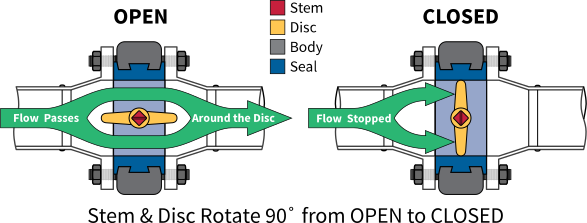
In contrast to ball and plug valves, butterfly valves use a disc shaped obstructer. Basic, general duty butterfly valves are called “resilient seated”. They have a single seal ring that acts a a seal between the valve body and disc, as well as the seal between the pipe flanges and valve body. When the disc is perpendicular to the direction of flow, the flow is stopped. When rotated 90˚ the flow goes through the valve by traveling around the slim profile of the disc.
Butterfly valves are commonly used on larger pipe sizes where a ball or plug valve would get very large, expensive, and heavy. Butterfly valves also function rather well as a flow control valve or an on/off valve. If a manual actuator is used in a flow control application, it must lock into place, so that the force of the fluid does not rotate the disc in either direction. Most manual butterfly valves do incorporate this feature.