Product Summary
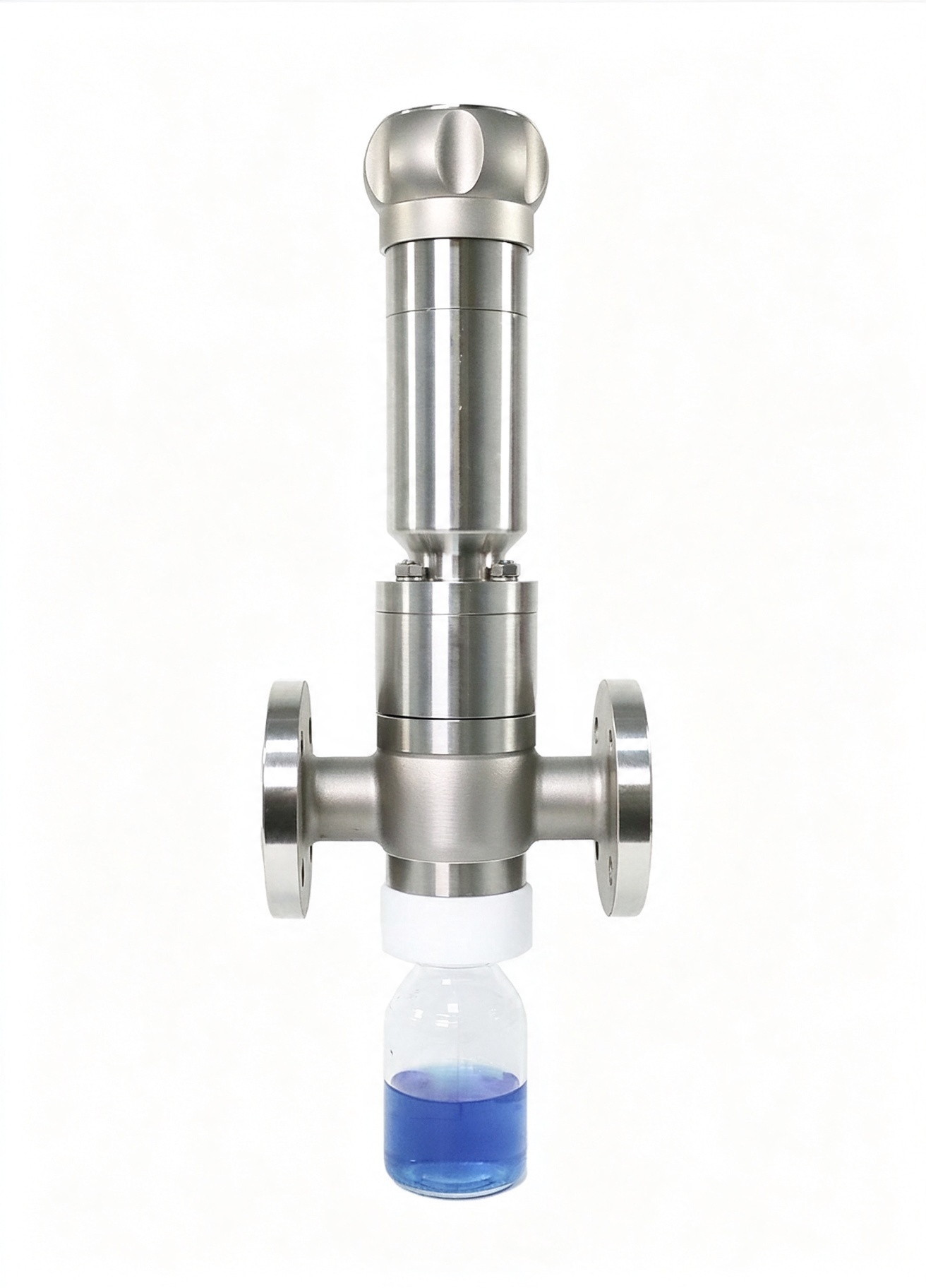
The Spring Return Self-Closing Sampling Valve is designed for safe, enclosed sampling of liquids in industrial process pipelines. Featuring a stainless steel three-way flanged body, manual handwheel operation, and an automatic spring-return closing mechanism, the valve automatically shuts off when the operator releases the handwheel, helping prevent accidental leakage and operator exposure. Its sealed sampling outlet allows direct connection to a sampling bottle for controlled sample collection. Available in DN15–DN50 sizes with PN16, PN25, and PN40 pressure ratings, it is widely used in chemical processing, pharmaceutical manufacturing, dye production, and other applications involving hazardous or corrosive liquids.
1. Product Overview
The Spring Return Self-Closing Sampling Valve is a specialized inline sampling device designed for safe sample collection from industrial process pipelines.
The valve incorporates an internal spring-return mechanism that automatically closes the sampling passage when the operator releases the handwheel. This self-closing function reduces the risk of accidental leakage caused by leaving the valve open after sampling.
Featuring a three-way flanged construction, the valve can be installed directly into the main process pipeline while maintaining normal fluid flow. The lower sampling outlet connects to a compatible sampling bottle for enclosed sample collection.
It is particularly suitable for chemical processing, pharmaceutical manufacturing, and other industrial applications requiring safe sampling of hazardous, volatile, or corrosive liquids.
2. Structural Features
- Automatic Spring-Return Closing Mechanism: The internal spring-return structure automatically closes the sampling valve when the handwheel is released, reducing the risk of accidental fluid discharge.
- Three-Way Flanged Valve Body: The two main pipeline ports feature flanged connections for inline installation, while the lower outlet serves as an independent sampling passage.
- Manual Handwheel Flow Control: The top-mounted handwheel allows operators to control valve opening travel and adjust the sampling flow rate.
- Sealed Sampling Bottle Connection: The sampling outlet can be directly connected to a compatible sampling bottle, helping minimize fluid splashing, leakage, and contact with the surrounding environment.
- Stainless Steel Construction: The valve body is manufactured from stainless steel, providing mechanical strength, a smooth internal flow passage, and convenient cleaning and maintenance.
- Optional Corrosion-Resistant Lining: PTFE-lined configurations are available for applications involving compatible highly corrosive process media.
- Serviceable Internal Components: The valve core and sealing components can be removed or replaced separately for convenient maintenance and cleaning.
3. Key Advantages
Automatic Closing for Enhanced Safety
The spring-return mechanism automatically closes the sampling passage when the operator releases the handwheel, reducing the risk of leakage caused by accidental valve opening or operator error.
Enclosed Sampling Protection
The sealed sampling bottle connection helps prevent hazardous liquids from splashing or leaking during sample collection, improving operator safety and reducing external contamination.
Adjustable Sampling Flow Rate
The manual handwheel enables controlled valve opening, allowing operators to regulate the sampling flow rate and minimize pressure-related splashing.
Continuous Production Compatibility
The three-way inline design allows sampling without interrupting the normal flow of process media through the main pipeline.
Convenient Maintenance and Cleaning
The removable valve core and sealing components simplify routine maintenance, inspection, and cleaning.
Durable and Corrosion-Resistant Construction
The stainless steel body provides structural strength, while optional corrosion-resistant lining materials extend compatibility with aggressive chemical media.
4. Technical Specifications
| Parameter | Specification |
|---|---|
| Product Type | Spring Return Self-Closing Sampling Valve |
| Nominal Diameter | DN15–DN50 |
| Nominal Pressure | PN16 / PN25 / PN40 |
| Valve Body Material | 304 / 316L Stainless Steel |
| Optional Lining | PTFE |
| Connection Type | Two-Way Flanged Pipeline Connection |
| Valve Configuration | Three-Way Inline Sampling Valve |
| Sampling Outlet | Sealed Sampling Bottle Connection |
| Operation Method | Manual Handwheel Opening / Automatic Spring-Return Closing |
| Operating Temperature | -20°C to +300°C (Depending on Sealing Material) |
| Sealing Materials | PTFE / PFA / Graphite Packing (Optional) |
| Surface Finish | Optional Sanitary-Grade Mirror Polishing |
| Flange Standard | GB/T Flange Standard |
| Sampling Bottle | Compatible Standard Sampling Bottle |
5. Applicable Media
The Spring Return Self-Closing Sampling Valve is suitable for various compatible process liquids, including:
- Industrial Chemical Liquids
- Pharmaceutical Process Fluids
- Oil Products
- Low- to Medium-Viscosity Liquids
- Compatible Organic Solvents
- Corrosive Liquids (With Suitable Lining Materials)
Material compatibility should be confirmed according to the specific medium, operating pressure, temperature, and sealing configuration.
6. Industrial Applications
The valve is widely used in industrial process pipelines requiring safe and controlled online sampling, including:
- Fine Chemical Processing
- Pharmaceutical Manufacturing
- Dye and Pigment Production
- Chemical Production Pipelines
- Hazardous Liquid Sampling
- Industrial Process Monitoring
- Laboratory Quality Control
- Continuous Production Systems
It is particularly suitable for sampling points involving toxic, volatile, or irritating chemicals, as well as production environments where operators frequently collect samples and accidental valve opening must be minimized.
The optional sanitary-grade polished configuration is suitable for applications requiring enhanced cleanliness and convenient cleaning.
The valve is not recommended for media containing large quantities of hard solid particles, as particles may interfere with the spring-return mechanism or damage sealing surfaces. Highly viscous or easily crystallizing fluids should also be evaluated carefully to avoid valve core sticking and incomplete automatic closure.