Product Description
1. Product Overview
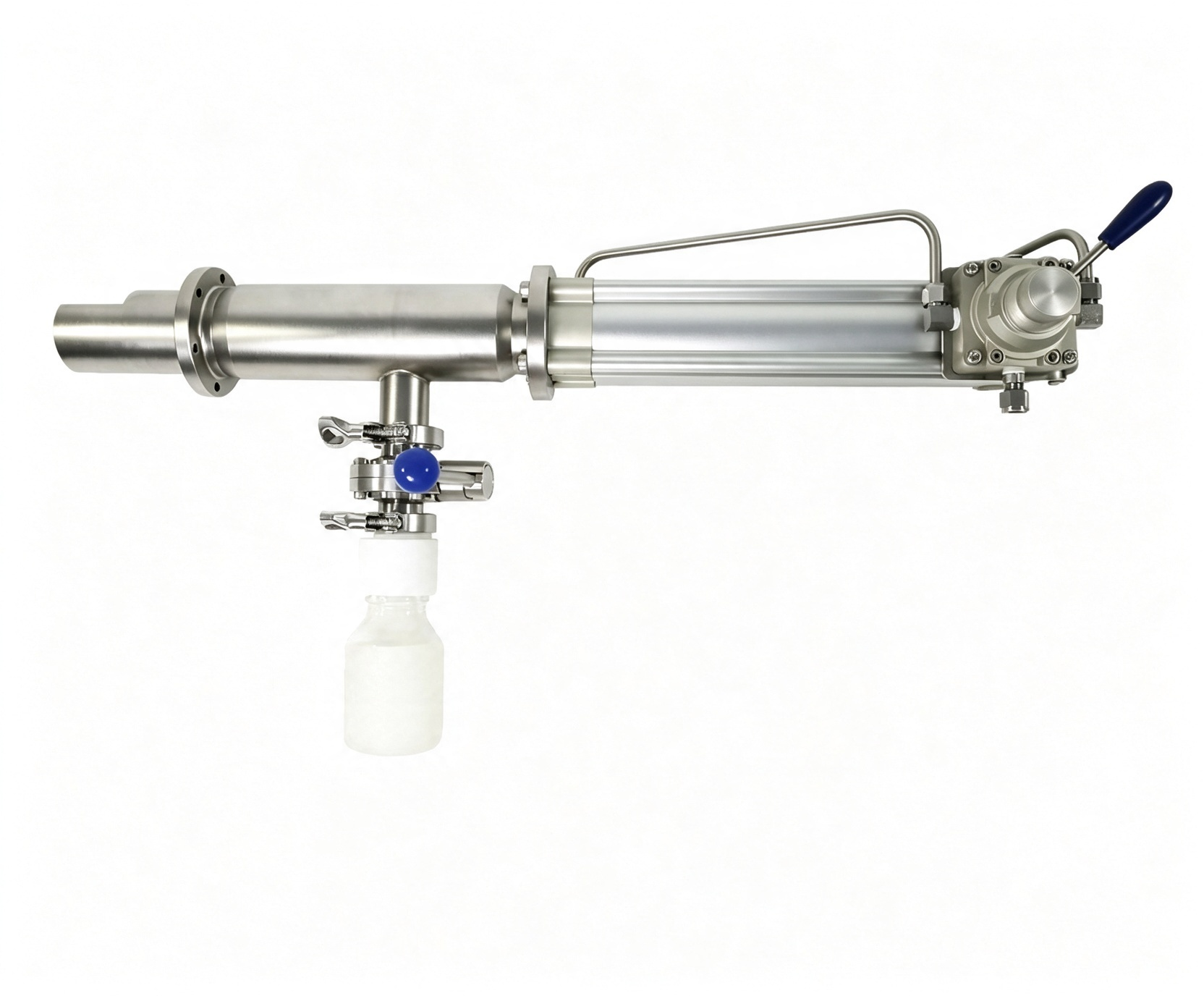
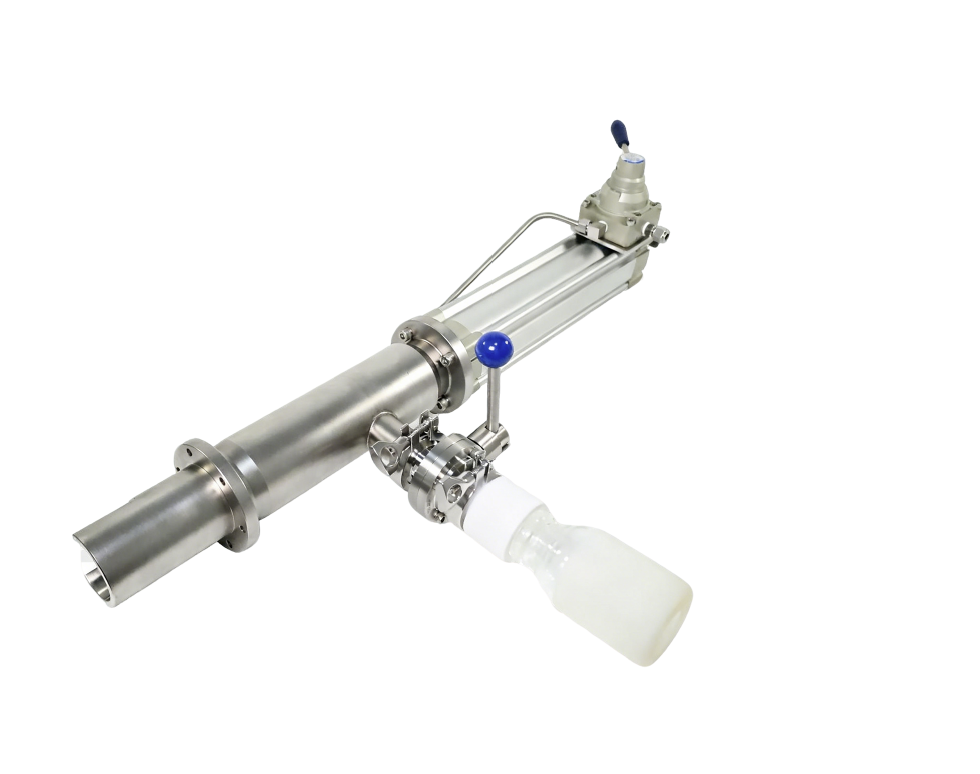
The pneumatic sampling device is designed with an integrated manual sampling valve. It is suitable for sampling powders and fine particles from pipelines, silos, and other equipment.
The device features a pneumatic telescopic probe structure that can automatically extend into the material layer for deep sampling. It is also equipped with an independent manual sampling valve on the side, allowing manual sampling without interrupting production.
The fully enclosed design prevents dust leakage and external contamination. It is suitable for food, pharmaceutical, lithium battery materials, chemical powders, plastic granules, and other applications.
It effectively addresses common problems associated with conventional powder sampling, including dust contamination, inconsistent sampling depths, inaccurate samples, and low sampling efficiency during equipment operation.
2. Overall Structural Design
Pneumatic Telescopic Probe Main Unit
The main unit is manufactured from 316L stainless steel using an integrated construction. The front end is equipped with a three-way connection for the sampling pipeline and material bin.
An internal aluminum alloy pneumatic cylinder drives the probe. When compressed air is supplied, the probe automatically extends and retracts. This allows the probe to collect representative powder samples from deeper material layers, reducing measurement errors caused by surface-only sampling.
The external components include a lifting handle for easy maintenance and disassembly.
Side-Mounted Manual Sampling Valve (Handwheel Type)
An independent manual sampling valve is installed on the side branch of the probe assembly. It features an anti-slip operating handwheel and a quick-connect sampling bottle interface, allowing the sampling bottle to be connected directly.
In the event of an air supply failure, equipment maintenance, or small-batch sampling, the manual valve can be operated independently without activating the pneumatic telescopic mechanism. This ensures sampling can continue without interrupting production.
Multi-Layer Sealing Structure
The cylinder and probe rod connection are equipped with PTFE sealing rings. During telescopic movement, fine powder is prevented from entering the cylinder, reducing jamming and wear.
The manual valve incorporates a double-layer composite seal to prevent powder leakage after closing, minimizing material loss.
Standardized Sampling Collection Assembly
The manual sampling outlet is equipped with a sanitary-grade quick-connect fitting, compatible with glass and PTFE-sealed sampling bottles.
The assembly allows quick disassembly and cleaning. The sealing gasket is resistant to powder corrosion and wear. The entire sampling collection process is enclosed to prevent dust dispersion.
3. Key Features and Advantages
Deep Pneumatic Sampling and Representative Sample Collection
The pneumatic telescopic probe can extend into the material pipeline or silo to collect samples from deeper layers, including bottom-layer materials.
This avoids surface-layer sampling and ensures that the collected samples are representative of the actual production material. It improves the accuracy of quality inspection data and reduces measurement errors caused by material stratification.
Dual Operating Modes: Pneumatic and Manual Sampling
-
Pneumatic mode: Automatically performs sampling during normal production.
-
Manual mode: Allows independent manual sampling when the compressed air supply is interrupted or equipment maintenance is required.
The side-mounted manual valve can complete small-batch sampling without stopping the pneumatic system or interrupting production inspection procedures.
Fully Enclosed, Dust-Free and Environmentally Friendly Design
The entire sampling process is enclosed. The telescopic probe and manual sampling valve feature double sealing structures, preventing powder from escaping into the surrounding environment.
This reduces dust pollution, minimizes material waste, and improves workplace cleanliness. It is suitable for clean production environments and dust-control applications.
Corrosion-Resistant and Durable Construction
All components in contact with materials are manufactured from 316L stainless steel. An optional PFA protective lining is available for improved resistance to lithium battery materials and corrosive chemical powders.
The telescopic sealing components are made from wear-resistant, corrosion-resistant materials, ensuring long-term durability and reliable operation.
Easy Disassembly and Cleaning
The flange and quick-connect structures allow the probe and manual sampling valve to be quickly removed and cleaned.
The design minimizes powder accumulation and hard-to-clean areas, making it suitable for pharmaceutical and food production environments where hygiene and cross-contamination control are important.
4. Applications and Industries
Suitable Materials:
-
Lithium battery cathode and anode materials
-
Pharmaceutical raw material powders
-
Food additives
-
Plastic granules
-
Catalyst powders
-
Agricultural chemical powders
-
Petroleum coke
-
Resin particles
Compatible Equipment:
-
Powder conveying pipelines
-
Vertical silos
-
Dryer discharge outlets
-
Mixing equipment
-
Pneumatic conveying pipelines
Applicable Industries:
-
New energy and lithium battery manufacturing
-
Pharmaceutical manufacturing
-
Fine chemicals
-
Food processing
-
Plastic modification
-
Advanced materials manufacturing
5. Optional Technical Specifications
| Parameter | Specification |
|---|---|
| Material in contact with product | 304 stainless steel, 316L stainless steel, or 316L with PFA lining |
| Pneumatic cylinder air supply | 0.4–0.6 MPa compressed air |
| Probe extension stroke | 100 mm / 150 mm / 200 mm (customizable longer stroke available) |
| Operating temperature | -20°C to +180°C |
| Connection type | Standard flange connection |
| Manual valve specification | DN15 miniature sanitary sampling valve |
| Sampling outlet | Quick-connect type |
| Optional features | Nitrogen purging connection, explosion-proof cylinder, insulation jacket, electrostatic grounding components |
6. Standard Operating Procedures
A. Automatic Pneumatic Sampling
-
Install the device on the side wall of the material silo or pipeline and connect the compressed air supply line. Secure the sampling bottle beneath the manual valve outlet.
-
Activate the pneumatic cylinder to drive the probe forward into the material layer, allowing powder to enter the sampling channel.
-
The cylinder retracts the probe, and the collected material flows into the sampling bottle through the connecting pipeline. The sample can also be collected through the manual valve.
B. Manual Emergency Sampling
-
Shut off the compressed air supply and directly rotate the operating handwheel of the side-mounted manual sampling valve.
-
Allow the powder to flow into the sampling bottle through the outlet.
-
After sampling, close the manual valve, remove the sampling bottle, and collect the sample. The entire process can be completed without operating the pneumatic mechanism.