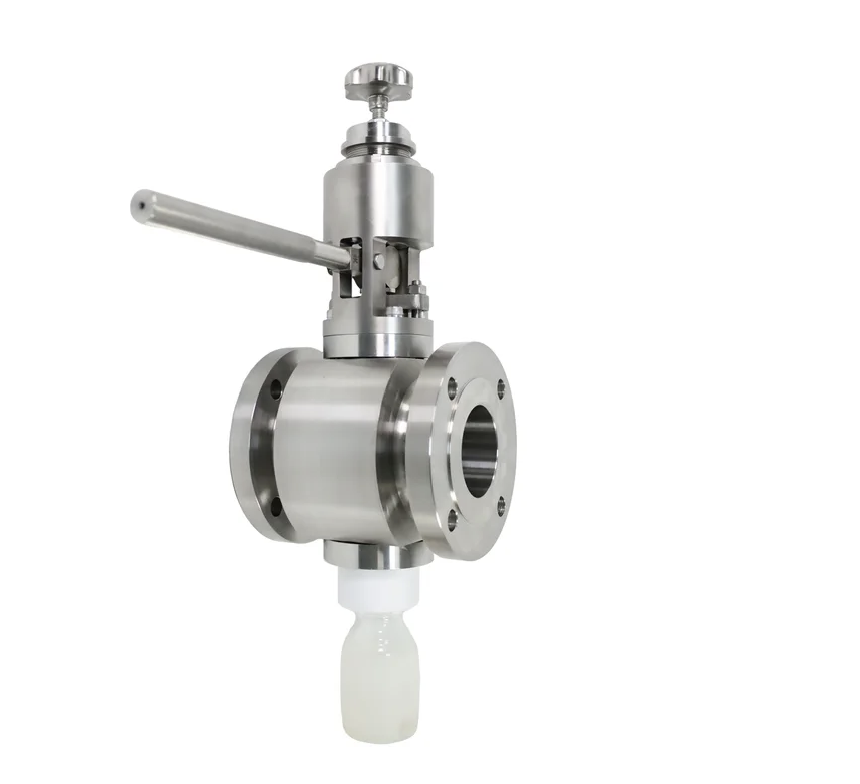
Self-Closing Sampling Valve
1. Product Overview
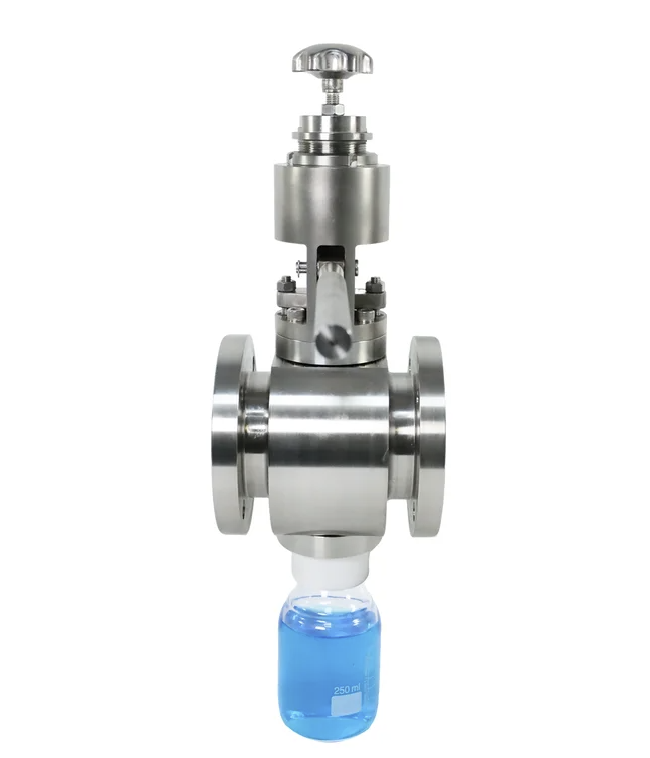
The Self-Closing Sampling Valve is a specialized inline sampling valve designed for automatic spring-return closure, one-handed operation, and safe leak-proof performance.
Featuring a built-in high-strength spring return mechanism, the valve automatically returns to its closed and sealed position immediately after the operating handle is released. Unlike conventional manually operated sampling valves, it eliminates the need for manual closing, significantly reducing the risks of accidental leakage, volatilization, and material waste caused by improper operation.
The valve body is manufactured from stainless steel using a precision casting process, providing a smooth, streamlined internal flow passage with no dead zones or material accumulation. It is suitable for installation in pipelines, reaction vessels, storage tanks, and other process equipment.
Designed for safe sampling of liquids, powders, granules, and various process media, the valve is widely used in chemical processing, pharmaceuticals, food production, environmental protection, lithium battery manufacturing, and fine chemical industries, particularly in applications involving hazardous, volatile, toxic, or corrosive substances.
It combines convenient operation with enhanced production safety and reliable sampling performance.
2. Main Structural Components
2.1 Spring-Return Mechanism (Core Component)
The valve incorporates a high-strength stainless steel compression spring that provides reliable automatic return and closure.
The spring is designed for repeated operation, ensuring consistent performance and a long service life.
When the operating handle is released after sampling, the spring automatically returns the valve to its closed position without manual intervention.
This mechanism minimizes operating errors and is particularly suitable for high-frequency sampling applications.
2.2 One-Piece Precision-Cast Valve Body
The valve body is manufactured from 304 or 316L stainless steel using an integral precision casting process.
Its compact structure features a smooth internal surface without dead zones, material accumulation, or clogging.
The valve body offers excellent resistance to acids, alkalis, and corrosion, as well as strong mechanical impact resistance.
It is suitable for high-temperature, low-temperature, and conventional pressure operating conditions.
2.3 Double-Sealing Closing Structure
The valve features a precision-machined tapered sealing surface combined with multiple PTFE/EPDM sealing elements.
The double-sealing design between the valve stem and valve seat ensures reliable sealing after closure, effectively preventing media leakage and the release of volatile gases.
2.4 Easy-Operation Handle
The lightweight handle is ergonomically designed for convenient one-handed operation.
Both push-type and rotary-type operating mechanisms are available.
With low operating torque and minimal effort required, the valve can be operated quickly and easily without additional tools.
2.5 Optional Sampling Accessories
The valve can be equipped with various sampling accessories, including:
- High-borosilicate glass sampling bottles
- Stainless steel sealed sampling tubes
- Sealed sampling valves
- Purge and cleaning connections
These accessories support closed sampling operations and help prevent sample residue and cross-contamination.
3. Working Principle
The Self-Closing Sampling Valve operates through an automatic spring-return mechanism.
During sampling, the operator simply presses or rotates the operating handle to overcome the spring force and open the valve, allowing process media to flow through the internal passage for sample collection.
Once sampling is completed, releasing the handle allows the internal spring to return immediately to its original position.
The valve core is driven back to its sealing position, compressing the sealing surfaces and automatically closing the valve.
No manual rotation or additional closing action is required.
The entire process provides fast, reliable, and automatic closure, effectively reducing the risks of accidental discharge and leakage.
4. Key Product Features and Advantages
4.1 Automatic Spring Return for Enhanced Safety
The spring-return mechanism provides automatic closure immediately after the operating handle is released.
This eliminates potential safety hazards associated with conventional sampling valves, such as accidental failure to close, incomplete closure, and unintended leakage.
It is especially suitable for handling toxic, flammable, volatile, and corrosive process media.
4.2 One-Handed Operation for Improved Efficiency
The valve is available with convenient push-type or rotary-type opening mechanisms.
A simple press-and-release operation enables quick sample collection.
The straightforward operating procedure significantly improves sampling efficiency, making the valve ideal for frequent sampling and routine process monitoring.
4.3 Zero Dead Zones and Minimal Material Accumulation
The valve features a smooth, unobstructed internal flow passage without dead corners.
Its stable opening and closing operation helps prevent media retention, crystallization, and material buildup.
Sampling can be performed with minimal residual material, helping maintain sample freshness, representativeness, and accurate analytical results.
4.4 Reliable Sealing and Long Service Life
The valve incorporates a double-sealing structure using flexible and durable sealing materials.
It provides resistance to high temperatures, acids, alkalis, and abrasion.
The spring is designed for excellent fatigue resistance and reliable performance during repeated operation.
Even after prolonged use and frequent opening and closing cycles, the valve maintains consistent sealing performance.
Its service life is significantly longer than that of conventional sampling valves.
4.5 Clean and Contamination-Free Sampling
The valve supports fully enclosed sampling procedures.
Its design helps prevent dust emissions, process media splashing, contamination, and material loss.
It is suitable for clean production environments and applications requiring compliance with food hygiene, pharmaceutical GMP, and chemical safety production standards.
4.6 Easy Installation and Maintenance
The valve features a compact structure, small overall dimensions, and flexible installation options.
It is compatible with various connection methods, including:
- Flanged connections
- Threaded connections
- Clamp connections
Sealing components and springs are standard replaceable parts, allowing convenient maintenance and replacement while minimizing maintenance costs.
5. Applicable Industries and Media
Applicable Media:
Various clean water-based media, organic solvents, acidic and alkaline liquids, oils, powders, granules, chemical intermediates, food slurries, pharmaceutical raw materials, and other dry or low-viscosity substances.
Applicable Industries:
- Fine chemicals
- Pharmaceutical and biotechnology
- Food processing
- New energy and lithium battery manufacturing
- Environmental protection and water treatment
- Petrochemical processing
- Building materials and powder processing
- Feed processing
The valve is suitable for inline sampling from pipelines, reactors, storage tanks, and other process systems.
6. Installation and Operating Precautions
- Before installation, verify that the valve’s pressure rating, temperature range, and material specifications are compatible with the actual operating conditions. Ensure that flange or threaded connections are properly tightened and sealed to prevent leakage at the connection points.
- Operate the sampling valve gently during sample collection. Avoid excessive force or impact that may cause deformation of the spring or valve core and affect the automatic return function and sealing performance.
- When sampling media that are prone to crystallization, high viscosity, or solidification, promptly clean the internal flow passage to prevent material buildup, valve core blockage, or failure of the spring-return mechanism.
- Regularly inspect the internal spring and sealing gaskets. Replace any components showing signs of aging, sticking, wear, or leakage to maintain reliable automatic closure.
- For special applications involving highly corrosive media or high-temperature and high-pressure conditions, select customized valve materials and configurations appropriate for the specific operating environment to extend service life.