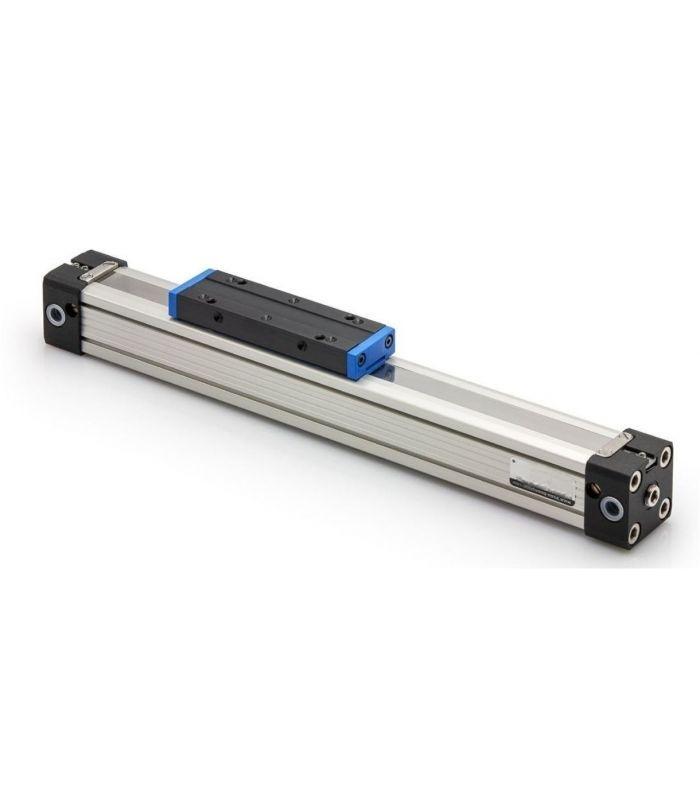
If you work in industrial automation, you know that every millimeter of installation space counts. Traditional rod-style pneumatic cylinders are reliable, but their protruding piston rods eat up valuable room and limit your design flexibility. That’s where rodless pneumatic cylinders come in—they’re a compact, high-performance alternative that’s transforming how we build automated systems.
What Is a Rodless Pneumatic Cylinder?
Unlike standard cylinders, which push a rod out to move a load, rodless cylinders transmit force directly from an internal piston to an external carriage. This is usually done via a magnetic coupling or a mechanical band that slides along a slot in the cylinder tube. The result? Smooth, continuous linear motion without the need for an external rod.
This design isn’t just a space-saver—it also eliminates common problems with rod cylinders, like rod bending, seal wear from contamination, and the risk of damage in tight spaces.
3 Key Benefits That Make Rodless Cylinders Stand Out
1. Unbeatable Space Efficiency
The most obvious advantage is the footprint. Without an external rod, you don’t need extra space for the rod to extend. This makes rodless cylinders perfect for applications like:
- Material handling systems where horizontal movement is needed in a tight gap
- Packaging machines that require long, continuous strokes without bulky hardware
- Pick-and-place robots where every centimeter of workspace is optimized
2. Longer Strokes, Higher Speeds
Rodless cylinders excel at long-stroke applications, with some models supporting strokes up to 5,000 mm (5 meters). They also reach speeds of up to 1 m/sec, making them ideal for high-throughput tasks like sorting or assembly lines.
3. Built for Tough Environments
Many rodless cylinders come with features that boost durability:
- Adjustable pneumatic cushioning: Absorbs impact at the end of each stroke to reduce vibration and protect your equipment.
- Viton® (FKM) seals: Available as an option for resistance to high temperatures, oils, and corrosive chemicals.
- Guided carriages: Optional guided carriages or bearing-guided skates handle lateral loads, ensuring stable movement even with offset weights.
Technical Specs You Need to Know
To choose the right rodless cylinder, keep these key specs in mind:
- Working pressure: 0.5 – 8 bar
- Temperature range: -10°C to 80°C (even higher with Viton seals)
- Bore sizes: 16 mm to 63 mm, to match your force requirements
- Position detection: Most models are prepped for magnetic proximity sensors, so you can easily add precise position monitoring
- Stroke length: Up to 5,000 mm, with custom options available for even longer distances
When to Choose a Rodless Cylinder Over a Standard One
Rodless cylinders aren’t a replacement for every rod cylinder, but they shine in specific scenarios:
✅ When space is limited: If your design can’t accommodate a rod’s extension, go rodless.
✅ For long strokes: Rod cylinders lose stability with long strokes, but rodless designs maintain precision even at 5 meters.
✅ When contamination is a risk: The sealed tube of a rodless cylinder keeps dirt and debris out, protecting internal components.
❌ For very high force applications: Rod cylinders still have the edge when you need maximum pushing or pulling power.
Final Thoughts: A Compact Solution for Big Results
Rodless pneumatic cylinders aren’t just a “nice-to-have”—they’re a problem-solver. Whether you’re designing a new automated system or upgrading an old one, their space-saving design, long stroke capability, and durability make them a smart choice for modern industrial applications.
If you’re ready to see how a rodless cylinder can streamline your next project, start by mapping your stroke length, load requirements, and installation space. The right model will help you build a system that’s faster, more compact, and more reliable than ever.