
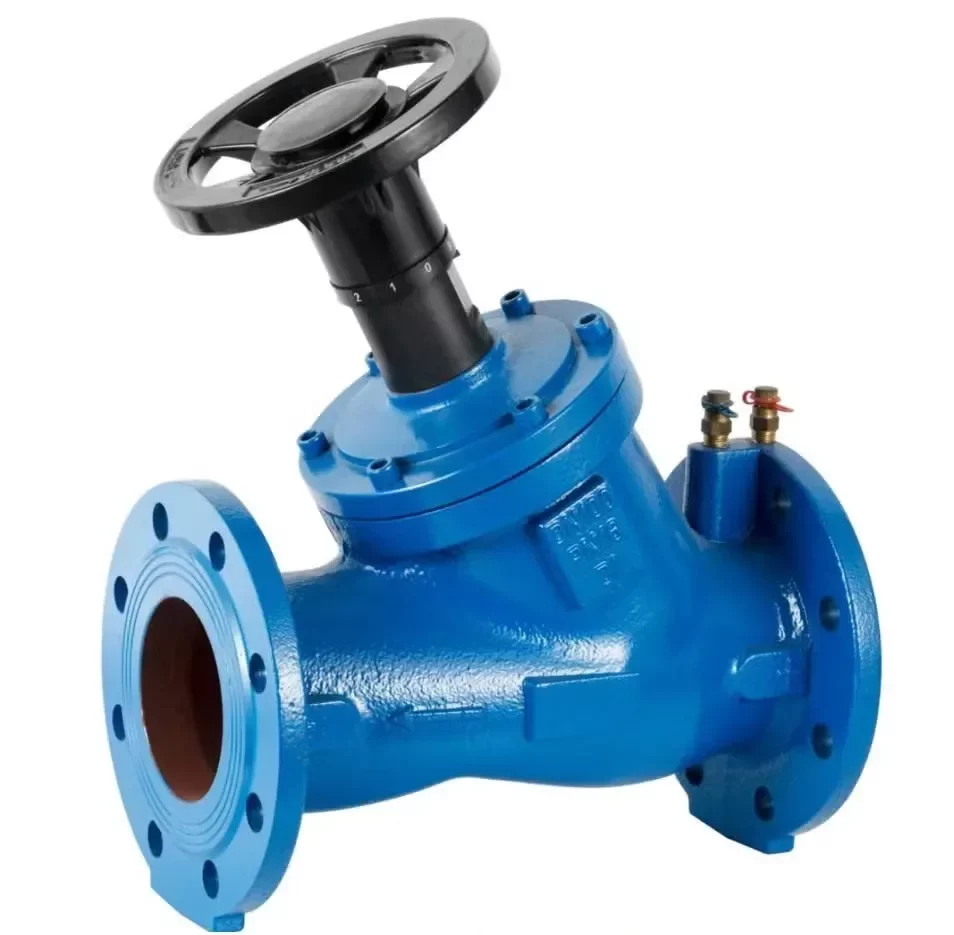
A balance valve is a critical component used in HVAC, plumbing, and industrial piping systems to control and maintain consistent fluid flow across different zones or branches. By regulating flow and pressure, balance valves ensure optimal system performance, energy efficiency, and comfort, especially in complex or variable-load environments. Whether in a chilled water loop, hot water distribution, or process cooling system, properly selected and installed balance valves help prevent flow imbalances, reduce energy waste, and extend the life of pumps and other equipment. In this article, we explain what a balance valve is, how it works, the different types available, and why it’s essential in modern fluid systems.
Types of Balance Valves
There are several types of balancing valves, each suited to different system demands, pressures, and control requirements. Choosing the right type is critical to achieving efficient, stable, and maintainable fluid systems. Below are the main categories:
Manual Balance Valves
Manual balance valves (also known as static balancing valves or pressure‑dependent balancing valves) are adjusted by hand. They have a fixed orifice or adjustable port, and technicians set them during commissioning or maintenance to deliver the desired flow under known conditions.
How they function:
-
They rely on measured differential pressure across the valve and known flow curves (Cv or Kv).
-
Once set, their internal parts remain static; they do not respond automatically to pressure changes.
Pros and cons:
| Advantages | Disadvantages |
|---|---|
| Lower upfront cost. | Performance degrades when system pressure changes (e.g. part load). |
| Simpler design, fewer moving parts. | Requires periodic rebalancing, which is labor‑intensive. |
| Easier to understand & maintain in simpler systems. | Can be inaccurate in large, variable load or large‑scale systems. |
Best use cases:
-
Smaller buildings or systems with relatively constant flow and load.
-
Where budget constraints make lower capital cost more important.
-
Projects where occasional manual tuning/rebalancing is acceptable.
Automatic Balance Valves
Automatic balancing valves (often called flow‑limiting balancing valves or dynamic balancing valves) adjust themselves in response to pressure changes, keeping the flow rate set even when the system operates at non‑design conditions.
How they function:
-
These valves have internal mechanisms (such as a spring‑loaded cartridge) that respond to variations in differential pressure and adjust the orifice size accordingly.
-
Below a minimum differential pressure, they act more like fixed orifices; above that, the internal element adjusts to maintain the desired flow.
Pros and cons:
| Advantages | Disadvantages |
|---|---|
| Maintains set flow under varying loads without manual adjustment. | Higher initial cost than manual valves. |
| Less labor during commissioning and fewer callbacks later. | More complex internal parts; more sensitivity to quality of installation and filtering of fluid. |
| Better suited for variable flow and large systems. | Must select correct differential pressure range; if out of range, performance can degrade. |
Best use cases:
-
Commercial or industrial systems with load variation or intermittent operation.
-
Systems with variable speed pumps or changing demands (e.g. different zones turning on/off).
-
Where maintenance costs or labor for balancing are high, and automatic stability is valued.
Pressure‑Independent Balance Valves
“Pressure‑independent valves” (sometimes called PICV = Pressure Independent Control Valve) combine functions: balancing the flow, regulating/control, and often differential pressure regulation in one device. These valves ensure the flow is maintained, regardless of upstream or downstream pressure changes.
How they function:
-
They integrate a balancing mechanism with a differential pressure regulator. The valve’s control element ensures that, despite changes in the system pressure, the prescribed flow is delivered.
-
They are often paired or integral with actuators for remote or automatic control (for example part of HVAC building control systems).
Pros and cons:
| Advantages | Disadvantages |
|---|---|
| High stability and accuracy in variable conditions. | Higher cost; greater complexity. |
| Reduced need for separate balancing valves + control valves (simplifies design). | Installation requires making sure the valve’s operating differential pressure range is matched. |
| Better energy efficiency and lower long‑term labor and maintenance. | More parts, so potential for maintenance/repair of internal regulators or actuators. |
Best use cases:
-
Complex building systems with tight performance, comfort or regulatory requirements.
-
Systems where automation (BMS) is already in use or planned.
-
Where the cost savings in energy and maintenance over lifetime support the higher initial investment.
Other Specialized Balance Valves
Beyond the main three types above, there are specialized balance valves designed for particular applications or for solving specific problems.
Examples include:
-
Thermal Balancing Valves / Thermostatic Balancing Valves
These are used in domestic hot water (DHW) recirculation systems. They control flow based on temperature rather than pressure or flow alone. For example, they limit flow when the water reaches a certain temperature, or help ensure correct return temperature, help in Legionella control. -
Fixed Orifice / Calibrated Valves
A subtype of manual/static valves. These have a fixed orifice whose geometry is chosen to meet design flow, and measurement ports (ΔP) for verifying flow. Less adjustable but simpler and useful where design conditions are well known. -
Flow Limiting Valves (sometimes overlapping with automatic / PI types)
Valves that limit maximum flow in a circuit regardless of pressure, i.e. serve as “safety / overflow / constraint” devices. -
Direct Reading Manual Valves
Manual static valves equipped with integrated flow‑measurement features (e.g. built‑in Venturi or scale, pointers, pressure ports) to simplify balancing. These help reduce measurement error and speed up commissioning.
When to use specialized types:
-
Applications with temperature safety / health regulations (e.g. domestic hot water, hospitals).
-
Where water temperature needs to be maintained tightly or where there is risk of pathogen growth.
-
Systems where designers want less manual labor but may not need full PI / automatic control.
-
Retrofit projects where space, piping configuration or pressure conditions make standard types less effective.
How Balance Valves Work
Working Principle and Mechanism
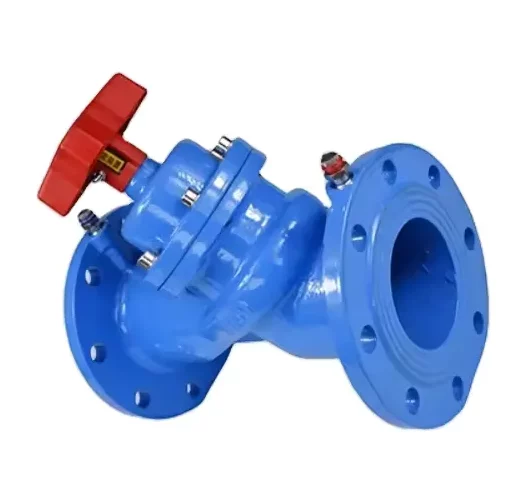
Balance valves function by creating resistance in a fluid circuit and using pressure differentials to regulate flow. The core idea is that by introducing a controllable orifice (or restricting element) and measuring or reacting to the drop in pressure across that orifice, the system can be tuned so that each branch receives its design flow even if pressures or loads change.
For manual/static balance valves, the operator sets the valve opening (via an obturator, plug, disc, or screw) to achieve the desired flow under design conditions; once set, it remains fixed until manually adjusted.
For automatic/dynamic or pressure‑independent valves, an internal mechanism senses changes in differential pressure (due to load changes, partial load conditions, pump speed variations, etc.) and adjusts the opening accordingly, maintaining the preset flow rate over a range of pressures. If the pressure differential exceeds or drops below the design range, there may be limits in how much the valve can compensate.
Pressure and Flow Control
-
Pressure differential (ΔP) is central. Flow through the valve causes a drop in pressure across the restricting orifice. This ΔP is measured and/or used as feedback for adjusting the orifice (in automatic valves) or for setting the fixed orifice (in manual valves).
-
Flow rate is controlled either by setting a fixed restriction (manual) or via a dynamic mechanism that responds to pressure changes to keep flow constant. This allows systems with variable demands to stay balanced even as loads or upstream/downstream pressures shift.
-
In some designs, flow is measured directly (e.g. via Venturi sections, orifices, pressure test ports) using the measured ΔP and known flow/pressure charts. This helps in commissioning and verifying balancing.
-
Pressure control may also involve differential pressure controllers which limit the maximum ΔP across a branch, ensuring that control valves downstream receive stable conditions.
Key Components of a Balance Valve
Here are the main parts and elements you’ll find in balance valves, and their roles:
| Component | Purpose / Role |
|---|---|
| Valve body / housing | The outer casing that holds all internal parts; sized for pressure class and fluid compatibility. Robust material to resist corrosion, temperature, etc. |
| Restricting orifice / obturator / disc / plug | Creates the flow restriction; adjustable in manual/static valves, or paired with a movable mechanism in automatic types. The geometry of this part determines how much flow is allowed for a given ΔP. |
| Adjustment mechanism | For manual valves: handwheel, screw, plug, etc. For automatic valves: springs, diaphragms, movable elements that respond to pressure changes. |
| Differential pressure sensing (test ports / pressure taps) | Ports upstream and downstream of the flow orifice to allow measuring ΔP. Used during commissioning or monitoring. Some designs integrate Venturi orifice for more accurate, stable measurement. |
| Flow measurement device | Optional but common in higher‑precision systems. Can be Venturi inserts, calibrated orifice plates, or other flow meter parts. Enables verifying that the flow set is being achieved. |
| Seals, packing, stems | To avoid leakage and ensure adjustment reliability over time. Good design here ensures low maintenance and consistent performance. |
| Locking or sealing mechanism | In manual valves especially, once the correct flow or ΔP has been achieved, a lock or seal can prevent tampering or drift. |
Applications of Balance Valves
Balance valves are used widely across many systems where fluid flow, temperature, and pressure stability matter. Below are the major application areas and examples of how balancing valves play a role.
HVAC Systems
-
In hydronic heating and cooling systems (buildings, commercial facilities), balance valves ensure that each terminal unit (radiator, fan coil, air handling unit) receives its designed amount of hot or chilled water. Without them, some zones may overheat while others remain under‑served.
-
They are essential during system commissioning: for example, manual balancing valves are adjusted using differential pressure test ports to tune flow in various branches.
-
In variable load HVAC (e.g., multi‑zone cooling, varying occupancy), automatic or pressure‑independent balancing valves help maintain set flow rates when loads change, reducing energy waste.
Water Supply Networks
-
In building water supply systems (domestic, commercial), balance valves can regulate flow to different fixtures to avoid pressure fluctuations and ensure uniform water delivery to all outlets.
-
In hot‑water circulation loops (for example in large buildings), where water must be kept at or above a certain temperature (for comfort or safety), balance valves help maintain flow in loops so that heat loss is minimized but water remains available quickly at fixtures.
-
Also used in plumbing and process water systems to prevent issues like water hammer, overpressure in certain branches, or inefficiency due to some branches hogging flow.
Industrial Process Control
-
In chemical processing, refining, pharmaceutical, and food & beverage plants, balance valves ensure precise distribution of fluids (chemicals, solvents, steam, etc.) through reactors, heat exchangers, mixers, etc., contributing to process consistency and product quality.
-
They are used in power generation (boilers, cooling water circuits, condensers, steam systems) to ensure balanced flow in large piping networks and to avoid hot spots or flow bottlenecks.
-
In refrigeration or server cooling systems, balance valves maintain steady coolant flow, minimize energy consumption, and avoid over/under cooling.
Other Common Industries
-
Building & Construction: Beyond HVAC and plumbing, systems like radiant floor heating, district heating, and multi‑building thermal stations employ balance valves to ensure the network’s branches deliver proper flow.
-
Power & Utilities: Cooling water networks in power plants, boiler feed systems, cooling towers, etc.
-
Data Centers / Telecommunication Facilities: Used to maintain cooling efficiency in server‑cooling loops; balanced flow prevents hot spots and supports system reliability.
-
District Heating / Thermal Stations: Where heat source(s) feed many consumers or buildings, balance valves ensure each receives the correct thermal energy—even when pipeline lengths or losses differ.
Benefits of Using Balance Valves
Improved System Efficiency
-
Balance valves help ensure that fluid distribution in a system matches the design intent. Without them, flow tends to favor the path of least resistance (shorter, less restrictive pipes, etc.), causing over‑flow in some branches and under‑flow in others. Proper balancing ensures every branch or coil gets its required flow, improving temperature consistency and reducing waste from over‑pumping or excessive bypass.
-
By maintaining correct flow and pressure relationships, the entire system operates closer to its optimal design point. Pump work is reduced, components like heat exchangers and control valves operate more efficiently, and thermal energy (heating/cooling) is more effectively delivered. This means less energy lost to friction, turbulence, or bypass.
Energy Saving
-
Balance valves, especially automatic or pressure‑independent types, reduce energy consumption by preventing over‑flow or excess pumping. For example, in part‑load conditions, when some zones require less flow, properly selected and commissioned valves avoid pumping more fluid than necessary. This translates into energy cost savings.
-
Using pressure‑independent balancing control valves (PIBCVs) can produce substantial savings. One recent source says PIBCVs can improve operational energy efficiency in hydronic HVAC systems, reducing energy costs by 20% or more by eliminating flow waste and optimizing fluid distribution.
-
In water heating or domestic hot water systems, thermostatic or fixed flow balancing valves also reduce waste by ensuring hot water stays distributed correctly and not lost via “hot water loops” or re‑circulation inefficiencies.
Enhanced System Stability
-
Balance valves help stabilize the hydraulic behavior of fluid systems. That means, they reduce pressure fluctuations, prevent overshoots, avoid sudden changes in flow when loads shift, or zones turn on/off. Stable flow reduces cycling, minimizes noise, and prevents uneven heating/cooling.
-
With automatic or pressure‑independent designs, valves respond dynamically to changing system pressures so that desired flow is maintained even when upstream or downstream conditions change. This increases system resilience under varying load, improves performance during part‑load periods, and helps maintain temperature/power consistency.
-
Maintaining correct delta‑T in heating/cooling loops (difference between supply and return temperature) also depends on stable flows; imbalance often causes poor delta‑T performance, which degrades overall system efficiency. Balance valves help ensure correct delta‑T, improving system thermal performance.
Reduced Maintenance Costs
-
Because balance valves (especially automatic or pressure‑independent ones) maintain correct flow without constant manual adjustment, they reduce the number of balancing interventions needed over time. That means less labor, fewer commissioning callbacks, fewer readjustments.
-
Unbalanced systems tend to suffer from more wear in components: pumps working harder, valves and actuators over‑traveling, fluctuations causing mechanical stress or water hammer, uneven temperature causing thermal stress. By reducing these issues, balanced systems see lower repair costs, longer component life.
-
Also, valves with built‑in differential pressure regulation or automatic balancing reduce the need for measuring devices and balancing test ports across many branches, simplifying maintenance logistics.
-
Finally, by preventing excessive overshoots/flows, balancing helps avoid problems like scale buildup, corrosion, noise, vibration—each contributing to maintenance issues.
Selection Criteria for Balance Valves
When selecting a balance valve for a system, several technical criteria must align to ensure optimal performance, accuracy, and longevity. Below are the major parameters to evaluate.
Flow Rate Considerations
-
Design flow vs actual flow
Always base valve selection on the nominal or design flow rate rather than just matching pipeline size. Undersizing or oversizing based on pipe diameter can lead to poor balancing and performance. -
Range (minimum to maximum demand)
The valve should be able to handle the maximum expected flow without excessive pressure drop, while still allowing stable control at lower flow rates. If the valve cannot properly throttle or adjust at lower flow rates, performance and control suffer. -
Flow coefficient (Kv or Cv)
The valve’s flow coefficient describes how much flow passes through it for a given pressure drop. Selecting a valve with appropriate coefficient ensures the valve can deliver required flow under expected ΔP. Manufacturers often provide curves or charts (Kv, flow vs ΔP) to aid in selection.
Pressure Drop and Compatibility
-
Permissible pressure drop (ΔP)
One must know the allowable pressure drop across the valve at the design flow. The ΔP must be compatible with both the balancing valve’s specification and the system’s pump capacity and operating head. Exceeding allowed ΔP leads to energy waste or possible cavitation. -
Valve authority
Valve authority is the ratio of the pressure drop across the valve at full flow to the total pressure drop in the system (valve + piping). Higher authority improves accuracy of control and balancing. If the valve’s share of the system drop is too small, the valve becomes less effective. -
Fluid compatibility
Consider fluid properties: type (water, glycol mix, steam, etc.), temperature, viscosity, density, presence of solids or impurities. These affect how the valve operates, how it is sized, and what materials are needed. Also differential pressure changes due to fluid density differences may need correction.
Size and Installation Requirements
-
Valve size relative to system piping and flow
The valve should be appropriately sized: not too large (which reduces control range and can cause control instability), and not too small (which causes excessive pressure drop or inability to meet required flow). Moderately opening position under design flow is preferred, leaving room for adjustment. -
Straight pipe runs upstream and downstream
Proper installation often requires straight lengths of pipe before and after the valve to stabilize flow and pressure, reduce turbulence, ensure the valve’s internal mechanisms and flow‑meters or test ports function properly. -
Access to test ports, adjustment mechanisms
The valve should allow easy access to pressure or differential pressure test ports, adjustment handles or knobs, and should enable sealing or locking once settings are established. This facilitates commissioning, measurement and maintenance. -
Orientation and flow direction
Valves may be designed to operate in specific orientations (horizontal, vertical), and the body will often have a marked flow direction. Installation against flow direction or in improper orientation can impair performance or damage the valve.
Common Challenges and Troubleshooting
Even a well‑designed and properly selected balance valve can run into issues. Knowing what these are, how to maintain them properly, and what failures to watch out for helps keep systems operating efficiently and reduces downtime.
Issues in Valve Balancing
| Problem | Cause | Symptoms |
|---|---|---|
| Uneven flow between branches | Valve settings incorrect; blockage or air in some lines; improper sizing; differential pressure changes not accounted for. | Some zones too hot/cold; some branches underperform. |
| No flow or very low flow through a valve | Valve closed or not adjusted properly; obstruction (debris, sediment); air lock; wrong orientation; valve stuck or damaged. | Measured flow is significantly lower than expected; zone receives no fluid. |
| Leaks | Worn seals, gaskets; poor joint connections; high pressure or vibration; material degradation. | Visible leakage; drop in system pressure; water damage; loss of efficiency. |
| Fluctuating pressure / flow | Pump issues; sudden load changes; air in system; valves reacting poorly because of being out of their design ΔP range. | Inconsistent comfort; noise in pipes; erratic performance. |
| Blockage / clogging | Sediment, scaling, debris in fluid; improper filtering; poor water quality. | Reduced flow; difficulty adjusting; possible damage to internal parts. |
Maintenance Tips
To prevent or resolve many of the above issues, regular maintenance is essential. Here are tips and best practices:
-
Periodic inspection of seals and gaskets
Check for wear, leaks or deformities. Replace seals before they fail fully. -
Clean strainers / filters upstream
Install and maintain filters on supply to the balance valve to prevent debris entry. Flush lines if there’s sediment. -
Bleed air from the system
Air pockets cause flow disruption and inaccurate readings. Use venting or bleeder valves as needed. -
Verify valve setting and performance periodically
After commissioning, seasonal changes, or system modifications, revisit flow measurements and re‑balance if needed. -
Lubrication of moving parts (if applicable)
For valves with internal mechanisms or moving components, ensure lubrication that matches manufacturer specs. Prevent sticking or excessive wear. -
Check for corrosion or material degradation
Particularly for valves in aggressive environments (chemicals, high temperature, etc.). Replace or refurbish as needed. -
Ensure accessibility
Valves and their test ports need to be installed where they can be reached for adjustment, measuring, or repairs.
Avoiding Typical Failures
These are common pitfalls to avoid in design, installation, and operation so that your balance valves continue working well.
-
Oversizing or undersizing valves
Either extreme causes performance issues (oversizing reduces authority, undersizing increases pressure drop and stress). Choose size based on flow & ΔP design. -
Installing with wrong orientation or without straight pipe runs
Turbulence upstream/downstream distorts pressure readings, causes improper operation or increased wear. Always heed manufacturer’s installation instructions. -
Using low‑quality materials in harsh environments
Materials that rust, scale, or wear quickly will degrade valve performance. Select materials compatible with fluid chemistry, temperature, and system pressure. -
Neglecting differential pressure range
Automatic or pressure‑independent valves have working ΔP ranges; outside these, they can’t regulate accurately. Avoid designs where operating pressures are frequently outside range. -
Poor water quality / lack of filtration
Sediment, scale or particulate damage internal parts, block orifices, degrade seals. Use filtration and periodic flushing. -
Ignoring changes over time
Systems change: valves drift, pumps age, loads shift. What was balanced at installation may not remain optimal years later. Scheduled re‑checking and commissioning updates help.
Conclusion
Balance valves are essential for achieving precise flow control, energy efficiency, and system stability in HVAC, water supply, and industrial fluid systems. By ensuring even distribution of flow and maintaining proper pressure balance, these valves help optimize performance, reduce operating costs, and prevent common issues like noise, uneven temperatures, and premature equipment wear. Whether using manual, automatic, or pressure-independent types, selecting the right balance valve is key to maintaining long-term efficiency and reliability. For expert guidance and high-quality valve solutions, contact our team to find the best balance valve for your system.
