
In industrial discharge systems, valve selection isn’t just a technical detail—it directly impacts efficiency, reliability, and maintenance costs. Choosing the wrong valve can lead to serious issues like residue buildup, jamming, pressure-related failures, and costly downtime. Top-entry discharge valves are often preferred for clean processes that require complete drainage, but they can struggle with crystallizing or sticky media. Inclined stem ball valves offer a more robust option in such cases, with a jam-resistant, easy-to-clean design suited for slurries, high-viscosity fluids, and pressurized systems. This guide breaks down the strengths and limitations of each valve type to help engineers make the right call for their specific application needs.
Understanding Top-Entry Discharge Valves

How Top-Entry Valves Work
Top-entry discharge valves operate using a vertical stem lift mechanism. When actuated, the stem moves upward, lifting the valve plug away from the seat to allow fluid flow. This design ensures that the flow path is straight and unobstructed, facilitating efficient drainage. The vertical movement minimizes areas where residue can accumulate, making it suitable for applications requiring high cleanliness.
Key Advantages of Top-Entry Valves
-
Zero-Residue Discharge: The vertical lift mechanism allows for complete drainage of the vessel, leaving minimal to no residue. This is particularly beneficial in processes where contamination must be avoided.
-
Superior Performance in Crystallization and Solid-Liquid Separation: The design is well-suited for handling crystallizing substances and separating solids from liquids, as it reduces the likelihood of blockages and ensures smooth operation.
-
Common Applications: Top-entry discharge valves are commonly used in reactor bottoms, crystallizers, and drying towers, where complete drainage and cleanliness are paramount.
Limitations & Challenges
-
Prone to Jamming and Caking: When dealing with viscous media or substances that tend to crystallize, there’s a risk of material buildup around the stem and seat area, leading to jamming or caking.
-
Slow Operation and High Friction Under Pressure: The vertical movement mechanism can be slower compared to other valve types, and operating under high pressure may increase friction, making actuation more challenging.
-
Difficult Maintenance and Cleaning of Guide Rails: The internal guide rails, essential for stem alignment, can be difficult to access and clean, especially if residues accumulate, leading to increased maintenance requirements.
Understanding Inclined Stem Ball Valves
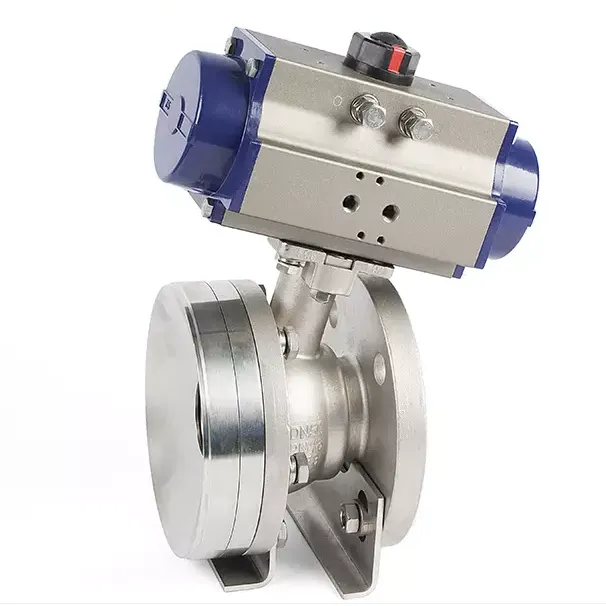
Design & Operational Principle
Inclined stem ball valves feature an angled stem that connects to a rotating ball with a bore. When the valve is actuated, the stem rotates the ball 90 degrees, aligning or misaligning the bore with the flow path to open or close the valve. This design allows for quick operation and reliable sealing. The compact profile of inclined stem ball valves makes them suitable for installations where space is limited.
Key Advantages of Inclined Stem Ball Valves
-
Jam-Resistant Design: The rotational movement eliminates the need for sliding guides, reducing the risk of jamming caused by debris or crystallization. This makes them suitable for applications involving slurries or viscous fluids.
-
Fast Actuation & Reliable Operation Under Pressure: The quarter-turn operation enables rapid opening and closing, which is beneficial in systems requiring quick response times. Additionally, the design maintains reliable sealing even under high-pressure conditions.
-
Handles Slurries, High-Viscosity Fluids, and Intermittent Discharge: The robust construction and sealing mechanism allow these valves to effectively manage challenging media, including slurries and high-viscosity fluids, as well as systems with intermittent discharge requirements.
-
Low Maintenance & Easy Cleaning: The simple design with fewer moving parts results in lower maintenance needs. The absence of cavities where media can accumulate simplifies cleaning processes, enhancing overall system hygiene.
Potential Limitations
While inclined stem ball valves offer several advantages, they may not be the optimal choice for applications requiring complete drainage or zero-residue discharge. In such cases, top-entry discharge valves, with their vertical stem lift mechanism, may provide better performance in ensuring full evacuation of media from the system.
Head-to-Head Comparison: Critical Selection Factors
Performance Factors
| Criteria | Top-Entry Discharge Valve | Inclined Stem Ball Valve |
|---|---|---|
| Residue Elimination | Excellent; vertical lift enables full drainage with minimal dead zones. | Good; rotational motion may leave minor residue, less ideal for complete drainage. |
| Resistance to Jamming | Moderate; prone to caking in viscous or crystallizing media. | High; self-cleaning action reduces buildup, suitable for slurries and sticky media. |
| Actuation Speed & Torque | Slower; vertical movement requires more torque, especially under pressure. | Faster; quarter-turn operation with lower torque requirements. |
| Pressure Handling | Good; suitable for high-pressure applications but may require robust actuators. | Excellent; designed for high-pressure systems with reliable sealing. |
Application Suitability
| Criteria | Top-Entry Discharge Valve | Inclined Stem Ball Valve |
|---|---|---|
| Fluid Type | Ideal for clean, non-abrasive fluids requiring complete drainage. | Suitable for abrasive, viscous, or slurry-type fluids. |
| Process Conditions | Performs well under stable temperature and pressure conditions. | Handles variable temperatures and pressures effectively. |
| Cycle Frequency | Best for processes with infrequent cycling. | Designed for frequent cycling and rapid operation. |
Maintenance & Reliability
| Criteria | Top-Entry Discharge Valve | Inclined Stem Ball Valve |
|---|---|---|
| Ease of Cleaning | Challenging; guide rails can accumulate residue, requiring disassembly. | Easier; design minimizes residue buildup, allowing for simpler cleaning. |
| Long-Term Durability | Durable; however, maintenance is more intensive due to potential buildup. | High durability with lower maintenance needs. |
| Serviceability | Moderate; maintenance may require system shutdown and disassembly. | High; designed for in-line maintenance without removing from the system. |
When to Choose a Top-Entry Discharge Valve
Top-entry discharge valves are particularly advantageous in applications where complete drainage, high purity, and minimal residue are critical.
1. Full Drainage Is Critical
The vertical stem lift mechanism of top-entry valves allows for a straight-through flow path, ensuring that vessels can be completely emptied with minimal dead zones. This design is essential in processes where residual material can lead to contamination or affect subsequent batches.
2. Handling Crystallizing Media
In processes involving crystallization, such as in the production of high-purity chemicals or pharmaceuticals, top-entry valves are preferred due to their ability to prevent crystal buildup within the valve body. The design facilitates smooth flow and reduces the risk of blockages caused by crystallized materials.
3. Low Risk of Caking
For applications dealing with clean, low-viscosity fluids that do not tend to stick or cake, top-entry valves offer reliable performance with minimal maintenance. Their design minimizes areas where materials can accumulate, reducing the likelihood of operational issues.
Common Applications
-
Reactor Bottoms: Ensuring complete drainage to prevent contamination between batches.
-
Crystallizers: Managing crystallizing substances effectively without blockages.
-
Drying Towers: Facilitating the removal of residual materials to maintain product quality.
When to Choose an Inclined Stem Ball Valve
Inclined stem ball valves are ideal for demanding discharge applications where media properties and operational conditions challenge traditional valve designs.
1. Handling Slurries and Sticky Fluids
The rotational movement of the ball in inclined stem ball valves minimizes areas where materials can accumulate, making them suitable for handling slurries, viscous fluids, and media prone to causing blockages. This design reduces the risk of jamming and ensures consistent operation.
2. Avoiding Jamming Is Critical
In processes where valve jamming can lead to significant downtime or safety hazards, inclined stem ball valves offer a reliable solution. Their design eliminates sliding guides, reducing friction points and the potential for material buildup that can cause sticking.
3. Fast Cycling and Pressurized Systems
Inclined stem ball valves are well-suited for applications requiring rapid opening and closing cycles. Their quarter-turn operation allows for quick actuation, and they maintain reliable sealing under varying pressure conditions, making them suitable for pressurized systems.
Common Applications
-
Slurry Discharge Systems: Handling abrasive and particulate-laden fluids.
-
Viscous Fluid Processing: Managing thick, sticky substances that can cause blockages in other valve types.
-
High-Frequency Operations: Processes requiring frequent valve cycling without compromising performance.
-
Pressurized Environments: Systems operating under high pressure where reliable sealing is essential.
Conclusion
In discharge applications where performance, reliability, and maintenance matter, choosing the right valve type is crucial. Top-entry discharge valves excel in processes demanding full drainage, high cleanliness, and effective handling of crystallizing media, making them ideal for reactors, crystallizers, and drying systems. However, their sensitivity to caking and slower actuation under pressure can be limiting. On the other hand, inclined stem ball valves offer a robust alternative for sticky, slurry-laden, or pressurized systems, delivering fast, jam-resistant performance with easier maintenance. Engineers should base their selection on media characteristics, cycle frequency, pressure conditions, and cleaning requirements to ensure long-term efficiency and minimal downtime. For expert guidance and custom valve solutions, contact a professional valve manufacturer specializing in industrial discharge systems.
