
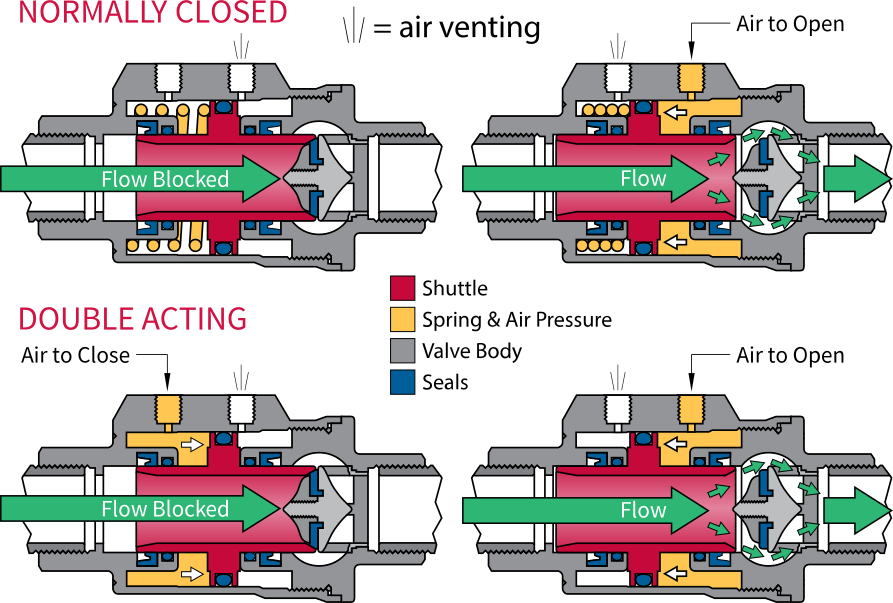
Coaxial valves are 2-position valves that can be pneumatically or electrically actuated. The electric versions use an electromagnetic coil vs. a spring, similar to solenoid valves. The pneumatic versions use air pressure vs. a spring (spring return), or air pressure in both directions (double acting).
Coaxial valves use a shuttle type obstructer that the media travels through when open. This shuttle moves to one position or the other to perform its function, either on/off or diverting flow to the proper outlet. Coaxial valves have a much larger flow path compared to solenoid valves, but still do not come close to a full port valve. That being true, there is again a limit on flow and an increase in pressure drop.
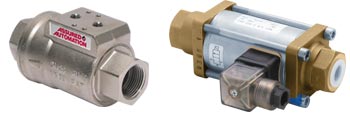
For many on/off applications coaxial valves would make a good substitute for a ball valve. Coaxial valves will provide a smaller valve that operates more quickly while a ball valve will have higher flow rates with lower pressure drops.
