
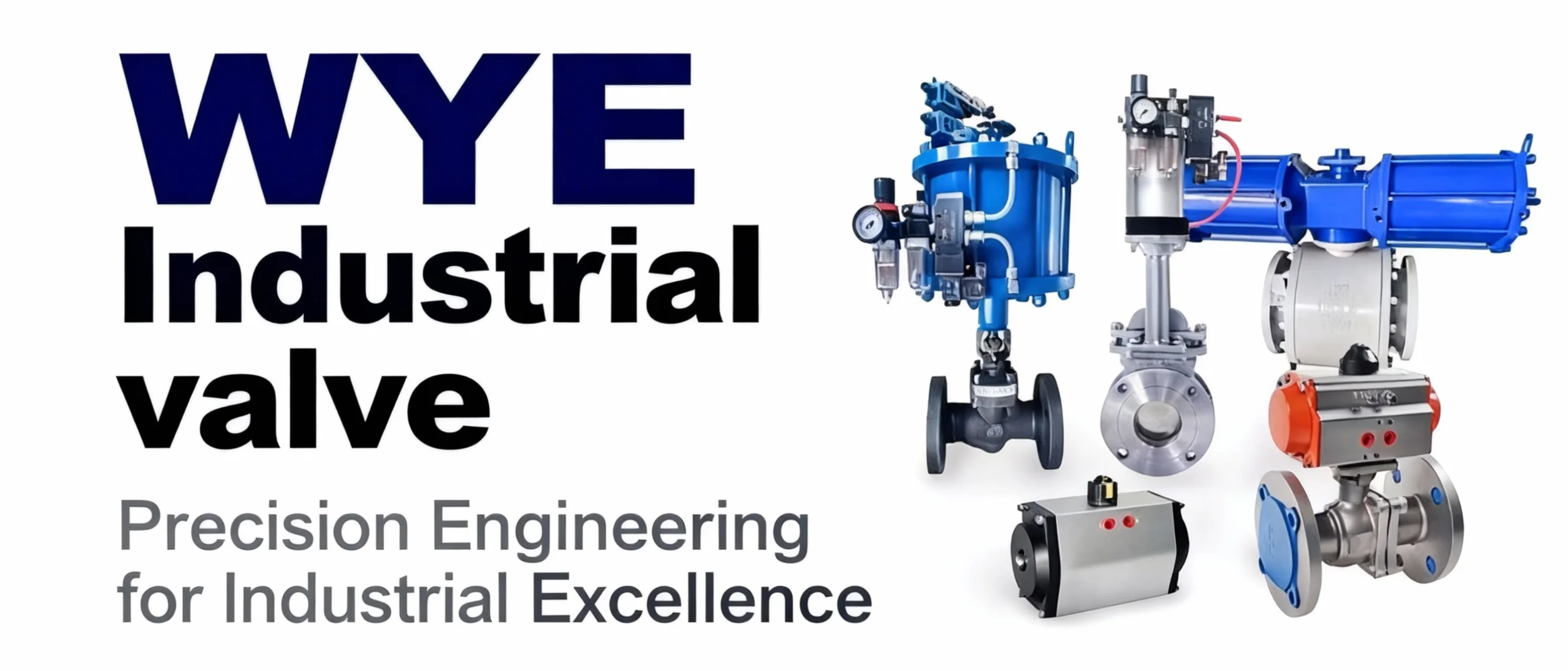
In the realm of industrial automation, there is a component that often goes unnoticed yet holds the key to controlling fluid transfer and pressure regulation across entire systems—the actuator valve. From the high-temperature, high-pressure pipelines of the petrochemical industry to the stable water supply in municipal infrastructure, and even the precise control in intelligent manufacturing, the actuator valve is an indispensable cornerstone. Today, we will take a comprehensive deep dive into this “invisible hero” of industry and explore why it has become the “core controller” of automated systems.
First, let’s clarify the basics: What exactly is an actuator valve? Simply put, an actuator valve is an integrated control device consisting of an actuator and a valve. The valve is responsible for directly shutting off or regulating the flow of fluids (liquids, gases, powders, etc.), while the actuator receives control signals to drive the valve to complete opening, closing, or regulating actions. Compared to traditional manual valves, the biggest advantage of an actuator valve lies in its ability to achieve remote control and automated operation, eliminating the need for on-site manual monitoring and significantly improving the efficiency and safety of industrial production.
You might wonder, with so many types of valves available on the market, why does the actuator valve stand out? This boils down to the core characteristics of the actuator valve—precision control and strong adaptability. Different industrial scenarios have vastly different requirements for valves. For example, in the chemical industry, valves must resist corrosion from strong acids and alkalis; in the power industry, they need to withstand high temperatures and pressures; in the food and pharmaceutical industries, they require seamless cleaning and compliance with hygiene standards. By pairing different types of actuators (such as pneumatic, electric, or hydraulic actuators) with various valve bodies (such as ball valves, butterfly valves, gate valves, or globe valves), the actuator valve can accurately match the needs of any scenario. For instance, a pneumatic actuator valve offers fast response speeds, making it ideal for high-frequency on-off applications; an electric actuator valve provides high control precision, suitable for scenarios requiring accurate flow regulation; and a hydraulic actuator valve delivers large thrust, perfect for controlling valves in large-diameter, high-pressure environments.
Next, let’s discuss the practical applications of the actuator valve. It’s safe to say that wherever there is a need for fluid control, you’ll find an actuator valve. In the petrochemical industry, actuator valves are widely used in pipelines for crude oil extraction and refining processes, regulating the flow and pressure of crude oil, natural gas, and chemical raw materials. Their stability directly impacts the safe operation of the entire production line—any failure of an actuator valve could lead to serious accidents such as leaks or explosions. Therefore, actuator valves used in such scenarios must possess extremely high reliability and explosion-proof performance.
In the field of municipal engineering, the actuator valve serves as the “nerve endings” of water supply, heating, and sewage treatment systems. At water treatment plants, actuator valves regulate water intake and chemical dosing to ensure water quality meets standards. In sewage treatment plants, actuator valves control the switching of water flow in various treatment stages, guaranteeing treatment efficiency. In central heating systems, actuator valves can automatically adjust hot water flow based on indoor temperatures, achieving a balance between energy conservation and comfort.
In intelligent manufacturing and new energy sectors, the role of the actuator valve has become increasingly critical. Take the production of new energy vehicle batteries as an example: the filling of battery electrolytes requires extremely high precision. Even a slight deviation in flow can affect the performance and safety of the battery. This is where high-precision electric actuator valves come into play, enabling accurate quantitative filling of electrolytes. In the semiconductor manufacturing industry, the transportation of ultra-high-purity gases demands extremely strict sealing performance from valves. Actuator valves, with their special sealing materials and structural designs, can effectively prevent gas leaks, ensuring the quality of semiconductor chip production. Additionally, in high-end equipment fields such as aerospace and shipbuilding, actuator valves must meet special requirements such as lightweight design, vibration resistance, and tolerance to extreme environments. The technical level of actuator valves directly reflects a country’s industrial manufacturing capabilities.
Now, let’s turn our attention to the daily maintenance of actuator valves. Many industrial failures stem from improper equipment maintenance, and actuator valves are no exception. Due to long-term contact with various fluids, the valve body and seals of an actuator valve are prone to wear and corrosion, while the transmission components of the actuator may seize up due to dried lubricant or dust accumulation. Therefore, regularly inspecting the sealing performance of the actuator valve, the operating status of the actuator, replacing worn parts in a timely manner, and adding lubricant are key to extending the service life of the actuator valve and ensuring its stable operation. Notably, with the development of the Internet of Things (IoT), many intelligent actuator valves now come equipped with condition monitoring functions, which can real-time feedback operational data (such as on-off status, flow rate, pressure, and fault warnings). This transforms maintenance from “passive repair” to “proactive prediction,” further reducing maintenance costs.
Looking to the future, with the in-depth advancement of Industry 4.0, actuator valves are evolving toward greater intelligence, efficiency, and energy conservation. On one hand, their intelligence level will continue to improve—actuator valves will integrate deeply with industrial Internet, big data, and artificial intelligence to achieve self-diagnosis, self-calibration, and adaptive regulation, becoming “smart nodes” in smart factories. On the other hand, energy conservation will become a key trend. Especially for electric actuator valves, optimizing motor structures and adopting high-efficiency, energy-saving components will further reduce energy consumption. Furthermore, against the backdrop of stricter environmental policies, actuator valves will place greater emphasis on environmental performance, using degradable and pollution-free materials to minimize environmental impact.
In summary, although the actuator valve is just a component in industrial systems, it serves as a crucial link between control systems and execution terminals, making it an indispensable core equipment in industrial automation. From basic fluid control to high-end intelligent manufacturing, the actuator valve supports the stable operation of various industries with its precision and reliability. If your industry involves fluid control, it’s worth paying more attention to the selection and maintenance of actuator valves—a suitable actuator valve can bring unexpected improvements in production efficiency and safety. Have you encountered any problems when using actuator valves in practice? Feel free to leave a comment and share your experiences!
