501D Top-Guided Single-Seat Control Valve
Reliable Flow and Pressure Control for Demanding Process Conditions
The Wye 501D Top-Guided Single-Seat Control Valve is designed for precise flow and pressure regulation in industrial process systems.
Its top-guided, unbalanced single-seat design combines a streamlined S-shaped flow passage with multiple trim options, allowing the valve to be configured for different pressure-drop, flow, noise and cavitation conditions.
With tight shutoff, stable control characteristics and a wide range of material and temperature options, the 501D provides a flexible control solution for demanding process applications.
DN15–DN300 | NPS 1/2″–12″
PN1.6–PN6.4 MPa | ASME Class 150–300
Temperature options: -196°C to +550°C
[Request a Quote]
[Send Your Operating Conditions]
一、Product Overview
1.1 What Is the 501D Control Valve?
The 501D is a top-guided, unbalanced single-seat control valve developed for accurate regulation of flow and pressure.
Its structure is designed to provide stable throttling performance, reliable shutoff and flexible configuration for different industrial operating conditions.
The valve can be supplied with different trim designs, actuator options, material combinations and temperature configurations according to actual process requirements. The catalogue also shows standard, cage-guided and improved single-seat structures for different pressure and flow conditions.
1.2 What Problems Can the 501D Help Solve?
A control valve should not be selected only by pipe size.
Changes in pressure drop, fluid velocity, temperature and process medium can result in:
- Unstable flow control
- Excessive flow velocity
- High aerodynamic noise
- Cavitation
- Valve trim wear
- Poor shutoff performance
- Frequent maintenance
The 501D can be configured with different internal structures to better match these operating conditions.
二、Process Control Solutions
2.1 Stable Flow and Pressure Control
As fluid passes through a control valve, the flow velocity and pressure change continuously around the throttling area.
For this reason, different process conditions require different valve trim configurations.
The 501D can be selected according to:
- Required flow coefficient
- Inlet pressure
- Outlet pressure
- Differential pressure
- Flow rate
- Medium
- Temperature
- Control accuracy
- Shutoff requirements
Instead of applying one standard trim to every application, the 501D platform allows the internal structure to be matched to the actual process conditions.
2.2 High Flow Velocity and Noise Control
High fluid velocity through the valve may generate excessive aerodynamic noise and create severe loading on the valve trim.
For such conditions, the 501D can be configured with a multi-stage cage structure.
The catalogue describes this structure as dividing the pressure drop through multiple stages, helping reduce the concentration of pressure reduction at a single throttling point.
Customer Benefits
- Better management of high flow velocity
- Multi-stage pressure reduction
- Reduced pressure-drop concentration
- Improved operating stability
- Configuration according to actual working conditions
2.3 Cavitation Control
Large pressure drops may cause the fluid pressure inside the valve to fall significantly, creating cavitation risk.
For these conditions, the 501D can use a multi-stage pressure-reducing trim.
The pressure drop is distributed through several stages instead of being concentrated at one location.
This helps reduce the risk of severe cavitation and excessive trim damage.
Suitable Conditions
- Large differential pressure
- High fluid velocity
- Cavitation-prone service
- High-pressure liquid applications
- Applications requiring staged pressure reduction
三、Valve Structure and Trim Options
3.1 Top-Guided Single-Seat Design
The 501D uses a top-guided, unbalanced single-seat plunger-type trim.
This configuration is designed to provide accurate regulation while maintaining reliable shutoff performance.
3.2 Standard Single-Seat Structure
The standard single-seat configuration is suitable for applications where the pressure difference before and after the valve is relatively moderate.
It can also be used in services where small amounts of soft impurities may be present.
3.3 Cage-Guided Single-Seat Structure
The cage-guided configuration is designed to improve dynamic stability.
It can also be used where noise reduction and more stable fluid control are required.
3.4 Improved Single-Seat Structure
The improved single-seat structure is designed for relatively higher differential-pressure conditions.
The catalogue shows a double-guided arrangement intended to improve structural stability under more demanding operating conditions.
四、Temperature and Media Options
4.1 High-Temperature Configuration
The 501D can be supplied in a high-temperature configuration for media such as:
- Steam
- Hot oil
- Other high-temperature process fluids
The catalogue shows high-temperature configurations covering approximately:
+250°C to +550°C
4.2 Low-Temperature Configuration
Low-temperature versions are available for applications involving media such as:
- Liquid nitrogen
- Low-temperature process fluids
- Cryogenic service
The catalogue shows low-temperature configurations down to approximately:
-196°C
4.3 Bellows Seal Configuration
A bellows construction is also available.
According to the catalogue, this configuration can be considered for media including:
- Flammable gases
- Explosive gases
- Toxic fluids
- Corrosive media
The appropriate configuration should be selected according to the actual medium, pressure and temperature conditions.
五、Technical Specifications
5.1 Main Technical Parameters
| Parameter | 501D Specification |
|---|---|
| Valve Type | Top-guided single-seat control valve |
| Body Form | Straight S-type cast body |
| Trim | Unbalanced top-guided single-seat plunger |
| Nominal Size | DN15–DN300 |
| NPS | 1/2″–12″ |
| Nominal Pressure | PN1.6–PN6.4 MPa |
| ASME Pressure Class | Class 150–300 |
| Temperature Range | -196°C to +550°C depending on configuration |
| End Connection | Flanged, welded or threaded |
| Face-to-Face Standard | IEC 60534 |
| Packing | PTFE or flexible graphite |
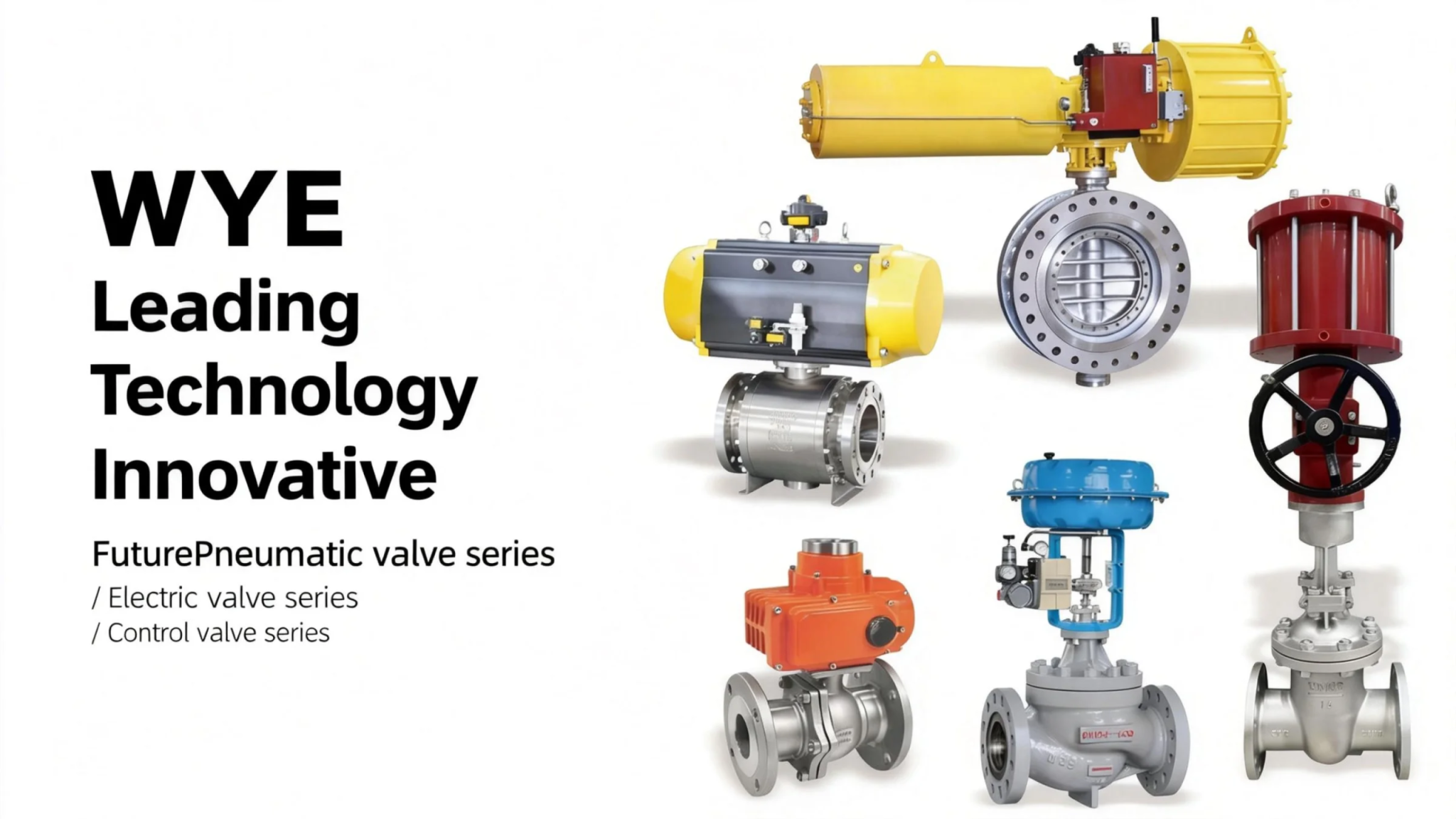
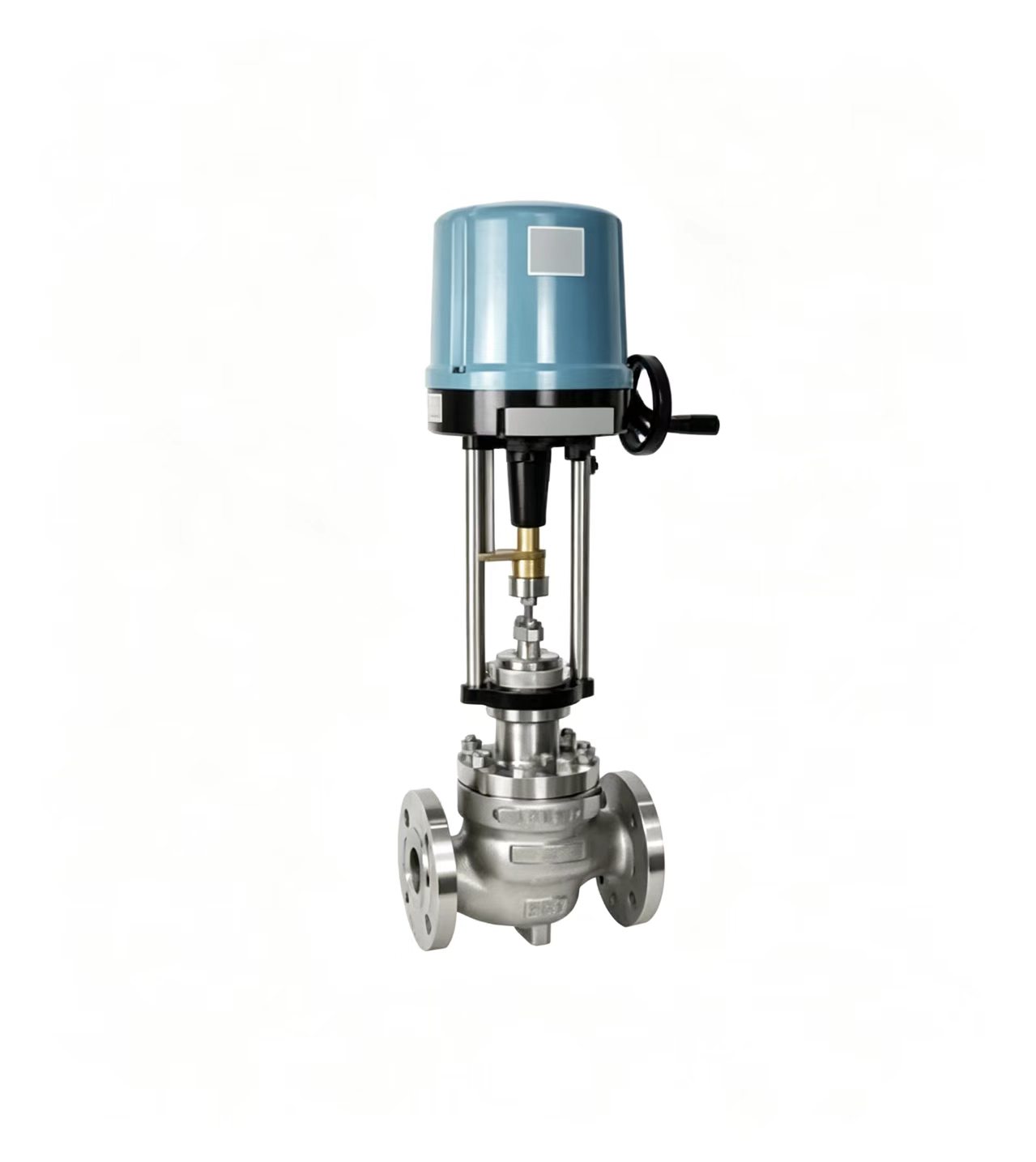
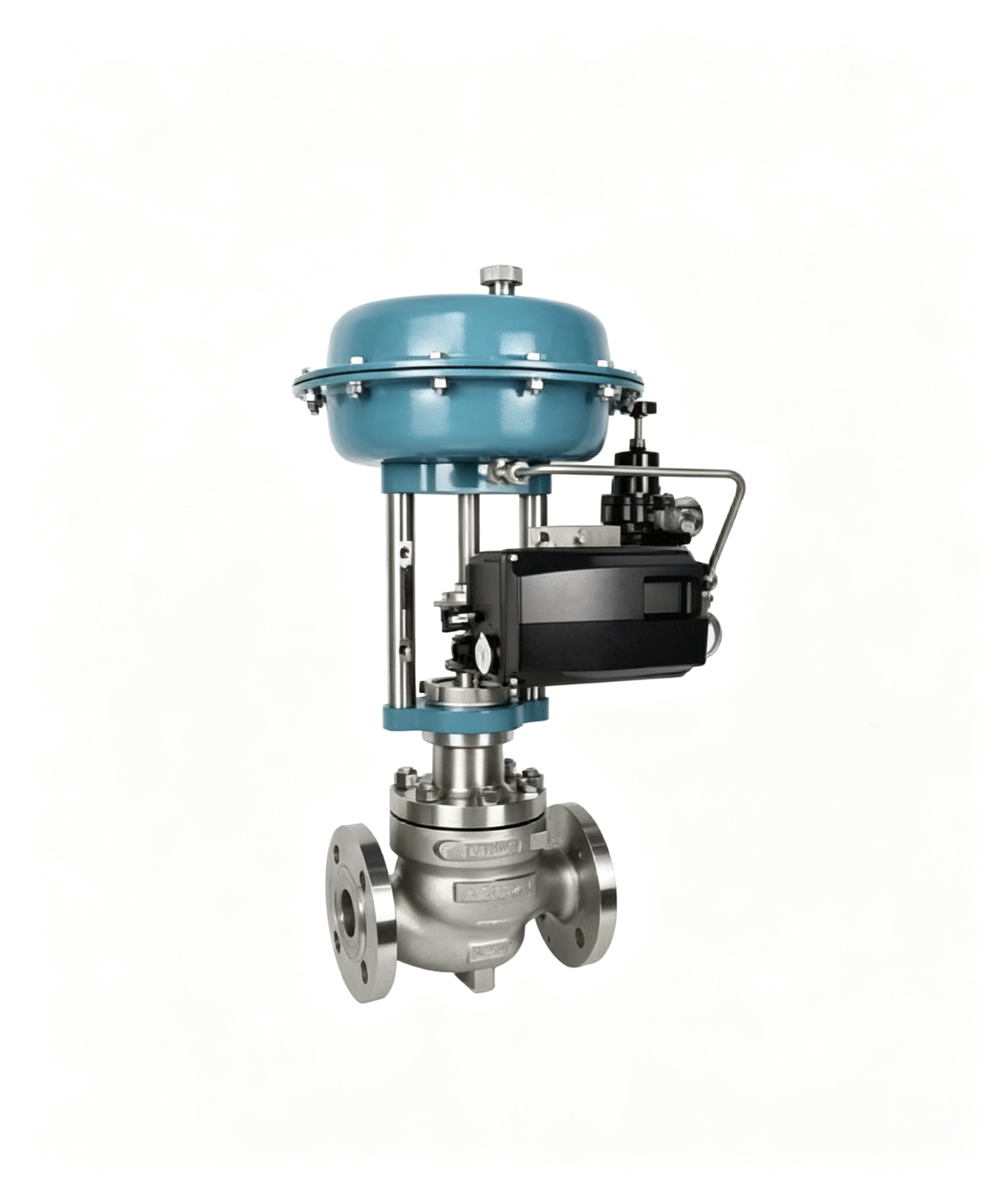
| Actuation | Pneumatic or electric |
| Flow Characteristics | Equal percentage or linear |
| Adjustable Range | 50:1 |
The catalogue also provides Cv selections according to valve size and trim diameter.
六、Body and Trim Materials
6.1 Body Materials
The 501D is available with carbon steel and stainless steel body options.
Typical catalogue materials include:
Carbon Steel
- WCB
- LCB
- WC9
Stainless Steel
- CF8
- CF8M
- CF3M
6.2 Trim Materials
Trim material options shown in the catalogue include:
- 304 stainless steel
- 316 stainless steel
- 316L stainless steel
Material selection should be based on medium, temperature, corrosion conditions and pressure requirements.
6.3 Packing and Sealing Materials
Available sealing and packing materials include:
- PTFE
- Flexible graphite
- Metal/graphite wound gasket
Special material configurations can also be selected according to operating conditions.
七、Actuator Options
7.1 Pneumatic Actuator
The 501D can be equipped with pneumatic actuators for regulating or switching applications.
When fitted with a positioner, the control signal can be configured for:
4–20 mA DC
Spring-return actuator configurations are also available.
7.2 Electric Actuator
Electric actuator options are available for automatic regulating service.
The catalogue includes electric actuator configurations using:
4–20 mA DC input control
7.3 Optional Accessories
Available accessory options may include:
- Valve positioner
- Solenoid valve
- Handwheel
- Travel switch
- Lock valve
- Heater
The final actuator configuration should be selected according to valve size, differential pressure, required thrust and control function.
八、Why Choose the Wye 501D?
8.1 Multiple Trim Configurations
One valve platform can be configured for different pressure-drop and flow conditions.
8.2 Wide Temperature Range
Available configurations cover both cryogenic and high-temperature applications.
8.3 Flexible Actuation Options
Pneumatic and electric actuator configurations are available.
8.4 Multiple Material Options
Carbon steel, stainless steel and different trim materials can be selected according to the process medium.
8.5 Application-Based Valve Selection
The valve can be configured according to the customer’s actual process data instead of being selected only by nominal pipe size.
九、Valve Selection Information
9.1 Information Required for Selection
To recommend the correct 501D configuration, please provide:
- Process medium
- Inlet pressure
- Outlet pressure
- Differential pressure
- Minimum flow rate
- Normal flow rate
- Maximum flow rate
- Operating temperature
- Pipe size
- Required Cv, if available
- Body material requirement
- Trim material requirement
- Pneumatic or electric actuator
- Required control signal
- Shutoff requirement
9.2 What We Can Configure for You
Based on the operating conditions, the valve can be configured with the appropriate:
- Valve size
- Cv
- Trim structure
- Pressure class
- Body material
- Trim material
- Packing
- Temperature configuration
- Pneumatic or electric actuator
- Accessories