Polishing Process of GHY43F Sanitary Clamped Direct-Acting Pressure Reducing Valve
Polishing can improve the flatness and brightness of the surface of sanitary stainless steel pipes, greatly enhancing their quality and service efficiency. There are three popular polishing technologies currently, which are introduced as follows:
- Chemical Polishing Advantages: Low investment in processing equipment, suitable for complex parts, fast processing speed, high efficiency, and good corrosion resistance of sanitary stainless steel pipes. Disadvantages: Low brightness, gas overflow requiring ventilation equipment, and difficulty in heating. It is suitable for small-batch complex parts and small parts with low brightness requirements.
- Electrochemical Polishing Advantages: Long-lasting mirror luster, stable process, low pollution, low cost, and good corrosion resistance. Disadvantages: High requirements for anti-pollution, high one-time investment in processing equipment; tooling and auxiliary electrodes are needed for complex parts, and cooling facilities are required for mass production. It is suitable for mass production, mainly applied to export products and products with tolerance requirements, featuring stable processing technology and simple operation.
- Mechanical Polishing Advantages: Good flatness and high brightness of processed parts. Disadvantages: High labor intensity, serious pollution, inability to process complex parts, inconsistent luster, short luster retention time, easy dulling and rusting. It is suitable for simple single pieces and medium & small-sized products.
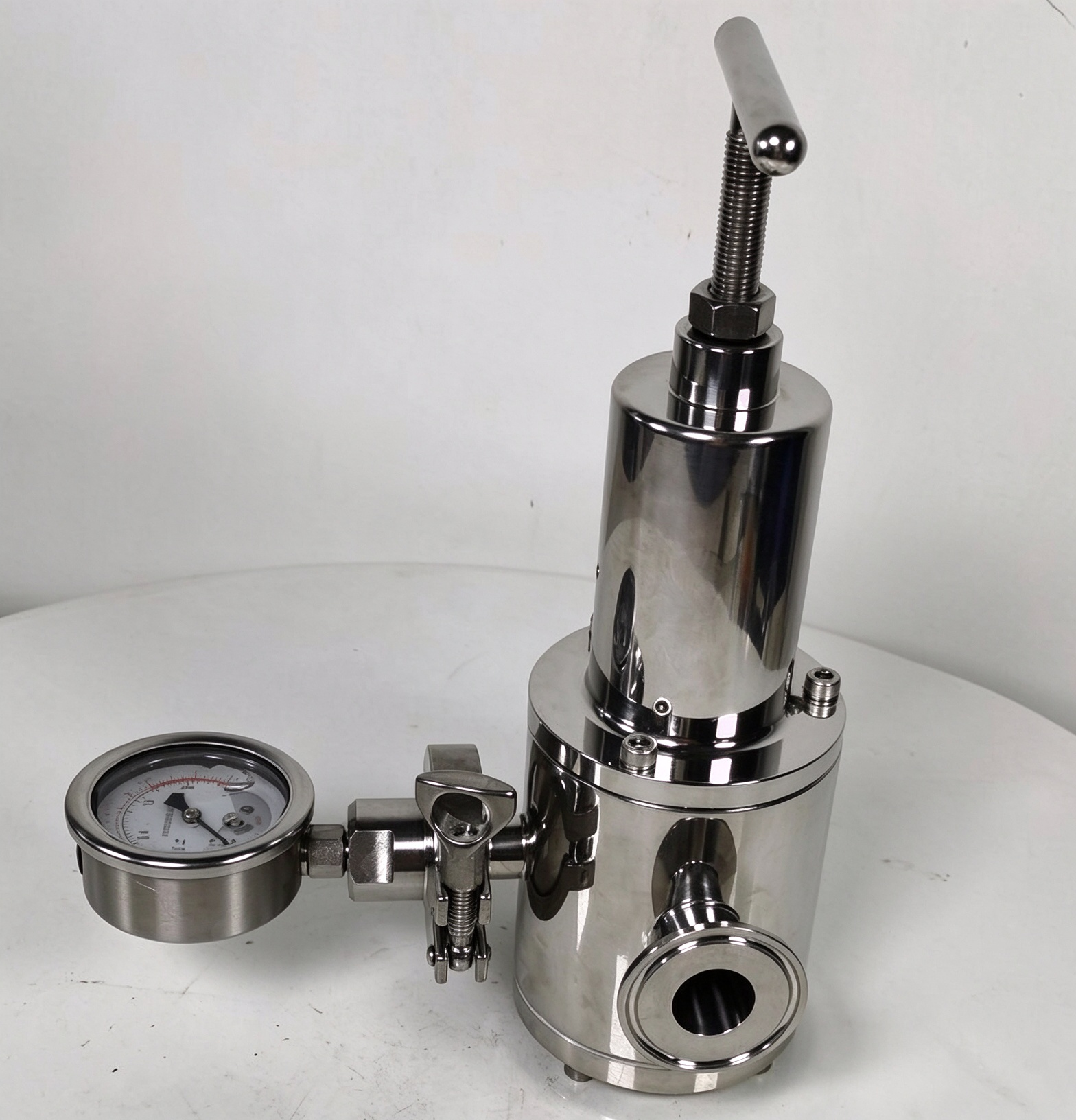
GHY43F Sanitary Clamped Direct-Acting Pressure Reducing Valve
Sanitary pressure reducing valves are widely used in high-cleanliness fields such as food, pharmaceutical, dairy, clean rooms and bioengineering. Valve Specifications: DN15~DN50mm (1/2″~2″) Connection Types: Clamped, threaded, welded, flanged Body Material: Stainless Steel SS304, SS316L Inlet Pressure: ≤1.2 MPa Outlet Pressure: 0~0.8 MPa Applicable Temperature: ≤180℃ Applicable Media: Steam, air, purified water, etc.