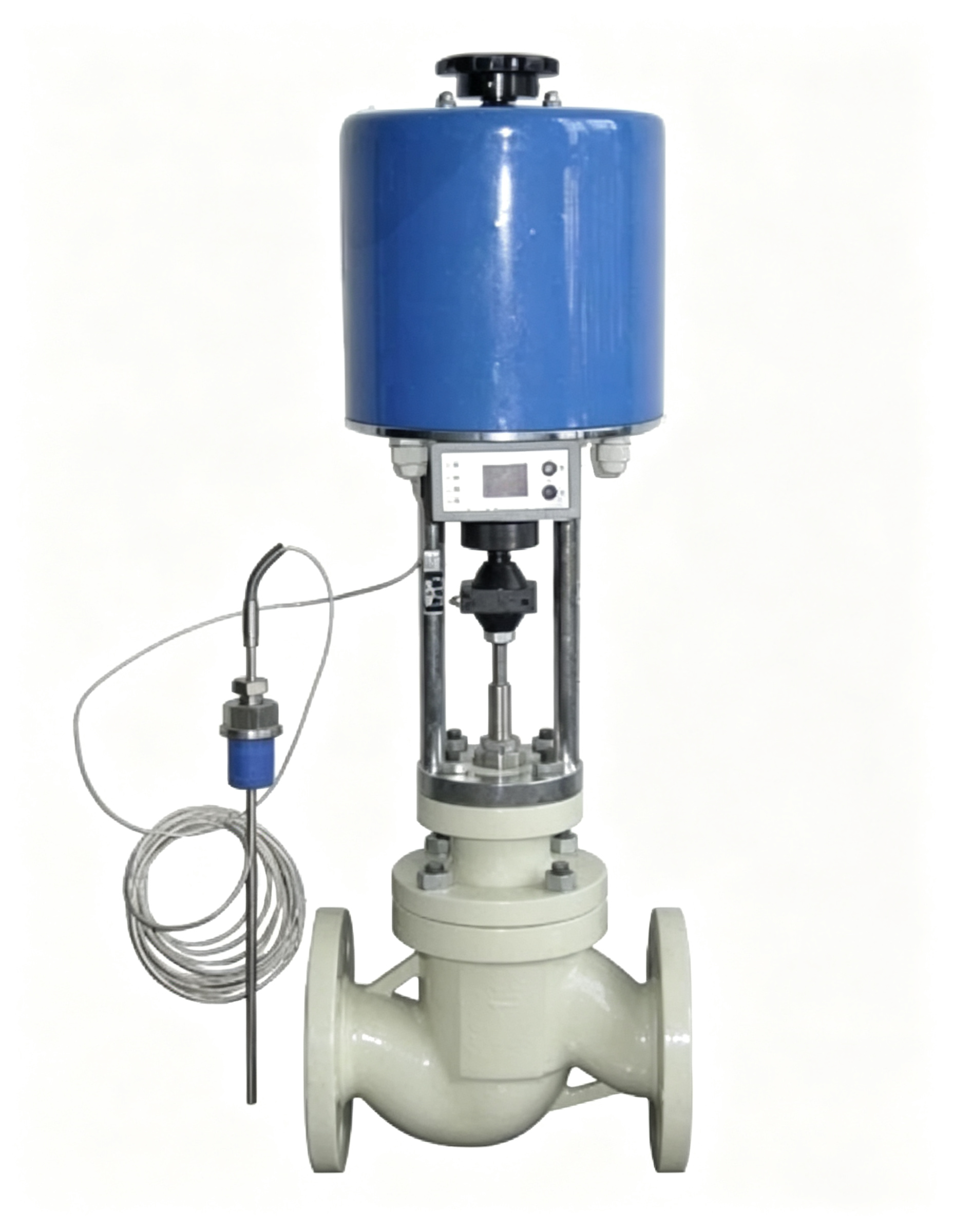
1. Product Overview
1.1 Product Description
The ZZWPE Self-Operated Temperature Control Valve is designed for automatic temperature regulation in industrial process systems.
The valve uses the thermal expansion of the temperature-sensing medium to generate the force required for regulation. When the temperature of the controlled medium changes, the temperature-sensing system responds automatically and adjusts the valve opening to regulate the flow of the heating or cooling medium.
The ZZWPE provides automatic temperature control without requiring an external energy source for normal regulating operation, making it suitable for applications where simple system configuration and stable temperature regulation are required.
1.2 Customer Value
For customers, the ZZWPE provides a practical way to maintain more stable process temperatures while reducing dependence on additional control equipment.
Automatic regulation helps reduce frequent manual adjustment, while stable temperature control can support more consistent process conditions and improve the reliability of heating and cooling systems.
2. Product Features
2.1 Self-Operated Temperature Control
The ZZWPE performs temperature regulation automatically according to changes detected by the temperature-sensing element.
No additional external energy source is required for normal regulating operation.
2.2 Automatic Response to Temperature Changes
When the controlled temperature changes, the sensing system automatically produces a corresponding regulating action.
The valve opening is adjusted continuously to control the amount of heating or cooling medium passing through the valve.
2.3 Adjustable Temperature Setting
The required temperature can be set according to actual process requirements.
This allows the valve to be configured for different temperature-control applications.
2.4 Simple Control Arrangement
Temperature sensing and valve regulation are integrated into the self-operated system.
For customers, this can reduce the need for additional controllers, power supplies and auxiliary control components in suitable applications.
2.5 Stable Process Temperature
Continuous automatic regulation helps reduce temperature fluctuations and maintain the process closer to the required operating temperature.
This is particularly useful where temperature stability affects process consistency or equipment operation.
3. Working Principle
3.1 Temperature Detection
The temperature-sensing element is installed at the point where process temperature needs to be controlled.
Changes in temperature cause the sensing medium inside the temperature package to expand or contract.
3.2 Signal Transmission
The resulting change is transmitted through the temperature-sensing system to the actuator.
The actuator converts this temperature response into mechanical valve movement.
3.3 Automatic Flow Adjustment
The valve plug changes position automatically, increasing or decreasing the flow of the heating or cooling medium.
3.4 Temperature Stabilization
As the flow changes, the amount of heat supplied to or removed from the process is adjusted.
The valve continuously responds to temperature changes, helping maintain the controlled temperature close to the required setting.
4. Technical Parameters
4.1 Basic Specifications
| Parameter | Specification |
|---|---|
| Product Model | ZZWPE |
| Product Type | Self-Operated Temperature Control Valve |
| Nominal Size | DN15–DN150 |
| Nominal Pressure | PN1.6 / 4.0 MPa |
| Temperature Setting Range | 0–270°C |
| Flow Characteristic | Linear |
| Connection | Flange |
| Valve Body Material | Cast Steel / Stainless Steel |
| Valve Trim Material | Stainless Steel |
| Packing | PTFE / Flexible Graphite |
The ZZWPE is available in different configurations according to valve size, temperature range and operating requirements.
4.2 Temperature Setting Range
The series provides different temperature-setting sections within the overall 0–270°C range.
The appropriate setting range should be selected according to the actual operating temperature of the process.
4.3 Valve Selection
Correct valve sizing should consider:
- Required flow rate
- Heating or cooling medium
- Inlet and outlet pressure
- Required control temperature
- Operating temperature range
- Process medium
- Material compatibility
Matching these parameters correctly helps achieve more stable temperature-control performance.
5. Typical Applications
5.1 Heat Exchangers
The ZZWPE can regulate heating or cooling medium flow according to outlet temperature changes.
This helps maintain more consistent heat-exchanger operating conditions.
5.2 Heating Systems
In heating applications, the valve automatically adjusts the heating-medium flow according to temperature demand.
This can help reduce overheating and unnecessary manual adjustment.
5.3 Cooling Systems
The valve can also regulate cooling-medium flow to maintain the required process temperature.
5.4 Industrial Process Temperature Control
The ZZWPE is suitable for industrial equipment and process systems where automatic temperature regulation is required without a complex external control arrangement.
6. Operational Advantages
6.1 Reduced Manual Adjustment
Once the required temperature is set, the valve automatically responds to temperature changes during normal operation.
This reduces the need for frequent operator intervention.
6.2 More Stable Process Conditions
Automatic regulation helps reduce temperature fluctuations, providing more consistent conditions for temperature-sensitive processes and equipment.
6.3 Simplified System Configuration
The self-operated design integrates sensing and regulating functions.
For suitable applications, this can reduce the number of external control components required.
6.4 Lower Dependence on External Energy
Normal regulating operation does not require an additional electrical or pneumatic energy source.
This makes the ZZWPE suitable for applications where an independent mechanical temperature-control solution is preferred.
6.5 Flexible Industrial Application
Different valve sizes, temperature ranges and material configurations allow the ZZWPE to be selected according to different heating, cooling and industrial process requirements.