Introduction
This article takes an in depth look at PVC Ball Valves.
You will learn more about topics such as:
- What is a PVC Ball Valve?
- Types of PVC Ball Valves
- PVC Ball Valve Structure
- Benefits of PVC Ball Valves
- And much more…
Chapter One – What is a Ball Valve?
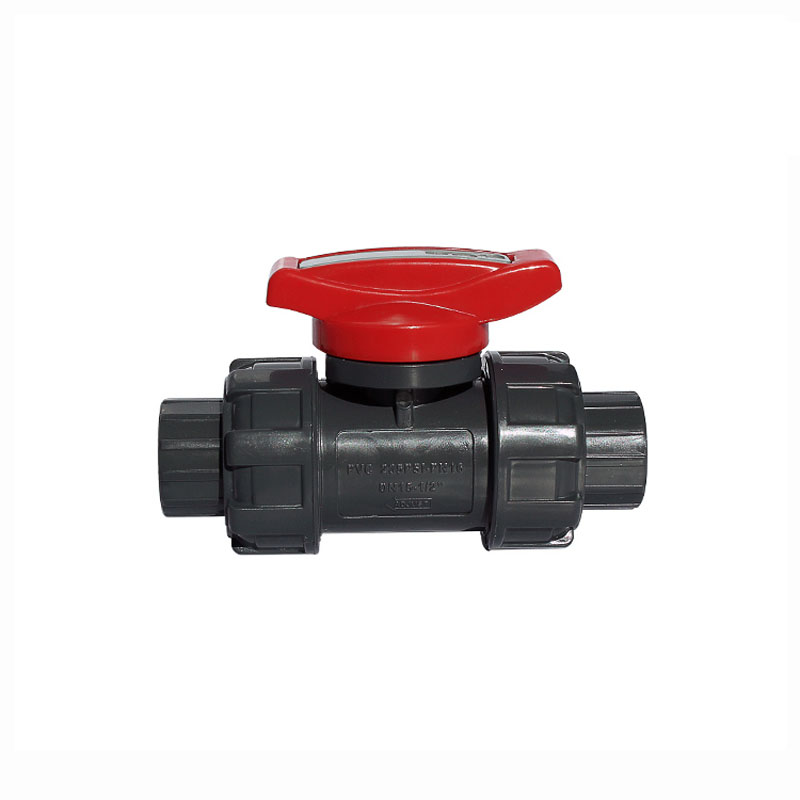
A PVC, or polyvinyl chloride, ball valve is a plastic valve used for starting and stopping the flow of fluids, featuring a rotary ball with a bore. Turning this ball a quarter turn is sufficient to halt fluid movement. These valves are extremely durable, economically viable, and ideal for controlling a variety of substances, including water, air, corrosive chemicals, acids, and bases. PVC ball valves are notably resistant to low temperatures and pressure while maintaining relatively lower mechanical strength. Like all ball valves, they function by rotating the ball 90° to cease flow.
The operation of PVC ball valves relies on a central rotating component known as the rotary ball. A stem atop this ball allows for manual or automated adjustment, determined by the valve’s design. When the valve’s handle is aligned with the pipeline, it remains open; conversely, the flow is stopped when the handle is perpendicular to the pipe.
Constructed from non-flammable plastic, PVC ball valves can endure temperatures ranging from -14°C to -140°C. They deliver comparable performance to traditional ball valves, featuring a lightweight structure, compact form, straightforward installation, and the adaptability to suit various application needs.
Chapter Two – What are the different types of PVC ball valves?
PVC ball valves come in various types, each tailored for specific industrial, commercial, or residential applications involving fluid control and pipeline management. These industrial valves are categorized based on essential factors such as the number of ports, seat types, body construction, ball accessibility, and bore size. Selecting the appropriate PVC ball valve type depends on the unique requirements of your piping system—including operating pressure, pipe diameter, fluid temperature, number of connection ports, end connectors, flow direction, and the overall system configuration.
PVC (polyvinyl chloride) ball valves are manufactured from a vinyl resin, which is a thermoplastic material known for its versatility and chemical resistance in plumbing and fluid handling systems. Like all high-performance thermoplastics, PVC is an environmentally friendly, cost-effective plastic that can be melted and reshaped several times, providing economical value in sustainable manufacturing. In addition to its wide use in PVC ball valve production, PVC is the industry standard for piping and fittings due to its corrosion resistance, high strength-to-weight ratio, and long service life.
PVC Ball Valve Types
Automatic Valves
Automatic PVC ball valves are available in both two-way and three-way configurations. These valves utilize a pneumatic or electric actuator, making them ideal for automated process control in water treatment, chemical dosing, irrigation systems, and industrial fluid transfer. With the ability for remote control and integration into advanced process automation, automatic actuated PVC ball valves enable precise regulation of fluid flow, optimize system efficiency, and reduce the need for manual operation. Their robust design supports a wide range of media—including potable water, compressed air, corrosive chemicals, gas, and oil.
Check Valves
PVC ball check valves prevent system backflow—a critical function in filtration, wastewater management, and pump systems. By automatically releasing excess pressure and stopping reverse flow, these non-return valves are essential for protecting equipment, maintaining system integrity, and preventing contamination. Trunnion-mounted check valves are common in demanding environments such as chemical processing, municipal water supply, and refrigeration systems. Unlike manual PVC ball valves, check valves feature a simple, stemless design for low-maintenance operation and reliable shutoff.
Flanged PVC Ball Valve
The uniqueness of flanged PVC ball valves lies in their flange-based connection type, providing easy installation, secure leak-proof joints, and fast maintenance in larger industrial piping systems. These full bore valves—available with two, three, or four ports—are engineered for high flow rates, minimal pressure loss, and compatibility with standard bolt patterns. The robust flange thickness can be specified according to the required operating pressure range. Flanged ball valves are typically joined using a bonding agent, gasket seal, or bolts, making them suitable for water distribution, wastewater systems, cooling towers, and chemical transfer lines.
Floating PVC Ball Valve
In a floating PVC ball valve, the ball is suspended within the flow stream and held in place by precision-fitted seats. This floating ball design ensures a tight seal as the ball shifts slightly under fluid pressure, allowing it to press firmly against the downstream seat for bubble-tight shutoff. The shaft attached to the ball enables swift 90-degree actuation, making floating ball valves a top choice for on/off service in plumbing systems, irrigation, pool equipment, and low-to-moderate pressure industrial applications.
Full Port PVC Ball Valve
A full port PVC ball valve features an opening in the ball that matches the inner diameter of the connecting pipeline. This full bore configuration provides maximum flow capacity, eliminates turbulence, and prevents clogging, making it ideal for bulk fluid transfer, potable water systems, and any application where preserving flow rate and minimizing pressure drop is crucial. Full port valves are especially recommended for slurry, viscous media, municipal waterworks, and chemical handling processes.
Manual Operated Valves
Among the different types of PVC ball valves, manually operated models offer a simple, cost-efficient solution with intuitive operation. The most common is the two-way PVC ball valve, actuated by turning a handle 90 degrees—parallel to open, perpendicular to close. Manual operation is practical for applications requiring occasional shutoff or flow control without automation, such as residential plumbing, aquariums, hydroponics, and small-scale industrial systems.
In manually operated three-way PVC ball valves, understanding the port and bore configuration is crucial, as T-port and L-port options govern whether you mix, divert, or block fluid flow. A quarter-turn handle lets users easily re-route media between multiple pipelines, providing flexibility in system design and maintenance.
Slip PVC Ball Valve
Slip PVC ball valves are engineered with solvent weld slip fittings at both the inlet and outlet, enabling quick, leak-proof installation for pipes up to two inches in diameter. Commonly used in residential and commercial plumbing, irrigation supply lines, and spa systems, these valves are affixed with primer and solvent cement to create a chemically bonded joint. Slip fit connections simplify retrofitting or replacing valves in tight spaces or pre-existing plastic piping networks.
Standard Port Valve
A standard port PVC ball valve features a slightly reduced bore compared to a full port. The smaller opening results in a measurable pressure drop and slightly decreased flow velocity, making standard port ball valves a dependable choice in applications where moderate flow is acceptable and cost savings are prioritized. These valves are frequently specified in general utility piping, industrial cooling circuits, and non-critical water distribution systems.
Threaded PVC Ball Valves
Threaded PVC ball valves incorporate either internal (female) or external (male) threads, making them ideal for easy, reusable connections in above-ground piping or where periodic disassembly is necessary. Highly versatile, these valves are found in pool equipment, agricultural irrigation, compressed air lines, and chemical feed systems. Their secure threaded joints make them compatible with both Schedule 40 and Schedule 80 PVC pipes, expanding their range in residential, commercial, and industrial markets.
Three Way PVC Ball Valve
Three-way PVC ball valves are designed for advanced fluid management—providing L-port or T-port configurations that allow for flow diversion, mixing, or shutoff between three distinct pathways. This makes them invaluable for process piping, chemical batching lines, recirculation loops, and multi-tank systems where flexible flow control is necessary. With a simple quarter-turn actuation, operators can change media direction or isolate sections of the pipeline, enhancing system adaptability and maintenance efficiency.
Trunnion PVC Ball Valves
Trunnion PVC ball valves incorporate a support pin at the base of the ball and stabilizing shafts at both ends, delivering superior performance under high-pressure or high-flow conditions. This trunnion-mounted design is ideal for larger diameter pipelines and industrial process systems where maintaining ball alignment and ensuring a bubble-tight seal is essential. These valves offer increased durability, lower operating torque, and extended service life in demanding applications—such as petrochemical facilities, power plants, and offshore installations.
V Port PVC Ball Valves
V port PVC ball valves are engineered with a V-shaped ball or seat, allowing for exceptionally precise flow control and modulation. By offering notched angles of 30°, 60°, or 90°, V port valves excel in throttling service and are the industry standard for process applications demanding accurate flow rates and pressures. Utilized in water treatment plants, food processing, and specialty chemical dosing, these valves are constructed from high-strength PVC to ensure longevity and consistent performance in harsh environments.
Vented Ball Valves
PVC vented ball valves are designed to automatically relieve system pressure, featuring a precision-drilled vent hole in the ball. This vent allows trapped fluids and gases to escape when the valve is closed, mitigating the risk of pressure buildup, leaks, or blowouts. Available in both internal and external venting designs, vented ball valves are commonly utilized in closed-loop systems, compressed air lines, and hazardous fluid processes where trapped pressure could create safety hazards for maintenance personnel or equipment.
Choosing the Right PVC Ball Valve for Your Application
When selecting a PVC ball valve for your system, consider key factors such as compatibility with the processed media, pressure and temperature ratings, valve size (bore diameter), port configuration, mounting options, industry certifications (NSF, ANSI, ISO), and end connection type (threaded, slip, flanged, or solvent weld). Leading manufacturers typically offer product datasheets and support to help engineers, procurement specialists, and facility managers make informed decisions. Additionally, assessing chemical resistance charts and valve actuation options (manual, pneumatic, electric) ensures long-term reliability and regulatory compliance for your specific application.
Properly chosen PVC ball valves deliver efficient fluid handling, corrosion resistance, and long service life in challenging environments—making them a go-to solution for water treatment plants, swimming pools, aquaculture facilities, food processing, agriculture, and chemical processing industries.