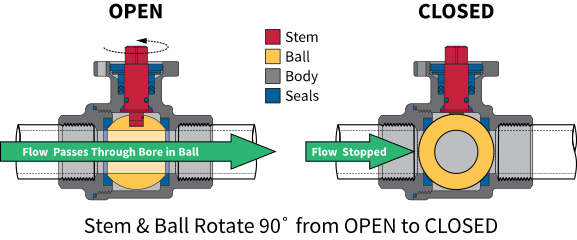
Quarter-turn 2-way ball valves are by far the most common type of process control valve. They are 2-way (inlet and outlet), 2-position (open and closed) valves that are used for shut-off or isolation of a system, or a loop or component within a system. The basic construction of a ball valve includes a ball as the obstructer which is sandwiched between two cup shaped seals referred to as “seats”. Typically the ball has a bore straight through it. Media flows through this bore when the valve is open. When the ball is rotated 90˚, the flow of media is stopped by the sides of the ball which now completely fill the opening in the seats.
3, 4, and even 5-way ball valves are also available, but far less common. Ball Valves are best suited for on/off applications. Throttling is possible, but not an ideal use for most standard ball valves. Specialty ball valves are available for throttling.