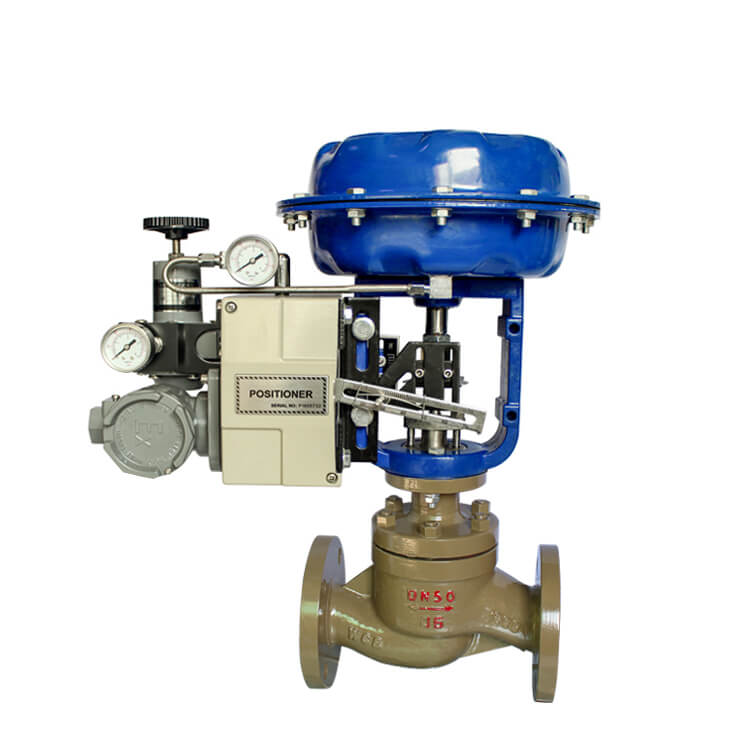
Pneumatic control valves are core components widely used in industrial process control systems, playing a critical role in regulating the flow, pressure, and temperature of media in pipelines. The tight fit between the valve core and valve seat is the key to ensuring the sealing performance of pneumatic control valves. Once deformation or leakage occurs in these two parts, it will directly affect the stability and accuracy of the entire process system. The main causes of deformation and leakage of the valve core and valve seat in pneumatic control valves are as follows:
-
Extreme Temperature FluctuationsWhen pneumatic control valves operate in high-temperature or cryogenic environments, the thermal expansion and contraction coefficients of the materials of the valve core and valve seat differ from those of other components of the pneumatic control valve. This mismatch leads to uneven thermal stress during temperature changes. Prolonged exposure to such temperature variations causes micro-deformations in the valve core and valve seat. These deformations destroy the original precise sealing contact surface between the two parts, resulting in poor sealing performance, failure of the pneumatic control valve to fully close, and thus medium leakage.
-
Overload Pressure OperationEach pneumatic control valve is designed with a specific rated working pressure range, which is the core parameter to ensure the safe and stable operation of the pneumatic control valve. When the actual working pressure in the pipeline exceeds the rated pressure of the pneumatic control valve, the valve core and valve seat will bear excessive impact force and static pressure for a long time. Under such overloaded conditions, the valve core and valve seat are prone to plastic deformation, and the sealing surface may also suffer from extrusion damage. This kind of deformation is usually irreversible, directly leading to the failure of the sealing pair of the pneumatic control valve and causing serious leakage problems.
-
Corrosion and Abrasion from MediaThe working medium conveyed by pneumatic control valves in industrial sites is often complex, which may contain corrosive substances such as acids, alkalis, and salts, or solid particles with abrasive properties. In the process of medium flow regulation, corrosive media will chemically react with the surface materials of the valve core and valve seat of the pneumatic control valve, causing pitting, rusting, or even material peeling of the sealing surface. Meanwhile, solid particles in the medium will continuously scour and abrade the sealing surface of the valve core and valve seat during the opening and closing process of the pneumatic control valve. Long-term corrosion and abrasion will damage the integrity and smoothness of the sealing surface, leading to poor sealing and leakage of the pneumatic control valve.
-
Improper Installation and MaintenanceStandardized installation and regular professional maintenance are essential to ensure the long-term reliable operation of pneumatic control valves. Improper installation operations, such as excessive tightening of the valve body flange bolts during the installation of the pneumatic control valve, will generate uneven clamping force, which is transmitted to the valve core and valve seat, causing their deformation. In addition, using lubricants that do not match the medium and material of the pneumatic control valve will not only fail to play a lubricating role but also cause chemical reactions with the sealing surface material. Failure to replace aging or damaged sealing parts in a timely manner during maintenance will also destroy the sealing structure between the valve core and valve seat, leading to deformation and leakage of the key components of the pneumatic control valve.
-
Failure of the Actuator SpringThe actuator spring is an important part that maintains the normal reset and sealing state of the valve core in the pneumatic control valve. It provides stable elastic force to ensure that the valve core can fit closely with the valve seat when the pneumatic control valve is in the closed position. If the spring of the pneumatic control valve becomes loose due to long-term fatigue, or breaks due to corrosion, the elastic force provided will be insufficient or lost. As a result, the valve core cannot be tightly pressed on the valve seat, and the sealing pair cannot form an effective seal, ultimately resulting in leakage of the pneumatic control valve.
To avoid the deformation and leakage of the valve core and valve seat of pneumatic control valves, it is necessary to select pneumatic control valves with appropriate materials and models according to the actual working conditions such as medium properties, temperature, and pressure. Strictly follow the installation specifications during the installation of pneumatic control valves and carry out regular professional maintenance, including timely inspection and replacement of damaged sealing parts and aging springs. In addition, according to the specific requirements of the working conditions, auxiliary measures such as installing heat insulation sleeves to reduce temperature impact, adding support structures to enhance the pressure resistance of the valve body, and selecting corrosion-resistant alloy materials for the valve core and valve seat can be taken. These measures can effectively improve the durability and sealing performance of the key components of pneumatic control valves, and ensure the stable operation of the pneumatic control valves in the industrial process.