
Selecting the right sampling valve is essential for obtaining representative samples while maintaining product hygiene and process safety. Sampling valves are commonly installed on tanks, vessels, fermenters, and process pipelines for quality control, microbiological testing, laboratory analysis, and process monitoring.
Different sampling applications require different valve designs. The correct choice depends on the installation position, sterilization requirements, operating method, pressure, temperature, cleaning procedure, and product characteristics.
1. Aseptic Membrane Sampling Valve
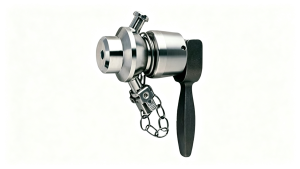
An Aseptic Membrane Sampling Valve uses a flexible membrane to separate the product side from the operating mechanism. This design is suitable for hygienic and aseptic sampling from tanks and pipelines.
The sampling chamber can be sterilized with alcohol or steam before and after sampling, helping reduce the risk of secondary contamination. Manual, micro-sampling, and pneumatic operating versions are available.
A verified reference product uses 316L stainless steel product-contact parts, EPDM membrane sealing, working pressure up to 10 bar, operating temperature from 1–130°C, and sterilization temperature up to 121°C.
Typical Advantages
- Hygienic membrane sealing
- Suitable for aseptic sampling
- Alcohol or steam sterilization
- Manual or pneumatic operation
- Tank, pipe, and threaded installation options
- Compact hygienic construction
2. Single Seat Sampling Valve
A Single Seat Sampling Valve uses a movable valve stem and sealing element to control the sampling flow.
This valve type is suitable for hygienic process systems requiring simple operation, reliable shut-off, and repeatable sampling.
The verified reference product uses 316L product-contact stainless steel, EPDM sealing, an internal surface finish of Ra ≤ 0.8 μm, maximum working pressure of 6 bar, and a temperature range of 1–130°C.
Typical Advantages
- Compact single-seat construction
- SS316L product-contact parts
- Smooth hygienic internal surface
- Manual or pneumatic operation
- Reliable shut-off
- Easy installation and maintenance
3. Aseptic Bellows Sampling Valve
An Aseptic Bellows Sampling Valve uses a bellows sealing system to separate the process medium from the operating mechanism.
This type of construction is suitable for applications requiring a high level of hygienic separation, cleanability, and sterilization.
Product Photo
The photos above show actual aseptic sampling valve configurations with the characteristic red operating handle and hygienic stainless steel construction. The verified product family includes 316L stainless steel versions, manual and pneumatic operation, and PTFE bellows configurations.
Typical Advantages
- Bellows sealing design
- SS316L construction
- Manual or pneumatic operation
- Hygienic tank installation
- Flushing and sterilization options
- Suitable for aseptic process systems
4. Inline Hygienic Sampling Valve
An Inline Hygienic Sampling Valve is installed directly into the process pipeline, allowing samples to be taken from the flowing product.
The valve body is designed to reduce dead pockets while maintaining a smooth flow path through the line.
Product Photo
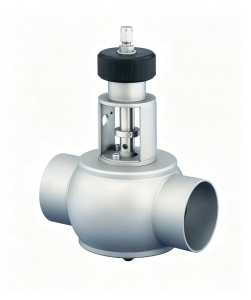
This is an actual inline sampling valve product image. The verified product uses AISI 316L / 1.4404 product-contact surfaces, PTFE shaft construction, DN25–DN100 sizes, manual or pneumatic operation, and an optional steam sterilization connection.
Typical Advantages
- Direct pipeline installation
- SS316L product-contact surfaces
- PTFE shaft construction
- Dead-pocket-reduced design
- Manual or pneumatic operation
- Optional steam sterilization
- Suitable for hygienic pipeline sampling
How to Select the Right Sampling Valve
For tank or vessel sampling, membrane, single-seat, or bellows sampling valves are commonly used.
For direct pipeline sampling, an inline hygienic sampling valve is generally more suitable.
For processes requiring sterilization before and after sampling, a valve with steam, alcohol, CIP, or SIP capability should be considered.
Manual sampling valves are suitable for occasional sampling, while pneumatic versions are better suited for frequent sampling, automation, or remote operation.
Process pressure, temperature, product viscosity, cleaning chemicals, sealing materials, and installation connection should always be confirmed before final valve selection.
Common Materials
Typical materials used in hygienic sampling valves include:
- SS304
- SS316L
- EPDM
- Silicone
- PTFE
SS316L is widely used for product-contact components because of its corrosion resistance and suitability for hygienic processing environments.
Applications
Sampling valves are commonly used in:
- Food processing
- Beverage production
- Dairy processing
- Brewery systems
- Fermentation equipment
- Hygienic storage tanks
- Process vessels
- Sanitary pipelines
- Pharmaceutical processing
- Biotechnology systems
Conclusion
Different sampling valve designs serve different process requirements.
An Aseptic Membrane Sampling Valve is suitable where hygienic sealing and sterilization are important. A Single Seat Sampling Valve provides a simple and reliable solution for general hygienic sampling. An Aseptic Bellows Sampling Valve provides additional separation between the process medium and operating mechanism, while an Inline Hygienic Sampling Valve is designed specifically for direct pipeline sampling.
Selecting the correct valve design, material, sealing system, and operating method helps improve sampling reliability, cleanability, and process hygiene.
