
In industrial process systems, unstable pressure can affect equipment operation, product consistency and overall process reliability. For users who need automatic pressure regulation without a complex external control system, self-operated control valves provide a practical solution.
Wye Valve offers self-operated pressure regulating solutions for general industrial pressure control as well as low-pressure and nitrogen blanketing applications.
1. Helping Customers Maintain More Stable Process Pressure
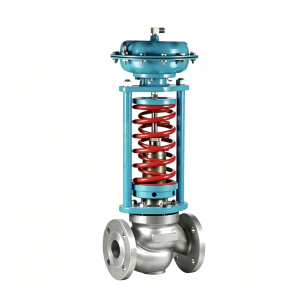
The ZZYP Self-Operated Pressure Regulating Valve is designed for automatic upstream or downstream pressure regulation in gas, liquid and steam systems.
When process pressure changes, the valve responds automatically and adjusts its opening to help bring the controlled pressure back toward the required setting.
For customers, this can help:
- Reduce pressure fluctuations in the pipeline
- Provide more stable operating conditions for downstream equipment
- Improve process consistency
- Reduce the need for frequent manual pressure adjustment
Stable pressure is especially important in applications where downstream equipment performance depends on a relatively consistent pressure supply.
2. Simplifying Pressure Control Systems
One of the main advantages of self-operated regulating valves is that the regulating action is driven by the process medium itself.
For suitable applications, this can reduce dependence on additional external energy or auxiliary control components.
For customers, a simpler control arrangement can mean:
- Easier system configuration
- Fewer auxiliary components
- Reduced installation complexity
- Less routine adjustment during normal operation
This makes self-operated valves particularly useful where a straightforward and reliable pressure-control solution is preferred.
3. Supporting Better Protection of Downstream Equipment
Excessive pressure variation can affect pipelines, instruments and other downstream process equipment.
By automatically regulating pressure, the ZZYP valve helps maintain a more stable pressure condition before the medium reaches downstream equipment.
For customers, this can help reduce the impact of pressure fluctuations on the process system and support more consistent equipment operation.
4. Providing Flexible Pressure Control for Different Applications
The ZZYP series is available in a wide range of nominal sizes, pressure ratings and pressure-setting ranges.
This gives customers greater flexibility when selecting a valve for different gas, liquid and steam applications.
Different body, trim, packing and diaphragm materials can also be selected according to process medium, temperature and operating conditions.
For users, this means the valve can be configured more closely to the actual application instead of relying on a single standard arrangement.
5. Helping Storage Tank Users Maintain Stable Nitrogen Blanketing Pressure
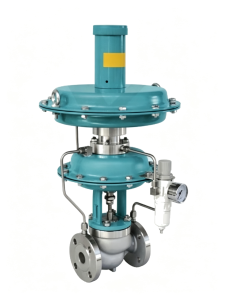
For storage tank applications, the ZZYVP Self-Operated Nitrogen Seal Control Valve is designed for low-pressure and micro-pressure regulation.
The valve helps maintain a controlled nitrogen pressure inside the storage tank.
For customers, this can provide several practical benefits:
- Help reduce direct contact between stored media and atmospheric air
- Help reduce oxidation of suitable stored materials
- Help reduce material evaporation
- Maintain a more stable protective gas environment inside the tank
- Support continuous tank operation with automatic pressure adjustment
The ZZYVP is particularly suitable for applications where relatively small pressure changes need to be detected and controlled accurately.
6. Reducing Manual Intervention
Once correctly selected and set, self-operated regulating valves can automatically respond to pressure changes during normal operation.
This reduces the need for operators to make frequent manual adjustments.
For customers, this can help improve operating convenience and allow personnel to focus on other process tasks rather than continuously correcting pressure settings.
7. Improving Process Reliability Through Correct Valve Selection
The performance of a pressure regulating valve depends on correct selection.
Important factors include:
- Process medium
- Inlet pressure
- Outlet or controlled pressure
- Flow rate
- Operating temperature
- Required pressure-setting range
- Material compatibility
When these parameters are matched correctly, a self-operated control valve can provide a stable and efficient pressure-regulating solution for a wide range of industrial applications.
8. A Practical Solution for Industrial Pressure Control
For many industrial users, the value of a self-operated control valve is not only its ability to regulate pressure.
It can also help create a simpler control system, reduce pressure fluctuations, support downstream equipment operation and reduce the need for frequent manual intervention.
With ZZYP pressure regulating valves and ZZYVP nitrogen blanketing valves, Wye Valve provides solutions for both conventional industrial pressure control and sensitive low-pressure tank applications.
