
In hygienic processing systems, accurate sampling is essential for quality control, process monitoring, and product verification. When samples need to be taken directly from storage tanks, mixing vessels, fermenters, or process containers, a Tank Bottom Sampling Valve provides a compact and practical solution.
Installed at the lower section or bottom of a vessel, this valve allows operators to collect product samples directly from the tank while minimizing product retention around the sampling point.
一、What Is a Tank Bottom Sampling Valve?
1.1 Basic Definition
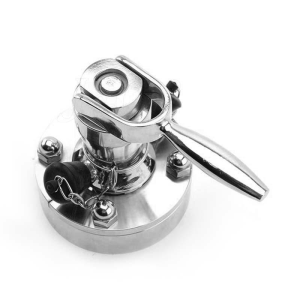
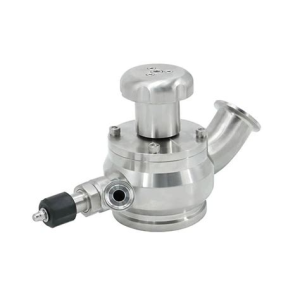
A Tank Bottom Sampling Valve is a hygienic valve designed specifically for collecting samples from tanks and vessels.
Unlike a standard pipeline sampling valve, this type of valve is mounted directly on the tank body, usually near or at the bottom section where representative product can be withdrawn.
1.2 Main Purpose
The main functions include:
- Collecting product samples
- Process monitoring
- Laboratory testing
- Quality control
- Residual product drainage
- Tank inspection support
Because of its installation position, the valve can also help remove small amounts of residual product remaining at the bottom of a vessel.
二、Why Install a Sampling Valve at the Tank Bottom?
2.1 Representative Sampling
Tank-bottom installation allows samples to be taken directly from the product inside the vessel.
This is particularly useful when operators need to monitor:
- Product consistency
- Concentration
- Fermentation condition
- Mixing quality
- Microbiological condition
2.2 Reduced Product Retention
A properly positioned bottom valve can help reduce the amount of product remaining inside the tank after processing.
This is especially valuable in applications where product recovery and cleaning efficiency are important.
2.3 Compact Installation
Tank bottom sampling valves normally use a compact design, allowing installation where external space around the vessel is limited.
三、Typical Valve Construction
3.1 Stainless Steel Body
Hygienic versions are commonly manufactured from SS316L stainless steel because of its corrosion resistance and suitability for sanitary processing.
3.2 Valve Stem
The valve stem controls the opening and closing movement of the sampling passage.
3.3 Sealing Element
The sealing element isolates the process medium from the sampling outlet when the valve is closed.
Common sealing materials may include:
- EPDM
- Silicone
- PTFE
Material selection depends on product characteristics and process conditions.
3.4 Sampling Outlet
The sampling outlet provides a controlled path for product to flow into a sample container.
Depending on the valve design, the outlet can be positioned to improve operator access and drainage.
四、How Does a Tank Bottom Sampling Valve Work?
4.1 Closed Position
During normal production, the valve remains closed.
The sealing element isolates the product inside the tank from the sampling outlet.
4.2 Opening
When a sample is required, the operator opens the valve manually or through an actuator, depending on the configuration.
The valve stem moves away from the sealing surface and creates a flow path.
4.3 Sample Collection
A controlled quantity of product flows from the tank into the sampling container.
The operator collects the required sample volume and then closes the valve.
4.4 After Sampling
After sampling, the outlet and product-contact surfaces should be cleaned according to the process hygiene requirements.
In some systems, flushing or sterilization connections may also be used.
五、Main Advantages
5.1 Direct Tank Sampling
The valve eliminates the need to transfer the product to another line before taking a sample.
5.2 Hygienic Design
Smooth stainless steel surfaces help improve cleanability and reduce product accumulation.
5.3 Easy Operation
Manual versions provide simple and reliable operation without compressed air or electrical power.
5.4 Reduced Dead Space
A properly designed tank-bottom valve can minimize dead zones around the sampling point.
5.5 Product Recovery
Bottom installation can assist with draining residual media after production.
5.6 Flexible Installation
The valve can be used on:
- Storage tanks
- Mixing tanks
- Fermentation vessels
- Process vessels
- Hygienic containers
六、Where Are Tank Bottom Sampling Valves Used?
6.1 Food Processing
Common applications include:
- Liquid food tanks
- Sauce processing
- Syrup systems
- Ingredient tanks
- Mixing vessels
6.2 Beverage Production
The valve can be used for sampling:
- Juice
- Soft drinks
- Process water
- Beverage concentrates
- Fermentation products
6.3 Dairy Processing
Typical applications include:
- Milk tanks
- Cream tanks
- Yogurt processing vessels
- Dairy mixing systems
6.4 Pharmaceutical and Biotechnology
Tank sampling valves can also be used in clean processing systems that require controlled sample collection from process vessels.
6.5 Cosmetic and Personal Care Production
Typical media include:
- Creams
- Lotions
- Liquid personal care products
- Cosmetic process mixtures
七、How to Select the Right Tank Bottom Sampling Valve
7.1 Select the Correct Material
SS316L is commonly preferred for hygienic and corrosion-resistant applications.
The final material should be selected according to:
- Product chemistry
- Cleaning agents
- Operating temperature
- Corrosion requirements
7.2 Choose the Seal Material
Seal compatibility is important.
Consider:
- Chemical resistance
- Temperature
- Cleaning chemicals
- Sterilization method
- Product compatibility
7.3 Confirm the Tank Connection
The valve must match the vessel connection.
Typical configurations may include:
- Welded connection
- Clamp connection
- Hygienic tank connection
- Custom tank interface
7.4 Check the Installation Position
The valve should be positioned where it can provide representative sampling while allowing complete drainage and convenient operator access.
7.5 Consider Cleaning Requirements
For hygienic production, check whether the valve needs:
- CIP cleaning
- SIP sterilization
- Steam cleaning
- External flushing
- Manual cleaning
八、Manual vs. Pneumatic Tank Sampling Valves
8.1 Manual Operation
Manual valves are suitable for applications where samples are taken occasionally.
Advantages include:
- Simple structure
- Lower installation cost
- Easy maintenance
- No compressed air required
8.2 Pneumatic Operation
Pneumatic versions are more suitable for:
- Frequent sampling
- Automated systems
- Remote operation
- Repeatable sampling cycles
The final choice depends on process automation level and sampling frequency.
九、Cleaning and Maintenance
9.1 Routine Cleaning
Product-contact areas should be cleaned regularly to prevent residue buildup.
9.2 Seal Inspection
Inspect sealing components for:
- Wear
- Cracking
- Deformation
- Leakage
Replace seals when necessary.
9.3 Stem Inspection
The valve stem should move smoothly and return to the correct closed position.
9.4 Tank Connection Inspection
The vessel connection should be checked periodically for looseness, leakage, or corrosion.
十、Tank Bottom Sampling Valve vs. Pipeline Sampling Valve
The main difference is the installation location.
A Tank Bottom Sampling Valve is mounted directly on a tank or vessel.
A Pipeline Sampling Valve is installed on the process line.
Tank-bottom valves are better suited for sampling stored or mixed product inside a vessel, while pipeline valves are more suitable for sampling flowing product during transfer or continuous production.
十一、Conclusion
A Tank Bottom Sampling Valve is a practical solution for hygienic sampling directly from process tanks and vessels.
Its compact stainless steel construction, simple operation, and tank-mounted design make it suitable for a wide range of sanitary processing applications.
When selecting the valve, important factors include material, seal type, tank connection, cleaning requirements, installation position, and operating method.
A properly selected tank bottom sampling valve can improve sample quality, process hygiene, product recovery, and overall production efficiency.
