
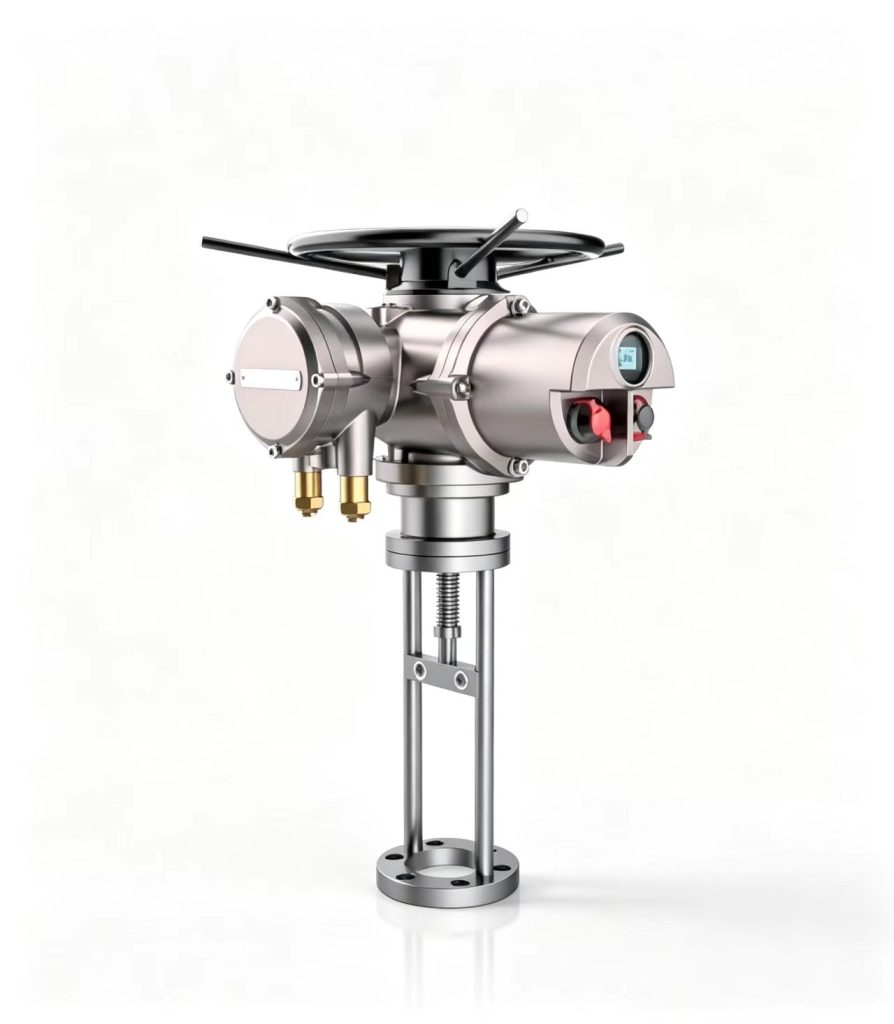
How to Select an Electric Actuator for a Valve
一、Introduction
Choosing the right electric actuator is essential for reliable valve operation, accurate control and long service life.
The correct actuator should not be selected only by valve size. The valve operating movement, required torque or thrust, duty type, power supply, mechanical interface and control requirements should all be considered.
According to the product catalog, valve actuator selection is primarily determined by the required valve movement — multi-turn, part-turn or linear-turn — together with valve type, operating torque and application requirements. Actual selection may also vary depending on available power, mechanical interface and thrust requirements.
二、Start with the Valve Movement
2.1 Multi-turn Valves
Multi-turn actuators rotate the valve stem through multiple revolutions to open or close the valve.
They are commonly used for valves such as:
- Gate valves
- Globe valves
- Sluice valves
- Parallel slide valves
- Choke valves
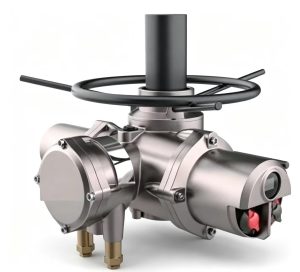
For these applications, a multi-turn electric actuator such as the WyeQ series can be selected.
The WyeQ range is designed for multi-turn valve applications and provides output torque from 40 Nm to 3000 Nm.
2.2 Quarter-turn Valves
Quarter-turn valves normally require approximately 90° rotation between the open and closed positions.
Typical applications include:
- Ball valves
- Butterfly valves
- Plug valves
- Dampers
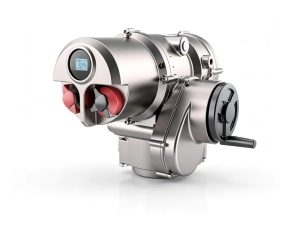
For normal quarter-turn applications, a direct-drive quarter-turn actuator can be used.
The WyeT series is designed for 90-degree rotary valve applications and provides output torque from 250 Nm to 2000 Nm.
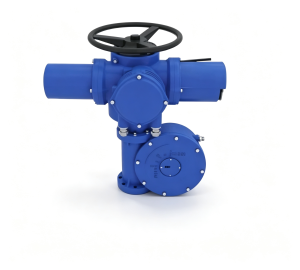
For applications requiring higher torque, a multi-turn actuator combined with a gearbox can be used. The catalog lists gearbox-assisted quarter-turn solutions for high-torque applications.
2.3 Linear Valves
Some valves require linear stem movement instead of rotary movement.
For these applications, actuator selection should be based on the required thrust and stroke, rather than torque alone.
The catalog specifies linear actuator thrust from 6400 N to 25000 N.
三、Determine the Required Torque or Thrust
3.1 Torque for Rotary Valves
Torque is one of the most important parameters when selecting an actuator for multi-turn or quarter-turn valves.
The selected actuator should provide sufficient output torque to operate the valve under actual working conditions.
The catalog gives the following actuator ranges:
| Actuator Type | Output Range |
|---|---|
| Multi-turn | 40–3000 Nm |
| Quarter-turn | 40–2000 Nm |
| With Gearbox | Up to 50000 Nm |
| Linear-turn | 6400–25000 N thrust |
The required valve torque should normally be obtained from the valve manufacturer or from actual valve operating data.
3.2 Thrust for Linear Valves
For linear valve applications, the key parameter is thrust.
The actuator must be capable of generating sufficient force to move the valve stem throughout the required stroke.
In addition to thrust, the following information should be confirmed:
- Valve stroke
- Stem dimensions
- Operating speed
- Mechanical connection
- Required control accuracy
四、Choose the Correct Duty Type
The actuator duty should match how frequently the valve operates.
4.1 On/Off Control
On/off actuators are mainly used when the valve only needs to move between fully open and fully closed positions.
Typical applications include:
- Isolation valves
- Shut-off valves
- Emergency operation
- Simple process flow control
The catalog specifies S2 short-time duty, 15 minutes for on/off operation.
4.2 Modulating Control
Modulating actuators are used when the valve position must be continuously adjusted.
They are suitable for applications requiring regulation of:
- Flow
- Pressure
- Temperature
- Process conditions
The catalog specifies S5–50% duty for modulating operation, with a maximum of 1200 starts per hour.
五、Check the Power Supply
Before selecting an actuator, confirm the available electrical supply at the installation site.
The catalog lists:
| Power Supply | Range |
|---|---|
| Three-phase | AC 380–690 V, 50/60 Hz |
| Single-phase | AC 110–240 V, 50/60 Hz |
The actuator voltage and frequency should match the site’s available power supply.
六、Select the Required Control Method
Modern electric actuators can support different control systems depending on the application.
The catalog provides three main control methods:
- On/Off
- Modulating
- Fieldbus
6.1 On/Off Control
Suitable for simple open and close commands.
6.2 Modulating Control
Suitable for applications where the valve must move to intermediate positions.
The catalog includes control signal options such as:
- 4–20 mA
- 1–5 V
- 0–10 V
6.3 Fieldbus Control
For automated plants, fieldbus communication can simplify integration with PLC and DCS systems.
Available communication options listed in the catalog include:
- Modbus
- Profibus DP
- HART
七、Consider the Installation Environment
7.1 Protection Grade
The actuator enclosure must be suitable for the installation environment.
The catalog specifies IP68 as the standard protection grade.
This type of protection is intended to help protect internal components against dust and water exposure.
7.2 Ambient Temperature
The catalog gives a standard ambient operating temperature of:
-30°C to +70°C
A low-temperature version is also listed for applications down to -50°C.
For applications outside the standard temperature range, the required version should be confirmed before ordering.
7.3 Humidity and Corrosion
The catalog specifies a maximum ambient humidity of 90% RH, non-condensing and describes anti-corrosion surface treatment for the actuator enclosure.
八、Check the Mechanical Interface
Even when actuator torque is correct, the actuator must still mechanically match the valve.
Important parameters include:
- Valve stem diameter
- Output drive dimensions
- Mounting flange
- Stem type
- Required stroke
- Installation position
- Gearbox requirement
The catalog specifically notes that actual actuator selection may vary depending on factors including the mechanical interface and thrust requirements.
九、Electric Actuator Selection Guide
A simple initial selection can be made according to valve movement:
| Valve Type | Movement | Recommended Actuator Type |
|---|---|---|
| Gate Valve | Multi-turn | Multi-turn Electric Actuator |
| Globe Valve | Multi-turn / Linear depending on design | Multi-turn or Linear Electric Actuator |
| Ball Valve | Quarter-turn | Quarter-turn Electric Actuator |
| Butterfly Valve | Quarter-turn | Quarter-turn Electric Actuator |
| Plug Valve | Quarter-turn | Quarter-turn Electric Actuator |
| Damper | Quarter-turn | Quarter-turn Electric Actuator |
| High-Torque Ball / Butterfly Valve | Quarter-turn | Electric Actuator + Gearbox |
| Linear Control Application | Linear | Linear Electric Actuator |
This is only an initial guide. Final selection should also consider operating torque or thrust, power supply, duty, mechanical connection and control requirements.
十、Which Wye Electric Actuator Should You Choose?
For the product range on your website, the selection can be summarized as follows:
| Application | Product |
|---|---|
| Multi-turn valves | WyeQ Multi-turn Electric Actuator |
| Standard quarter-turn valves | WyeT Quarter-turn Electric Actuator |
| High-torque quarter-turn valves | WyeQ+BW Quarter-turn Electric Actuator |
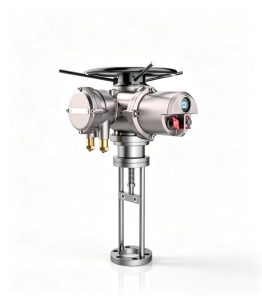
| Linear valve applications | WyeQ+VE Linear Electric Actuator |
| Linear valve applications using WyeT configuration | WyeT+VE Linear Electric Actuator |
This structure also makes it easy to link this article directly to your five product pages.
