一、Product Overview
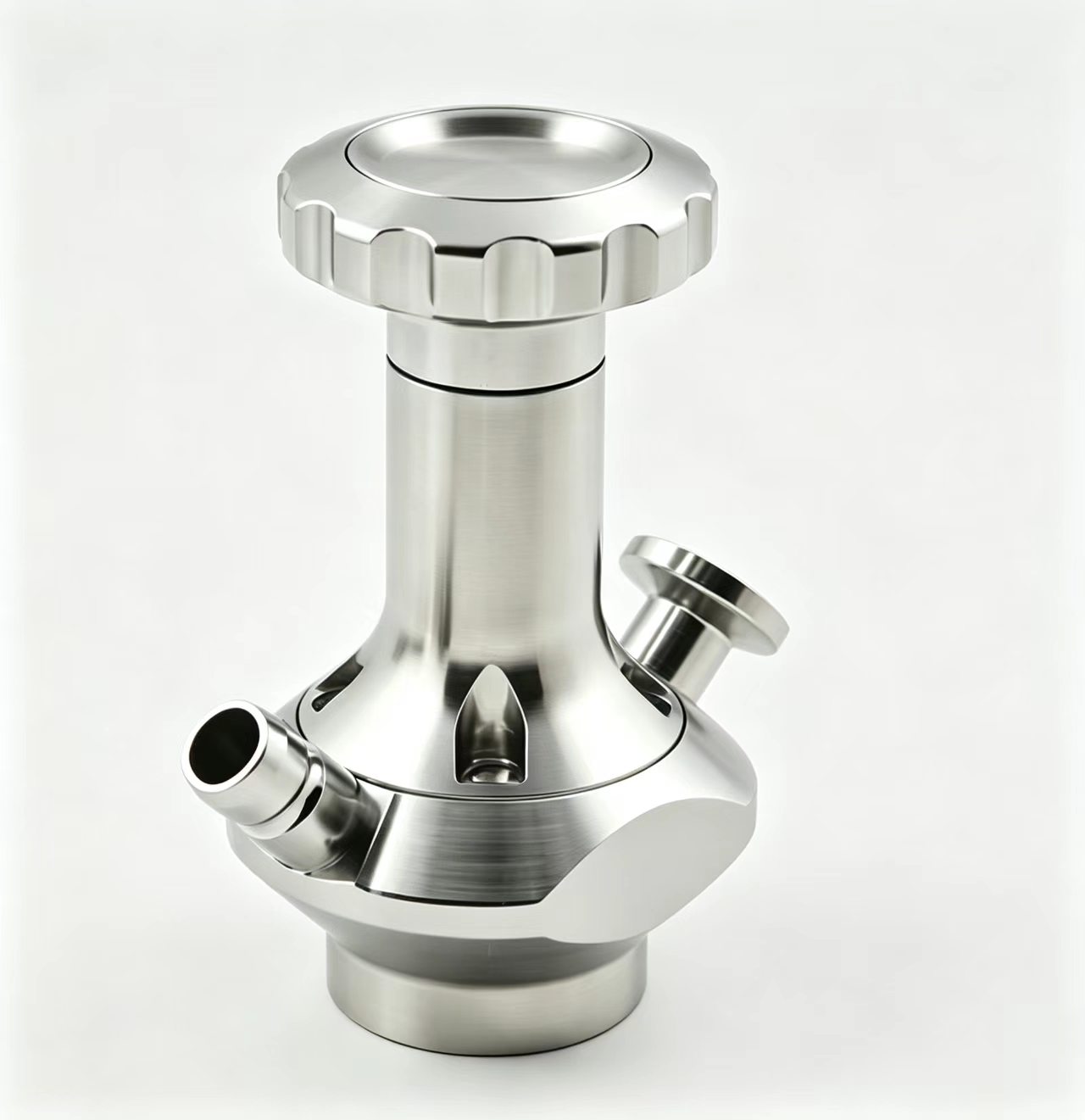
The Aseptic Double Seat Sampling Valve is designed for hygienic and aseptic sampling applications in food, beverage, dairy, pharmaceutical, and biotechnology processing systems. Its independent double-seat design separates the product sampling path from the cleaning and sterilization path, allowing sampling, cleaning, and sterilization to be carried out without interrupting the main process.
In the normal closed position, both the product side and the CIP/SIP side remain isolated. During sampling, only the product-side seat opens, allowing the process medium to flow into the sampling chamber while the cleaning inlet remains closed. During cleaning or sterilization, only the cleaning-side seat opens, allowing cleaning fluid or steam to enter the valve chamber while the product side remains isolated.
This independent operating concept helps reduce the risk of cross-contamination and external contamination while improving sampling consistency and process safety. The valve can be installed on process pipelines, tanks, vessels, or other hygienic equipment and can be supplied with different connection and actuation options.
二、Features
- Independent double-seat design for separate sampling and cleaning functions
- Enables online sampling without stopping the process
- Suitable for CIP cleaning and SIP sterilization applications
- Hygienic internal flow path designed to minimize product retention
- Suitable for low- to medium-viscosity liquids
- Available with manual knob, lever, or pneumatic actuation
- Suitable for pipeline or tank installation
- Wetted parts can be manufactured in 316L stainless steel
- Available with welded, clamp, or other hygienic connections
- Designed for processes requiring a high level of sampling hygiene
三、Working Principle
Closed Position
Both valve seats remain closed, keeping the process medium, sampling outlet, and cleaning or sterilization inlet isolated from each other.
Sampling Position
When the product-side seat is opened, the process medium enters the sampling chamber and flows through the sampling outlet. The cleaning and sterilization path remains closed during this operation.
Cleaning / Sterilization Position
When the cleaning-side seat is opened, CIP solution or SIP steam enters the sampling chamber to clean or sterilize the internal flow path. The product-side seat remains closed so that the cleaning medium is isolated from the main production process.
四、Technical Data
| Item | Specification |
|---|---|
| Product Name | Aseptic Double Seat Sampling Valve |
| Body Material | 316L Stainless Steel |
| Operation | Manual Knob / Lever / Pneumatic |
| Valve Design | Independent Double Seat |
| Working Pressure | Up to 10 bar* |
| Cleaning | CIP |
| Sterilization | SIP / Steam Sterilization |
| Installation | Pipeline / Tank |
| Connection | Welded / Clamp / Hygienic Connection |
| Suitable Media | Liquid and Low- to Medium-Viscosity Media |
| Surface Finish | Hygienic Polished Finish, Optional |
| Industries | Food, Beverage, Dairy, Pharmaceutical, Biotechnology, Brewing |
* Actual allowable working pressure and temperature depend on valve configuration, seal material, connection type, and final product specification.
五、Applications
The Aseptic Double Seat Sampling Valve is suitable for hygienic process systems where representative samples need to be collected regularly during production, including:
- Beer and fermented beverages
- Juice and soft drinks
- Milk and dairy products
- Liquid food products
- Pharmaceutical process fluids
- Biotechnology process media
- Mixing and preparation systems
- Fermentation tanks and storage vessels
- Process water and high-purity fluids
六、Installation
The valve can be installed on hygienic process pipelines, tank walls, fermentation vessels, storage tanks, or other process equipment.
Pipeline-mounted versions are suitable for online sampling in continuous process systems. Tank-mounted versions can be installed directly at the sampling point to reduce the flow path between the vessel and the sampling chamber and to help minimize product retention.
七、Why Choose a Double Seat Design?
Conventional sampling valves often require separate cleaning or sterilization procedures after sampling. A double-seat design integrates the product sampling path and the cleaning or sterilization path within one valve body while keeping the two functions independently controlled.
This allows the sampling chamber to be cleaned or sterilized while the main process remains isolated, making the valve particularly suitable for repeated sampling in hygienic and aseptic production environments.