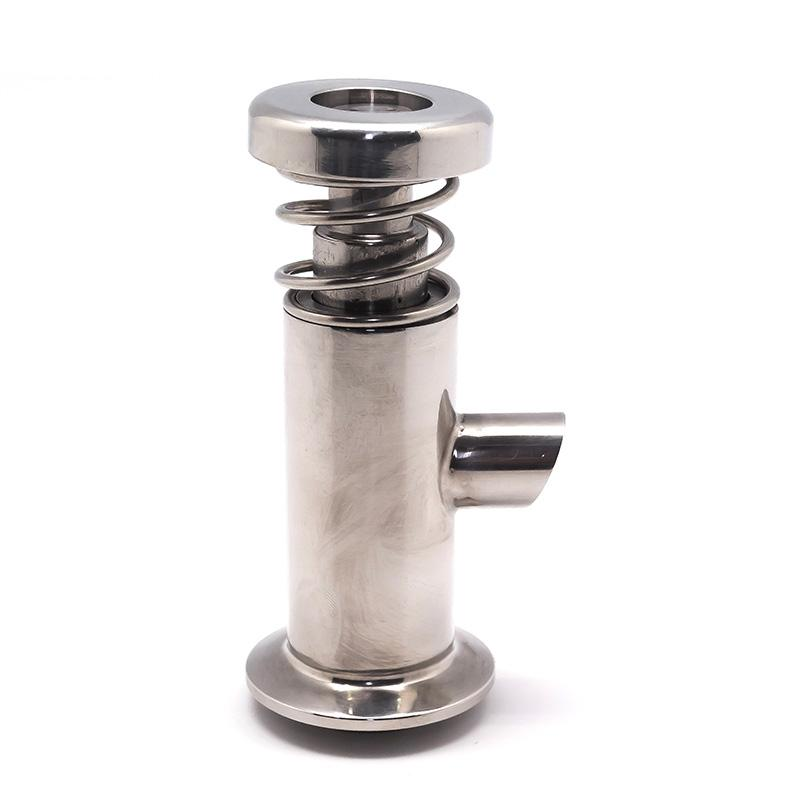
The Spring-Loaded Sampling Valve is designed for quick, controlled, and reliable sampling from process tanks, vessels, and pipelines. Its spring-assisted operating mechanism allows the valve to open manually and automatically return to the closed position when the operating force is released.
Manufactured with a durable stainless steel body and stem, the valve provides excellent corrosion resistance and reliable performance for repeated process sampling. Its simple mechanical design requires no compressed air or electrical power, making it suitable for installations where straightforward and dependable manual sampling is required.
The valve can be configured with different seat and connection options to meet various process requirements.
一、Product Overview
1.1 Main Function
The Spring-Loaded Sampling Valve is used to collect a controlled quantity of process media from tanks, vessels, and pipelines for inspection, laboratory testing, process monitoring, and quality control.
The spring-return mechanism provides convenient manual operation while helping prevent the valve from remaining unintentionally open after sampling.
1.2 Valve Construction
The valve is mainly composed of:
- Stainless steel valve body
- Stainless steel valve stem
- Spring return mechanism
- Operating lever
- Valve seat
- Sampling outlet
- Process connection
The compact structure provides easy installation and convenient maintenance.
1.3 Operating Method
The valve is operated manually.
When the operator applies force to the lever, the valve opens and allows the process medium to flow through the sampling outlet.
Once the operating force is released, the spring mechanism assists the valve stem in returning to the closed position.
二、Product Features
2.1 Spring-Loaded Operation
The spring-assisted mechanism provides quick opening and automatic return closing, making the valve convenient for repeated manual sampling.
2.2 Stainless Steel Construction
The valve body is manufactured from 316 stainless steel, providing good corrosion resistance and mechanical strength for industrial processing environments.
2.3 Simple Manual Operation
No pneumatic actuator, compressed air supply, electrical connection, or external control system is required.
2.4 Reliable Closing
The spring mechanism helps return the valve to the closed position after sampling, reducing the risk of accidental continuous discharge.
2.5 Compact Design
The compact construction requires limited installation space and makes the valve suitable for tanks, vessels, and pipelines.
2.6 Easy Maintenance
The simple mechanical structure allows convenient inspection, cleaning, seat replacement, and routine maintenance.
三、Technical Specifications
| Item | Specification |
|---|---|
| Product Name | Spring-Loaded Sampling Valve |
| Body Material | 316 Stainless Steel |
| Stem Material | Stainless Steel |
| Operation | Manual Spring-Loaded |
| Closing Method | Spring Return |
| Process Connection | Threaded |
| Installation | Tank / Vessel / Pipeline |
| Seat Type | Resilient Seat / Metal Seat |
| Resilient Seat Material | Silicone |
| Sampling Method | Manual |
| Application | Process Media Sampling |
Specifications and configurations can be customized according to process requirements.
四、Working Principle
4.1 Closed Position
Under normal operating conditions, the spring mechanism keeps the valve in the closed position.
The valve seat prevents the process medium from flowing through the sampling outlet.
4.2 Opening the Valve
When a sample is required, the operator manually activates the operating lever.
The valve stem moves away from the seat, creating a flow passage between the process system and the sampling outlet.
4.3 Collecting the Sample
A controlled quantity of process medium flows through the outlet into the sampling container.
The operator can control the sampling duration according to the required sample volume.
4.4 Automatic Spring Return
After the sample has been collected, the operator releases the operating mechanism.
The spring assists the valve stem in returning to the closed position, stopping the product flow.
五、Applications
5.1 Tank Sampling
The valve can be installed on various process and storage tanks for periodic product sampling.
Typical installations include:
- Process Tanks
- Storage Tanks
- Mixing Tanks
- Holding Tanks
- Production Vessels
5.2 Pipeline Sampling
The valve can also be installed on process pipelines where regular samples must be collected during production.
Suitable applications include:
- Liquid Process Lines
- Transfer Pipelines
- Production Lines
- Circulation Systems
- Process Monitoring Lines
5.3 Process Media
Depending on seat configuration and process conditions, the valve can be used for sampling:
- Liquids
- Process Fluids
- Stock
- Slurry
- Compatible Industrial Media
六、Available Configurations
6.1 Seat Options
Different seat configurations can be supplied according to process requirements.
Available options may include:
- Silicone Resilient Seat
- Other Resilient Seat Options
- Metal Seat
6.2 Connection Options
The valve can be supplied with different threaded process connections according to the piping or tank installation requirements.
6.3 Installation Options
Available installation configurations include:
- Tank Mounted
- Vessel Mounted
- Pipeline Mounted
6.4 Sampling Outlet Options
Different outlet arrangements can be selected according to the required sampling method and installation position.
七、Advantages
7.1 No External Power Required
The valve operates mechanically and does not require compressed air or electricity.
7.2 Fast Sampling
The spring-loaded mechanism allows operators to quickly open the valve, collect a sample, and close the valve.
7.3 Reduced Operating Complexity
The simple design eliminates the need for additional pneumatic or electrical control components.
7.4 Reliable for Repeated Sampling
The robust stainless steel construction and spring return mechanism make the valve suitable for applications requiring regular process sampling.
7.5 Flexible Installation
Tank, vessel, and pipeline installation configurations allow the valve to be used in a wide range of processing systems.
八、How to Select a Spring-Loaded Sampling Valve
8.1 Confirm the Process Medium
The chemical properties, viscosity, solids content, and temperature of the process medium should be considered when selecting the valve.
8.2 Select the Seat Material
Seat material should be selected according to:
- Process medium compatibility
- Operating temperature
- Cleaning conditions
- Required sealing performance
8.3 Confirm the Connection
The process connection should match the existing tank nozzle or pipeline connection.
8.4 Consider Sampling Frequency
Spring-loaded valves are particularly suitable for applications requiring regular manual sampling without an automated control system.
8.5 Confirm Installation Position
The available installation space and required sampling direction should be considered before selecting the final configuration.
九、Maintenance
9.1 Routine Inspection
Regularly inspect:
- Valve stem
- Spring mechanism
- Valve seat
- Operating lever
- Process connection
9.2 Seat Inspection
The seat should be checked periodically for wear or damage. Replace the sealing element when required to maintain reliable shut-off.
9.3 Cleaning
The sampling outlet and product-contact areas should be cleaned according to the process requirements and the characteristics of the sampled medium.
9.4 Spring Mechanism
The spring return mechanism should move freely and return the valve to the closed position after operation.
十、FAQ
10.1 What is a Spring-Loaded Sampling Valve?
A Spring-Loaded Sampling Valve is a manually operated valve designed to collect samples from tanks, vessels, or pipelines. A spring mechanism assists the valve in returning to the closed position after the operating force is released.
10.2 Does the valve require compressed air?
No. The valve is manually operated and does not require compressed air.
10.3 Does the valve require electricity?
No. The valve operates mechanically without electrical power.
10.4 Can it be installed on a tank?
Yes. Tank and vessel installation configurations are available.
10.5 Can it be installed on a pipeline?
Yes. The valve can also be configured for process pipeline sampling.
10.6 What material is used for the valve body?
The standard reference configuration uses a 316 stainless steel valve body.
10.7 What seat options are available?
Resilient seat and metal seat configurations can be supplied depending on process requirements.