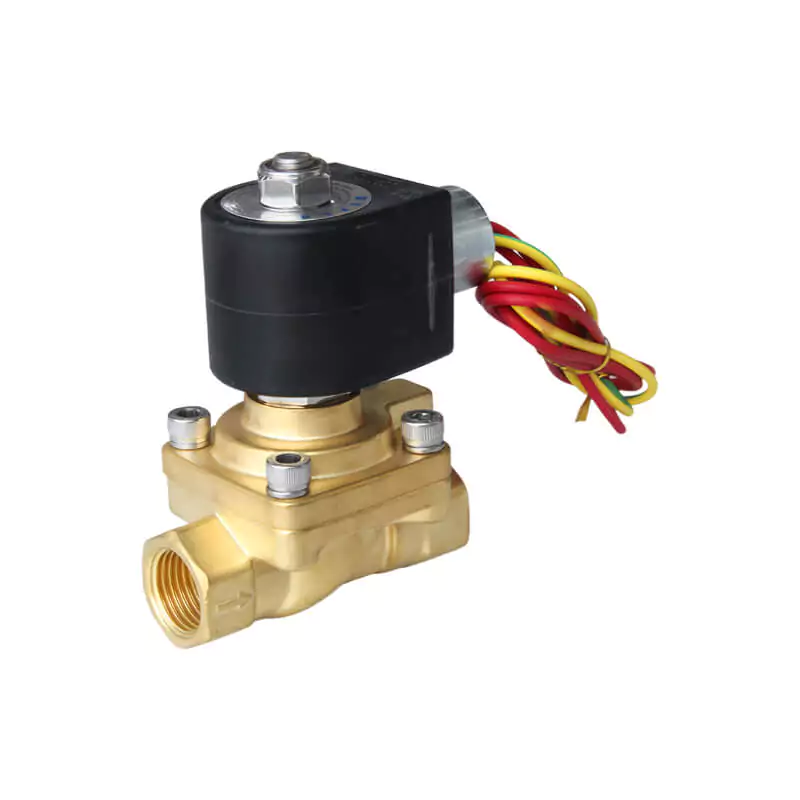
In the intricate world of industrial automation, where precision and reliability are non-negotiable, the solenoid pilot valve stands out as a cornerstone component. From the bustling assembly lines of automotive factories to the precise fluid management systems in pharmaceutical plants, from the high-pressure pipelines of oil refineries to the climate control units of commercial buildings—you’ll find a solenoid pilot valve working tirelessly behind the scenes. This compact yet powerful device acts as a critical bridge between electrical signals and fluid power, translating digital commands into seamless mechanical actions. Today, we’ll dive deep into the world of the solenoid pilot valve, exploring its working principle, key advantages, selection tips, maintenance essentials, and wide-ranging applications.
I. The Core Principle of a Solenoid Pilot Valve: Small Force, Big Impact
One of the most remarkable features of a solenoid pilot valve is its ability to control large flow rates and high-pressure fluids with minimal electrical power. Unlike direct-acting solenoid valves, which rely solely on electromagnetic force to shift the main valve core, a solenoid pilot valve operates on a “pilot-assisted” design—leveraging the pressure difference of the fluid itself to drive the main valve movement. This “force multiplication” mechanism is what makes the solenoid pilot valve indispensable in large-scale industrial applications.
Here’s how it works: When the coil of the solenoid pilot valve is energized, electromagnetic force opens a small pilot orifice first. This rapid opening reduces the pressure in the upper chamber of the main valve core. A significant pressure difference is then formed between the upper and lower ends of the main valve core, and the fluid pressure at the lower end pushes the main valve core to open the large-flow main orifice. When the coil is de-energized, a spring closes the pilot orifice immediately. The inlet fluid refills the upper chamber of the main valve core through a bypass hole, creating a reverse pressure difference that resets the main valve core and closes the main orifice. This design allows a solenoid pilot valve to control high-flow fluids with a low-power coil, making it far more energy-efficient than direct-acting valves of the same size.
II. Key Advantages of a Solenoid Pilot Valve: Why It’s the Industrial First Choice
The solenoid pilot valve has become the preferred choice in industrial control systems for a multitude of compelling reasons, each addressing critical needs of modern automation:
First and foremost is energy efficiency. As mentioned earlier, the solenoid pilot valve uses the fluid’s own pressure difference to assist operation, resulting in extremely low coil power consumption. For industrial systems that run 24/7, this translates to substantial energy cost savings over time. Second is its wide applicability. Whether handling corrosive chemicals, high-temperature steam, viscous oils, or clean water, a properly selected solenoid pilot valve can perform reliably. It covers a broad range of port sizes (from small diameters to over DN50) and pressure ratings (from 0.05MPa to high-pressure scenarios).
Equally important are its precision and stability. A solenoid pilot valve offers fast response times and high repeatability, ensuring accurate alignment with control system signals. Premium solenoid pilot valve models often feature a diaphragm-free design, eliminating response delays caused by diaphragm sticking and further enhancing operational stability. Additionally, the solenoid pilot valve boasts a compact structure and flexible installation options, making it ideal for space-constrained equipment—another key reason for its widespread use in precision machinery.
III. Solenoid Pilot Valve Selection Guide: 6 Non-Negotiable Parameters
Choosing the right solenoid pilot valve is critical to ensuring system reliability. A mismatched solenoid pilot valve can lead to frequent failures, reduced efficiency, and even safety hazards. Below are six core parameters to prioritize during selection:
1. Fluid Characteristics: This is the foundation of solenoid pilot valve selection. For corrosive fluids (e.g., strong acids, alkalis), opt for a solenoid pilot valve made of 316L stainless steel or PTFE, with PTFE seals. If the fluid contains particulate impurities, select a solenoid pilot valve with a built-in filter or install a pre-filter (precision ≤50μm) to prevent pilot orifice clogging. For high-viscosity fluids, choose a large-port solenoid pilot valve or pair it with a heating device to reduce fluid viscosity.
2. Pressure Ratings: Every solenoid pilot valve has a minimum and maximum operating pressure range (typically ≥0.05MPa minimum). Ensure the system’s operating pressure falls within the solenoid pilot valve’s rated range, with a safety margin to accommodate pressure fluctuations.
3. Port Size & Flow Rate: Select the solenoid pilot valve’s port size based on pipeline dimensions and system flow requirements. An undersized port will cause excessive pressure loss, while an oversized one will waste costs and compromise control precision. Calculate the required port size using the Cv value to ensure the solenoid pilot valve meets the system’s flow demands.
4. Electrical Parameters: Match the solenoid pilot valve’s coil voltage (common options: AC220V, DC24V) to the control system—incorrect voltage will burn out the coil immediately. Choose the appropriate protection class (e.g., IP65 for outdoor/damp environments, ExdIIBT4 for explosive atmospheres) based on the installation environment.
5. Operation Mode: Select a normally closed (NC) or normally open (NO) solenoid pilot valve based on safety needs. An NC solenoid pilot valve closes when de-energized, ideal for hazardous fluids (e.g., natural gas) requiring immediate shutoff. An NO solenoid pilot valve opens when de-energized, suitable for cooling water or emergency flushing systems needing continuous flow during power outages.
6. Temperature Range: Ensure the fluid and ambient temperatures fall within the solenoid pilot valve’s rated temperature limits. For high-temperature environments, add a heat sink to the solenoid pilot valve; for low-temperature settings, use insulation or a heating jacket to prevent fluid solidification or coil failure.
IV. Solenoid Pilot Valve Installation & Maintenance: Extend Its Service Life
Proper installation and regular maintenance can extend a solenoid pilot valve’s service life by over 50%. Here are key tips to follow:
During installation, align the solenoid pilot valve’s flow direction with the arrow marked on the valve body—reverse installation will prevent proper closing or cause leaks. Install the solenoid pilot valve vertically (coil facing up) whenever possible; if horizontal installation is necessary, ensure a levelness ≤0.5° to avoid debris accumulation and diaphragm wear. For electrical connections, use waterproof or explosion-proof junction boxes to secure wiring and prevent moisture or short circuits from damaging the coil. After installing a new solenoid pilot valve, conduct a test run with fluid to confirm no leaks and smooth operation before full deployment.
For maintenance, inspect the solenoid pilot valve comprehensively every 3–6 months: Shut off power and fluid supply, disassemble the valve to clean internal debris and rust, check if the valve core and spring move freely, and inspect seals for aging or cracks. Apply high-temperature grease (e.g., molybdenum disulfide) to moving parts to enhance smoothness. Additionally, avoid frequent on-off cycling of the solenoid pilot valve (limit to ≤30 cycles per minute) to prevent diaphragm fatigue and premature failure.
V. Typical Applications of Solenoid Pilot Valve: A Versatile Control Solution
The solenoid pilot valve’s versatility makes it a staple across industries, from heavy manufacturing to everyday infrastructure. In the petrochemical industry, solenoid pilot valves control fluids in reaction vessels and pipelines, ensuring safe and stable production. In water treatment plants, solenoid pilot valves regulate water flow, chemical dosing, and backwashing processes—serving as the backbone of automated water management.
In specialized sectors, the solenoid pilot valve plays an irreplaceable role: In nuclear power plants, dedicated scram solenoid pilot valves control control rod insertion, ensuring emergency shutdown safety. In the food and beverage industry, FDA-compliant solenoid pilot valves handle ingredient transfer, maintaining strict hygiene standards. In dust collection systems, solenoid pilot valves trigger pulse jet filter cleaning, boosting filtration efficiency. Even in HVAC systems, medical equipment, and automotive manufacturing, the solenoid pilot valve delivers precise control, acting as an “invisible guardian” of system performance.
Conclusion: Choose and Use Solenoid Pilot Valve Wisely for Enhanced Automation Efficiency
As a core component of industrial automation, the solenoid pilot valve directly impacts the efficiency and stability of fluid control systems. From understanding its working principle to selecting the right model, from proper installation to regular maintenance—every step matters. We hope this guide helps you gain a comprehensive understanding of the solenoid pilot valve, enabling you to choose and use the solenoid pilot valve effectively. By leveraging its compact design and powerful performance, you can unlock greater efficiency and reliability in your automation systems.
Have you encountered challenges with solenoid pilot valve selection or operation? Feel free to share your experiences in the comments below—let’s discuss and learn together!