Installation And Use:
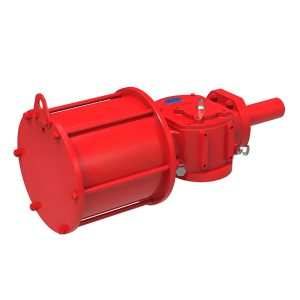
The pneumatic actuator has undergone necessary performance testing before leaving the factory and can be directly installed and used according to the requirements in general. Users do not need to test it again. If the design needs to be changed, it must be carried out by the manufacturer;After the installation, it is necessary to check whether the product has been damaged during transportation, check whether the connection size of the actuator and the valve meets the requirements, and whether the accessory parts are complete;Before installation, check the actuator and the valve, the model, and the connection of the two to see whether they conform to the design requirements, and check whether the actuator and the valve are in contact, and whether the valve stem and the connecting fork are installed in place;If a pneumatic control regulating mechanism is installed, after the installation, the air source should be connected to check whether the actuator operates normally. If the actuator is single-acting (spring return type), first connect the air source to check whether the opening direction is correct, and then check whether there is any abnormal noise during the opening and closing of the valve;If the pneumatic control valve is used, before installing the pneumatic control valve (regulating valve), check whether there is any foreign matter in the cylinder first;If a pneumatic control regulating mechanism is installed, respective protective measures should be taken when the pipeline is connected, and the control signal should be connected only after confirming that the actuator is in normal operation;If the handwheel is used, when using the handwheel operation, do not use too much force, and do not apply external force on the handwheel of the valve.
Maintenance And Maintenance:
It is necessary to ensure the pneumatic actuator control system in normal working properly, it is recommended once a year, or maintain a check. When maintaining a check, the valve should be well sealed and all the solenoid valves and joints should be checked for air leakage;Before maintenance, turn off the power supply first;When checking the connection between the actuator and the air source, check whether there is any change in the connection pipeline; if any, it must be handled in a timely manner;When the air source is cut off, the air supply pipeline must be left with a certain pressure, and the valve positioner should be adjusted first. If there is a quick exhaust valve, it should be removed first. When the valve is in the process of opening and closing, the solenoid valve and the cylinder piston should be checked for air leakage. During the use, if the leakage is found in the cylinder, the cylinder should be stopped for maintenance, and the piston rod sealing ring should be replaced;For the pneumatic control valve with electric actuator, the noise generated by the electric actuator should be checked regularly. Sufficient lubricating oil should be added to the moving parts. The solenoid valve should be maintained once every three months, and the filter should be cleaned once;When the air pressure is 0.3-0.6MPAG (gauge pressure), the air source should be clean, dry, etc. After the power is turned on, the power supply should be tested before operation;Check whether the signal of the electric part is normal, such as: positioner, solenoid valve, external protective cover, etc. The wiring is tight, strict, waterproof and anti-corrosion;The moving parts are not allowed to be corroded. The connecting rod of the cylinder should be regularly checked for deformation. If the deformation is serious, the cylinder cannot work normally;If the opening and closing time of the valve is changed, it may be the throttle valve is blocked, and the throttle valve should be cleaned in time.