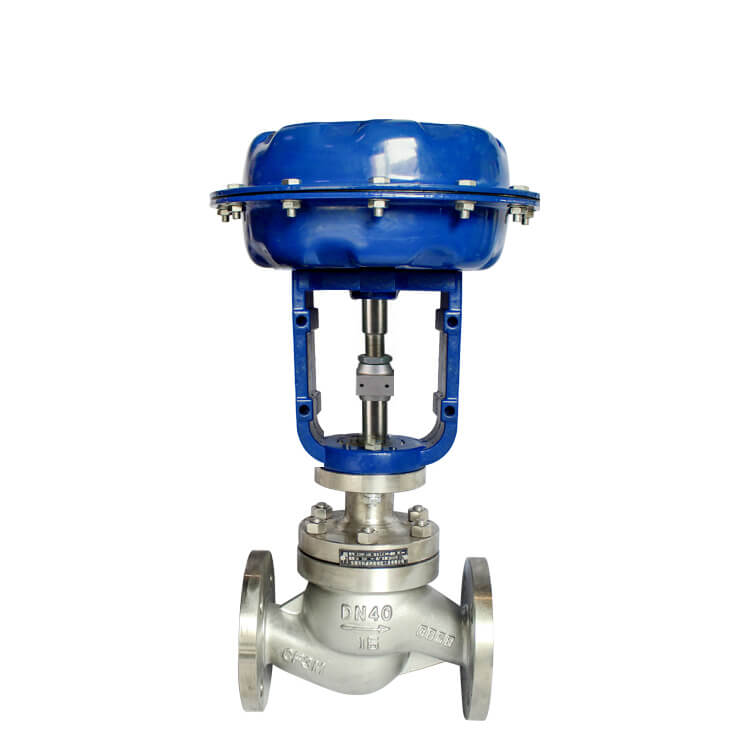
Internal leakage in a pneumatic control valve refers to the slight leakage that still occurs between the valve core and the valve seat after the valve is closed. The main causes of internal leakage are as follows:
1. Mismatch between Valve Core and Valve Seat
Insufficient machining precision of the valve core and valve seat or unreasonable dimensional fit may lead to incomplete sealing, thereby causing internal leakage.
2. Corrosion and Wear
In the working environment of pneumatic control valves, the medium may contain corrosive substances or particles. Long-term exposure to these elements will cause corrosion and wear of the valve core and valve seat, resulting in leakage.
3. Damage to Sealing Surfaces
The sealing surfaces of the valve core and valve seat may be damaged due to corrosion, wear, scratches, or other reasons, leading to internal leakage.
4. Spring Failure
Pneumatic control valves usually use springs to maintain the normal working state of the valve core. If the spring becomes loose, breaks, or fails, the valve core may not close completely, resulting in leakage.
5. Improper Operation
During the use of pneumatic control valves, operators may engage in improper operations, such as over-tightening the valve or failing to replace sealing components in a timely manner, which can cause internal leakage.
Measures to Solve Internal Leakage Problems
To address internal leakage, the following measures can be taken:
-
Select the appropriate material and model of control valve to ensure the matching and corrosion resistance of the valve core and valve seat.
-
Regularly inspect and maintain the valve, and replace damaged sealing components and springs in a timely manner.
-
Implement strict operating specifications to avoid improper operations such as over-tightening the valve.
-
According to the requirements of working conditions, it may be necessary to take measures such as reducing the corrosiveness of the medium, adding support structures, or using wear-resistant materials to extend the service life of the valve core and valve seat.
By understanding the root causes of internal leakage and adopting targeted solutions, you can effectively reduce the occurrence of internal leakage in pneumatic control valves, ensure the stability of the production process, and reduce unnecessary economic losses.