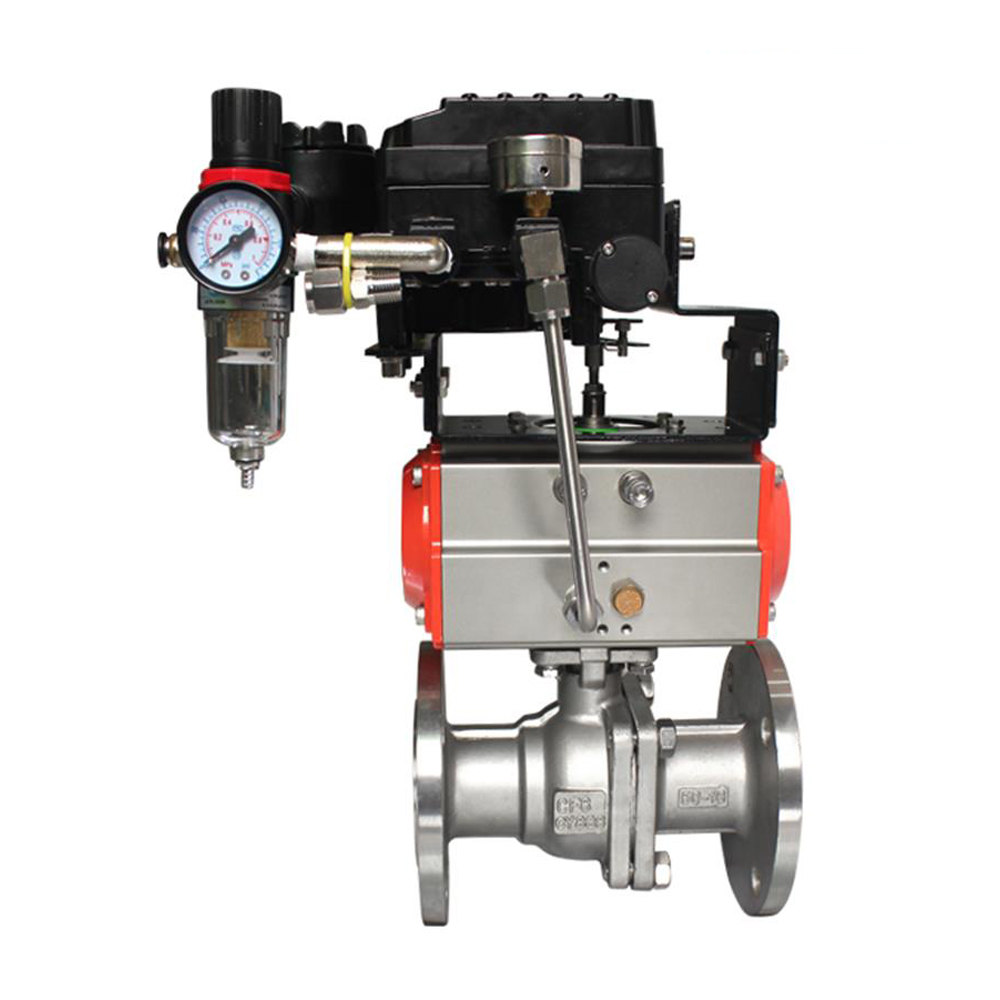
For the food industry, where product safety and quality are paramount, every component in the production line plays a crucial role—especially pneumatic valves. These valves are widely used in fluid handling processes such as raw material transportation, processing, and packaging. Selecting the right pneumatic valves is not only related to the stability of production efficiency but also directly affects food safety. So, how should we correctly select pneumatic valves for the food industry? Let’s break down the key points in detail.
First and foremost, the manufacturing materials of pneumatic valves used in food applications must not chemically react with the product, nor affect the product’s taste, color, or other characteristics in any way. This is the most basic and core requirement. Unlike non-food contact fluid equipment—where design factors focus on reducing maintenance and downtime, increasing output, and lowering costs, along with many intangible factors related to suppliers’ expertise and services—food-contact valves leave no room for compromise on material safety.
In general, water pumps selected for the food industry should be made of sanitary stainless steel in accordance with national standards to avoid secondary pollution of water sources and food. Similarly, for pneumatic valves, we recommend sanitary stainless steel safety valves, as well as commonly used sanitary butterfly valves and ball valves. These valves not only meet the material safety requirements but also have structural advantages that adapt to the food industry’s strict hygiene standards.
Food safety has become the top safety concern for people around the world. As responsible valve manufacturers, we are faced with various health-related responsibilities that go beyond the scope of ordinary industrial product manufacturing. Since the end consumers of the products are the general public, food contamination must be avoided, and corrosion is strictly prohibited. Cracks and dead spots in valves and pipeline systems that can cause fluid retention and bacterial growth are completely unacceptable. Therefore, when selecting pneumatic valves, in addition to checking the material, we must also carefully examine the structural design to ensure there are no dead corners that are difficult to clean, thus eliminating potential hygiene hazards.
Beyond material selection and the choice of food-contact surfaces during processing, the food industry must also consider the selection of pipelines and storage tank equipment used to transport acidic and alkaline cleaning fluids during system maintenance. Additionally, it is necessary to select equipment that uses corrosive chemicals for sewage treatment and meets various environmental standards. These auxiliary systems are closely linked to the normal operation of pneumatic valves, so their compatibility with the valves must be taken into account during the selection process.
Another key factor is the characteristics of the circulating medium, such as medium temperature and pressure. Pneumatic valves come in a variety of materials and structural features, and different valves are suitable for different medium pressures and temperatures. If the medium pressure reaches a certain level, high-pressure valves must be selected, as ordinary valves cannot withstand high-pressure impacts. When the medium temperature is extremely high, high-temperature valves should be chosen—normal-temperature valves will have their seals melted quickly in high-temperature media, resulting in loss of sealing performance and subsequent valve failure. Ignoring medium characteristics can lead to not only valve damage but also serious production accidents and food safety risks.
To sum up, selecting pneumatic valves for the food industry is a comprehensive task that requires integrating factors such as material safety, structural hygiene, compatibility with cleaning and sewage treatment systems, and adaptation to medium characteristics. Only by strictly adhering to these requirements can we ensure that the selected pneumatic valves meet the food industry’s high standards for safety, hygiene, and efficiency. If you have more questions about the selection of pneumatic valves for specific food processing scenarios, welcome to leave a message in the comment area for in-depth communication!