
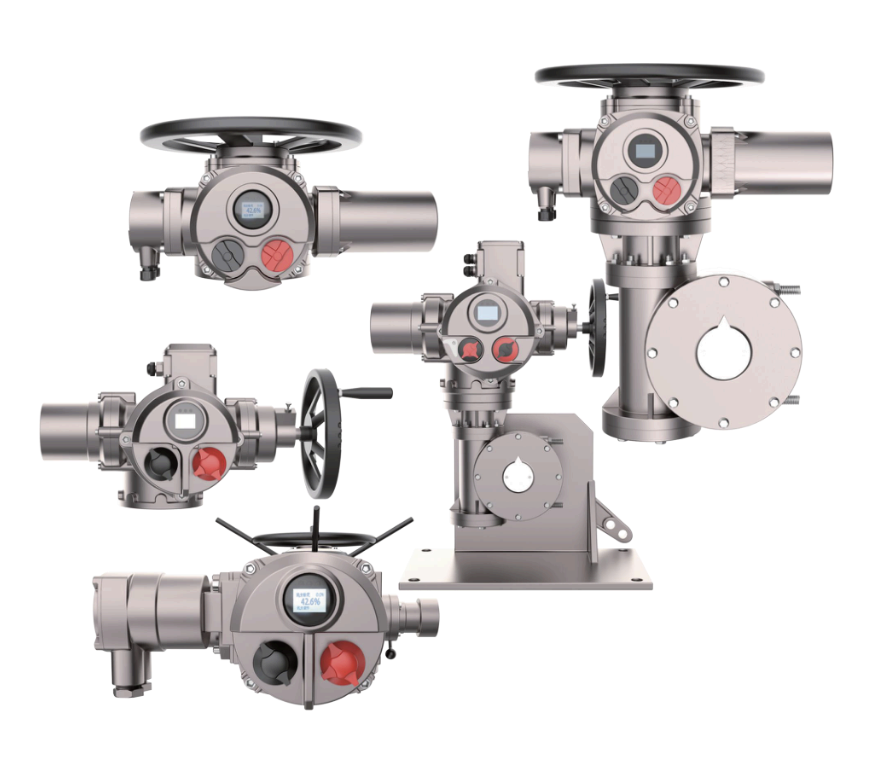
Multi-turn vs Quarter-turn Electric Actuators: What’s the Difference?
一、Introduction
Electric actuators are widely used to automate industrial valves, but different valves require different types of actuator movement.
Two common types are multi-turn electric actuators and quarter-turn electric actuators. The correct choice depends primarily on the valve operating movement, valve type, required torque and operating conditions.
The Wye actuator catalog separates these applications into the WyeQ Multi-turn Electric Actuator and the WyeT Quarter-turn Electric Actuator series.
Understanding the difference between these two actuator types can help you select the appropriate solution for your valve automation system.
二、What Is a Multi-turn Electric Actuator?
2.1 How It Works
A multi-turn electric actuator provides multiple rotations of the output shaft to operate a valve.
According to the Wye catalog, the WyeQ Multi-turn Electric Actuator is designed for multi-turn valve applications and provides an output torque range of 40–3000 Nm.
2.2 Suitable Valve Types
The WyeQ series is suitable for valves including:
- Gate Valves
- Globe Valves
- Diaphragm Valves
The actuator selection information in the catalog also associates multi-turn operation with valve types such as gate, globe, sluice, parallel slide and choke valves.
2.3 WyeQ Multi-turn Electric Actuator
The WyeQ series includes:
| Model | Maximum Output Torque |
|---|---|
| WyeQ18 | 136 Nm |
| WyeQ25 | 400 Nm |
| WyeQ35 | 610 Nm |
| WyeQ40 | 1020 Nm |
| WyeQ70 | 1490 Nm |
| WyeQ90 | 2030 Nm |
| WyeQ95 | 3000 Nm |
This range allows different WyeQ models to be selected according to valve operating torque and application requirements.
三、What Is a Quarter-turn Electric Actuator?
3.1 How It Works
A quarter-turn electric actuator is designed for part-turn valve operation.
The Wye catalog describes the WyeT Quarter-turn Electric Actuator as a direct-drive part-turn actuator suitable for applications requiring rotary valve operation.
3.2 Suitable Valve Types
The WyeT series is designed for:
- Ball Valves
- Butterfly Valves
- Plug Valves
These valves use part-turn movement rather than the multiple output rotations required by typical multi-turn valves.
3.3 WyeT Quarter-turn Electric Actuator
The WyeT range includes:
| Model | Output Torque |
|---|---|
| WyeT250 | 250 Nm |
| WyeT500 | 500 Nm |
| WyeT1000 | 1000 Nm |
| WyeT2000 | 2000 Nm |
The WyeT series therefore provides quarter-turn actuator options from 250 Nm to 2000 Nm.
四、Multi-turn vs Quarter-turn Electric Actuator
4.1 Main Differences
| Comparison | Multi-turn Actuator | Quarter-turn Actuator |
|---|---|---|
| Wye Series | WyeQ | WyeT |
| Movement | Multiple rotations | Part-turn rotation |
| Typical Valves | Gate, Globe, Diaphragm | Ball, Butterfly, Plug |
| Catalog Torque Range | 40–3000 Nm | 250–2000 Nm |
| Typical Function | Multi-turn valve operation | Rotary valve operation |
| Example Model | WyeQ18–WyeQ95 | WyeT250–WyeT2000 |
The distinction between WyeQ and WyeT, their valve applications and torque ranges comes directly from the catalog.
五、How to Choose Between Multi-turn and Quarter-turn
5.1 Start With the Valve Type
The first consideration is the movement required by the valve.
For example:
Gate Valve → Multi-turn Actuator
Gate valves generally require multiple turns to move between open and closed positions. The catalog associates gate valves with multi-turn actuator selection.
Globe Valve → Multi-turn Actuator
Globe valves are also listed among the multi-turn valve applications.
Ball Valve → Quarter-turn Actuator
Ball valves are listed as typical applications for part-turn actuator operation.
Butterfly Valve → Quarter-turn Actuator
Butterfly valves are another typical quarter-turn application.
Plug Valve → Quarter-turn Actuator
The WyeT product description specifically includes plug valves among its suitable applications.
5.2 Check the Required Torque
After determining the actuator movement type, the required valve operating torque must be considered.
The Wye catalog provides:
- WyeQ Multi-turn: 40–3000 Nm
- WyeT Quarter-turn: 250–2000 Nm
The selected actuator should meet the operating requirements of the valve.
5.3 Check the Power Supply
The standard actuator specifications in the catalog list:
| Power Supply | Specification |
|---|---|
| Three-phase | AC 380–690 V, 50/60 Hz |
| Single-phase | AC 110–240 V, 50/60 Hz |
The available power supply should therefore be considered during actuator selection.
5.4 Determine the Control Method
The Wye actuator platform supports several control methods:
- On/Off
- Modulating
- Fieldbus
For communication, the catalog lists:
- Modbus
- Profibus DP
- HART
5.5 Consider the Operating Environment
The catalog specifies IP68 protection for the actuator platform.
Standard environmental specifications include:
- Standard ambient temperature: -30°C to +70°C
- Maximum humidity: 90% RH, non-condensing
- Insulation grade: F
六、Common Intelligent Actuator Features
Although WyeQ and WyeT are intended for different valve movements, the catalog describes a number of intelligent actuator features.
These include:
- Non-invasive design
- Data logger
- Clear controls and indication
- Multi-language text display
- Torque and position control
- Local operation
- Infrared setting and control
- Fault self-diagnosis
- Phase sequence identification
- Phase-loss protection
- IP68 protection
These functions are intended to support actuator operation, configuration and monitoring in industrial valve automation applications.
七、Quick Selection Guide
For a simple initial selection, use the valve movement as the starting point:
| Valve Type | Actuator Type | Wye Series |
|---|---|---|
| Gate Valve | Multi-turn | WyeQ |
| Globe Valve | Multi-turn | WyeQ |
| Diaphragm Valve | Multi-turn | WyeQ |
| Ball Valve | Quarter-turn | WyeT |
| Butterfly Valve | Quarter-turn | WyeT |
| Plug Valve | Quarter-turn | WyeT |
Final actuator selection may also depend on operating torque, power supply, mechanical interface, thrust and other working requirements. The catalog specifically notes that actual selection can vary according to these factors.
八、Which Electric Actuator Do You Need?
The main difference between a multi-turn and quarter-turn electric actuator is the type of movement required to operate the valve.
Choose a multi-turn electric actuator when the valve requires multiple rotations to operate. The WyeQ series is designed for applications such as gate, globe and diaphragm valves.
Choose a quarter-turn electric actuator for part-turn rotary valve applications. The WyeT series is designed for ball, butterfly and plug valves.
After determining the actuator type, consider the required torque, power supply, control method, mechanical interface and operating environment before selecting the final actuator model.
九、Need Help Selecting an Electric Actuator?
If you are not sure whether your valve requires a multi-turn or quarter-turn electric actuator, provide the following information:
- Valve Type
- Valve Size
- Required Torque
- Power Supply
- Control Method
- Signal Requirements
- Mechanical Interface
We can use these operating requirements to determine the appropriate actuator configuration.
Contact Us for Electric Actuator Selection
