
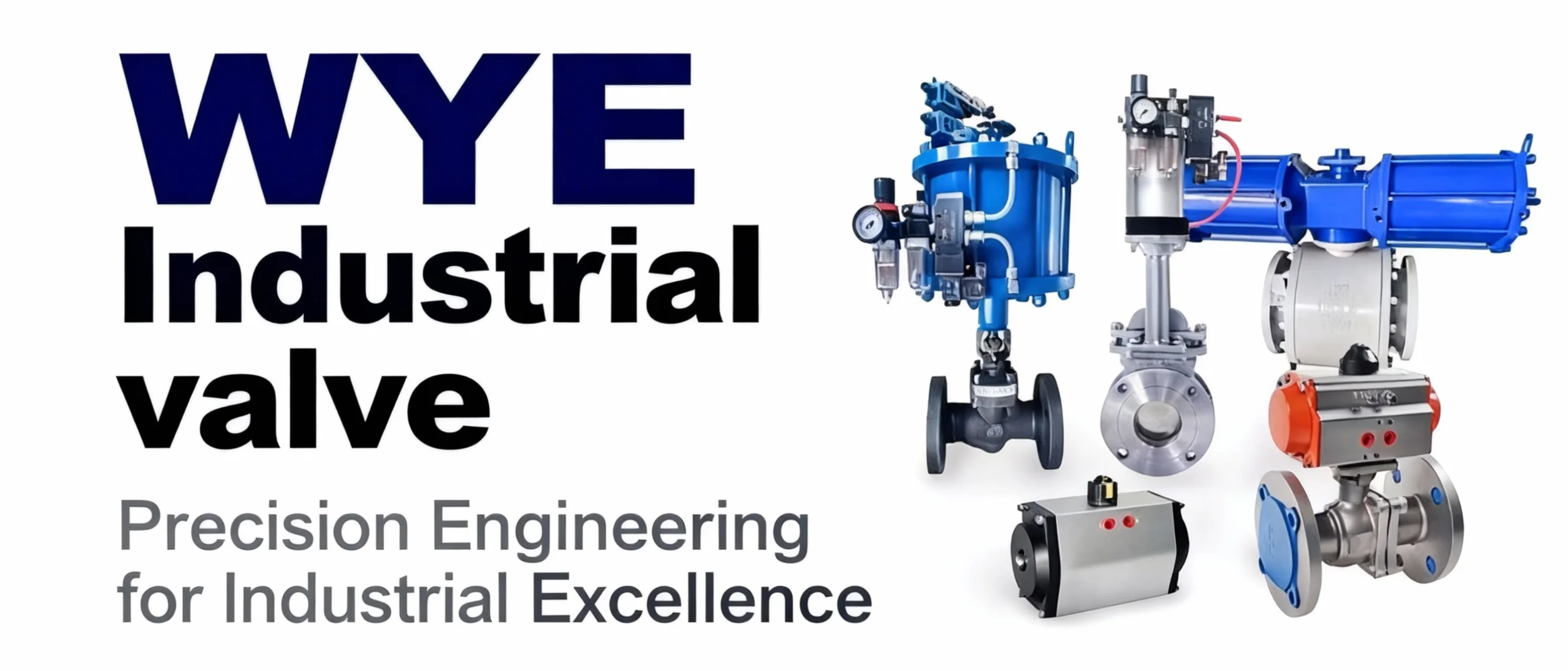
Actuators are divided into three main categories by their energy source: pneumatic, electric, and hydraulic. Each type has distinct characteristics and is suitable for different application scenarios. Pneumatic actuators are one category of actuators, which can be further classified into two types: double-acting and spring-return (single-acting).
- Double-Acting (DA): Both the opening and closing actions of the actuator are driven by an air supply.
- Spring-Return (SR): Only the opening action is driven by an air supply, while the closing action is achieved via spring reset.
Note: This document takes the DA/SR series pneumatic actuators as an example to illustrate actuator selection. The purpose of this reference material is to assist customers in selecting actuators correctly. Before installing a pneumatic or electric actuator on a valve, the following factors must be taken into consideration:
- The operating torque of the valve plus the safety factor recommended by the manufacturer (based on operating conditions).
- The air supply pressure or power supply voltage of the actuator.
- The type of actuator (double-acting or spring-return/single-acting) as well as the output torque at a given air supply pressure or rated voltage.
- The rotation direction of the actuator and the fail-safe mode (fail-open or fail-close).
Correct selection of an actuator is of great importance. An oversized actuator may exert excessive force on the valve stem. Conversely, an undersized actuator cannot generate sufficient torque to fully operate the valve. Generally speaking, the torque required to operate a valve is derived from friction between the metal components of the valve (e.g., ball core, valve disc) and the sealing elements (valve seat). Many factors affect the operating torque, including the valve’s application scenario, operating temperature, operating frequency, pipeline pressure difference, and flowing medium (lubricating, dry, slurry, etc.).
1. Ball Valve
The structural principle of a ball valve is basically based on a polished ball core (including a flow channel) clamped between two valve seats (upstream and downstream). The rotation of the ball core either blocks or allows the flow of fluid through the ball core. The force generated by the pressure difference between the upstream and downstream presses the ball core tightly against the downstream valve seat (floating ball structure). In this case, the torque required to operate the valve is determined by the friction between the ball core and the valve seat, as well as between the valve stem and the packing. The maximum torque occurs when there is a pressure difference and the ball core rotates from the closed position to the open position.
2. Butterfly Valve
The structural principle of a butterfly valve is essentially based on a butterfly disc fixed on a valve shaft. In the closed position, the butterfly disc forms a complete seal with the valve seat. When the butterfly disc rotates (around the valve stem) to be parallel to the fluid flow direction, the valve is in the fully open position. Conversely, when the butterfly disc is perpendicular to the fluid flow direction, the valve is in the closed position.
The torque required to operate a butterfly valve is determined by the friction between the butterfly disc and the valve seat, as well as between the valve stem and the packing. Meanwhile, the force exerted on the butterfly disc by the pressure difference also affects the operating torque. The torque is maximum when the valve is in the closed position and decreases significantly with a slight rotation of the butterfly disc.
3. Plug Valve
The structural principle of a plug valve is basically based on a plug sealed inside a tapered valve body. A flow channel is machined in one direction of the plug. The valve is opened or closed by screwing the plug into the valve seat. The operating torque is usually not affected by fluid pressure, but is determined by the friction between the valve seat and the plug during the opening and closing processes. The torque reaches its maximum when the valve is closed and remains relatively high throughout the rest of the operation cycle, due to the absence of pressure-related influence.
