
Sealing Performance of Pneumatic Flanged Ball Valves
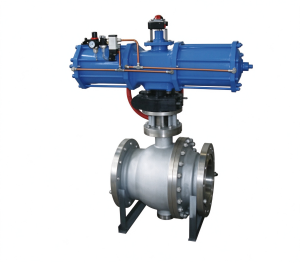
Sealing performance is very important for pneumatic flanged ball valves.
The Pneumatic Flanged Ball Valve is equipped with a pneumatic actuator that allows remote or local control of valve opening and closing. It enables valve operation from a control room, significantly reducing labor requirements and avoiding the risks associated with manual operation at elevated locations or on-site.
Pneumatic flanged ball valves have relatively low flow resistance compared with other valve types, contributing to energy efficiency. The valve stem is durable and resistant to damage, with low friction during operation. It maintains flexible and smooth operation over extended periods. The reliability of its materials also contributes to a relatively long service life.
The valve is directly connected to the pneumatic actuator, featuring a relatively simple structure and easy operation. Maintenance and inspection are also convenient. The connecting components of the pneumatic flanged ball valve are equipped with springs to discharge static electricity generated during valve opening and closing.
Working Principle
The Pneumatic Flanged Ball Valve consists of a pneumatic piston actuator and a ball valve with a 90° rotational movement.
When the ball rotates 90°, the inlet and outlet passages are completely blocked by the spherical surface, shutting off the flow. When the passage through the ball aligns with the pipeline, the medium can flow through.
The full-bore ball valve provides a straight flow passage with minimal resistance. The pneumatic actuator rotates the ball 90° to achieve rapid and tight shutoff.
The direct connection between the actuator and valve body reduces the possibility of mechanical failure. Flanged pipeline connections provide reliable sealing, facilitate maintenance and replacement, and allow convenient pipeline shutoff.
Sealing Performance
Sealing performance is one of the most important characteristics of pneumatic flanged ball valves. When selecting this type of valve, particular attention should be paid to its sealing capabilities.
The sealing performance of a ball valve mainly depends on three factors: material, manufacturing process, and connection method.
The material determines the initial sealing capability and its durability during long-term operation. The manufacturing process affects the sealing performance resulting from the valve structure, while the connection method influences the sealing effectiveness between the valve and pipeline.
Without sufficient technical experience, it may be difficult to evaluate the internal manufacturing quality of a pneumatic flanged ball valve based solely on its appearance. However, sealing performance can be verified through appropriate testing.
Materials and connection methods should be selected according to the specific operating conditions. Each material and connection type has its own advantages, and sealing performance should be evaluated based on the actual application requirements.
