
In industrial process systems, controlling flow is important, but being able to stop the flow quickly when required can be equally critical.
Production lines often contain gases, liquids and other process media operating under pressure. When operating conditions change or a process needs to be isolated, relying on manual valve operation may not provide the response required by an automated system.
Pneumatic quick cut-off valves provide a practical solution. By combining pneumatic actuation with reliable valve shut-off, they allow process flow to be interrupted rapidly and can be incorporated into automated control systems.
Wye Valve’s 100M and 100S Pneumatic Quick Cut-Off Valve series are designed around this requirement, providing fast valve action for industrial process applications.
1. Why Rapid Process Isolation Matters
1.1 Reducing the Time Required to Stop Flow
A manually operated valve requires an operator to reach the valve and physically perform the closing operation.
A pneumatic cut-off valve can respond directly to an operating signal. The actuator generates the force required to move the valve and change its operating position rapidly.
For customers, the key benefit is straightforward: less time between the command to stop the process and the actual interruption of flow.
1.2 Supporting Automated Operation
Modern industrial systems increasingly depend on automatic process control.
Pneumatic operation allows a quick cut-off valve to work as part of a larger control arrangement instead of functioning only as an independent manual component.
This makes the valve particularly useful where remote operation and automatic valve response are required.
2. How a Pneumatic Quick Cut-Off Valve Works
The basic operating concept is relatively simple.
Compressed air provides the power required by the pneumatic actuator. The actuator converts pneumatic force into mechanical movement, which drives the valve stem and internal closing element.
When the operating signal changes, the actuator moves the valve rapidly toward the required position.
This combination of pneumatic actuation and quick valve movement allows the pipeline flow condition to be changed without requiring an operator to operate the valve locally.
3. What Customers Gain from Pneumatic Cut-Off Control
3.1 Faster Response
One of the most important advantages is operating speed.
A faster valve response allows the process system to react more quickly when flow needs to be interrupted.
3.2 Reduced Manual Intervention
Automated pneumatic operation reduces the need for operators to repeatedly open or close valves at the pipeline.
For plants with multiple valves or remotely located equipment, this can simplify daily operation and improve overall process efficiency.
3.3 Better Integration with Process Control
A pneumatic quick cut-off valve can form part of an automated process arrangement.
Instead of treating the valve as an isolated mechanical component, customers can incorporate valve operation into the broader control strategy of the production system.
3.4 More Flexible Valve Selection
Industrial applications do not all operate under the same conditions.
Pipeline diameter, operating pressure, temperature, process medium, material compatibility and required flow capacity can all influence valve selection.
For example, the 100S series provides multiple nominal sizes, pressure ratings, body and internal material options, as well as different packing and accessory configurations. This allows the final valve configuration to be matched more closely to actual process requirements.
4. 100M and 100S Pneumatic Quick Cut-Off Valves
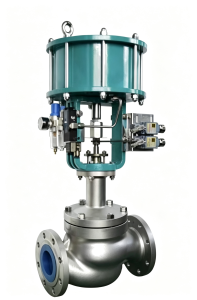
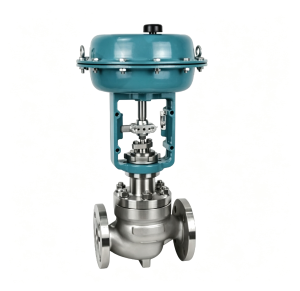
Wye Valve provides 100M and 100S Pneumatic Quick Cut-Off Valves for industrial process applications.
Both products are designed around fast pneumatic operation and process cut-off requirements, while their specific structures and available configurations allow valve selection according to different operating conditions.
The 100S technical configuration includes multiple nominal diameters and pressure classes, together with different valve-body, internal, packing and accessory options.
Rather than selecting a valve based only on pipeline diameter, customers should consider the complete operating conditions of the system.
5. What Should Be Considered When Selecting a Quick Cut-Off Valve?
5.1 Process Medium
The characteristics of the medium influence the selection of valve-body, trim, packing and sealing materials.
5.2 Operating Pressure and Temperature
Pressure and temperature conditions should be confirmed before determining the appropriate valve pressure class and material configuration.
5.3 Required Flow Capacity
Valve size should be selected according to actual process flow requirements rather than pipeline diameter alone.
5.4 Pneumatic Supply
Because the actuator depends on compressed air for operation, the available pneumatic supply should be considered during system design and valve selection.
5.5 Required Operating Action
Customers should clearly define how the valve needs to respond to the control or cut-off signal.
Confirming this requirement at the selection stage helps ensure that the valve configuration matches the intended operating strategy.
6. From a Valve Component to a Process Solution
Choosing a pneumatic quick cut-off valve is not simply a matter of selecting a valve body and actuator.
The real objective is to determine how the valve will operate within the customer’s process.
A properly selected valve should provide sufficient flow capacity during operation, respond rapidly when a position change is required, provide dependable cut-off performance and use materials appropriate for the process medium and operating conditions.
This is why Wye Valve considers medium, pressure, temperature, flow requirements, materials, pneumatic supply and operating requirements when determining an appropriate valve configuration.
For customers, the result is not simply another valve installed in the pipeline. It is a component that can help make process operation faster, more automated and easier to manage.
7. Choosing the Right Pneumatic Quick Cut-Off Valve
Every industrial process has different operating requirements.
Before selecting a 100M or 100S Pneumatic Quick Cut-Off Valve, customers can provide the main process conditions, including pipeline size, medium, operating pressure, operating temperature, required flow capacity and pneumatic supply conditions.
Based on this information, Wye Valve can determine a suitable valve configuration for the application.
Whether the objective is rapid process isolation, automated pipeline operation or reducing manual valve intervention, selecting the correct pneumatic quick cut-off valve is an important part of building a reliable industrial process system.
