
Sampling is an essential part of quality control in food, beverage, dairy, pharmaceutical, biotechnology and other hygienic process industries. A properly selected sampling valve allows operators to collect representative samples from tanks, vessels and process pipelines while helping reduce contamination risk and product loss.
Different process conditions require different sampling valve designs. Factors such as sample volume, hygiene level, cleaning method, operating pressure, installation position and media characteristics should all be considered before selecting a valve.
1. Why Sampling Valve Selection Matters
1.1 Maintaining Sample Integrity
The main purpose of a sampling valve is to obtain a sample that accurately represents the process medium inside the system.
If the valve contains excessive dead space, product residue or difficult-to-clean internal areas, the sample may not reflect the actual condition of the process fluid. Residual material can also affect later samples and reduce testing accuracy.
A hygienic sampling valve should therefore provide a short, clean flow path and a design that minimizes product retention.
1.2 Reducing Contamination Risk
In hygienic and aseptic systems, the sampling point creates a temporary connection between the process and the external environment.
For this reason, the valve should be designed to limit direct exposure of the process medium to surrounding air, tools and operators.
Diaphragm, membrane, double-seat and micro sampling valve designs are commonly used in applications where hygiene and contamination control are important.
2. Common Types of Sampling Valves
2.1 Hygienic Diaphragm Sampling Valve
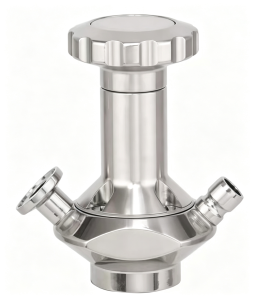
A hygienic diaphragm sampling valve uses a flexible diaphragm to separate the operating mechanism from the process medium.
This design provides a simple and hygienic flow path and can be installed on tanks, vessels or process pipelines.
Typical applications include:
- Beverage production
- Dairy processing
- Brewing
- Food processing
- Pharmaceutical liquids
- Biotechnology systems
Diaphragm sampling valves are commonly selected for general hygienic sampling where reliable shut-off and easy cleaning are required.
2.2 Aseptic Double Seat Sampling Valve
An aseptic double seat sampling valve uses two independently controlled valve seats.
One valve seat controls the product sampling path, while the second controls the cleaning or sterilization path. This allows sampling and CIP or SIP operations to be carried out separately.
During sampling, the cleaning path remains closed. During cleaning or sterilization, the product side remains isolated.
This design is especially suitable for production systems that require frequent sampling together with a high level of hygiene control.
Typical applications include:
- Pharmaceutical processing
- Biotechnology
- Fermentation systems
- Dairy production
- Beverage processing
- High-hygiene liquid processing
2.3 Micro Aseptic Sampling Valve
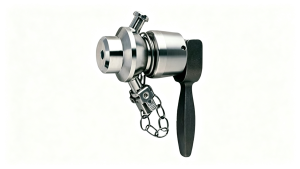
A micro aseptic sampling valve is designed for small-volume sampling and microbiological analysis.
Instead of releasing a large quantity of product, the valve allows a very small sample to be collected through a compact sampling point. Some designs use a fine needle together with a self-sealing membrane or elastomer element.
Micro sampling valves are useful when only a small amount of product is needed for laboratory testing.
They are commonly used for:
- Microbiological testing
- Laboratory sampling
- Fermentation monitoring
- Beverage production
- Dairy processing
- Pharmaceutical process fluids
- Process water testing
3. Key Factors When Selecting a Sampling Valve
3.1 Process Media
The characteristics of the process medium should be considered first.
Low-viscosity liquids such as water, beer, milk and beverages normally require less flow capacity than thicker process fluids.
For higher-viscosity media, the internal flow path, outlet size and valve opening should be evaluated carefully to ensure reliable sampling.
3.2 Hygiene Requirements
Not all process systems require the same hygiene level.
For general food and beverage applications, a standard hygienic sampling valve may be sufficient.
For pharmaceutical, biotechnology or high-purity applications, an aseptic design with improved isolation and sterilization capability may be more appropriate.
3.3 Sample Volume
The required sample quantity can determine which valve design is most suitable.
For routine production samples, a conventional diaphragm or seat-type sampling valve can be used.
For microbiological analysis or laboratory testing where only a few milliliters are required, a micro sampling valve may be a better choice.
3.4 CIP and SIP Requirements
If the process system uses Cleaning-in-Place or Sterilization-in-Place, the sampling valve should be compatible with the same cleaning philosophy.
Some sampling valves can be cleaned through the main process line, while others include a dedicated cleaning or steam connection.
Double-seat sampling valves are particularly useful when the sampling chamber needs to be cleaned or sterilized independently from the main process.
3.5 Material Selection
316L stainless steel is widely used for wetted parts in hygienic and aseptic sampling valves because of its corrosion resistance and suitability for sanitary processing.
Seal and diaphragm materials may include:
- EPDM
- Silicone
- PTFE
- Other food-grade or pharmaceutical-grade elastomers
The final material selection should be based on process temperature, cleaning chemicals, media compatibility and regulatory requirements.
4. Installation Considerations
4.1 Tank Installation
Sampling valves can be installed directly on storage tanks, mixing tanks, fermentation vessels and other process equipment.
A tank-mounted valve should be positioned so that representative product can be collected while minimizing product retention around the installation point.
4.2 Pipeline Installation
Pipeline-mounted sampling valves are suitable for continuous process systems.
The installation location should provide good access for operators while ensuring that the sample represents the actual process condition.
Sampling points should generally avoid areas where product may stagnate or separate.
4.3 Connection Options
Common sanitary connection options include:
- Weld connection
- Clamp connection
- Hygienic threaded connection
- Tank welding adapter
The correct connection method depends on the system design, maintenance requirements and hygiene standard.
5. How to Improve Sampling Reliability
A reliable sampling process depends not only on the valve itself but also on proper operating procedures.
Operators should ensure that the sampling point is cleaned before and after use according to the process requirements.
Where sterilization is required, the sampling chamber and outlet should be sterilized using an appropriate method before sample collection.
Sampling frequency, sample volume and cleaning procedures should also be standardized to improve repeatability between different operators and production batches.
6. Which Sampling Valve Is Right for Your Process?
There is no single sampling valve that is suitable for every application.
A hygienic diaphragm sampling valve is a practical choice for general sanitary liquid sampling.
An aseptic double seat sampling valve is better suited for processes that require independent sampling and CIP/SIP control.
A micro aseptic sampling valve is ideal when only a very small sample is needed for laboratory or microbiological testing.
The most suitable valve should be selected based on:
- Process medium
- Required sample volume
- Hygiene level
- Cleaning and sterilization method
- Working pressure
- Operating temperature
- Installation position
- Connection type
- Material compatibility
Conclusion
Selecting the correct sampling valve is an important part of building a reliable hygienic or aseptic process system.
The right valve helps operators collect representative samples, reduce contamination risk, simplify cleaning and improve process control.
By matching the valve design to the application, sample volume and hygiene requirements, manufacturers can achieve more consistent sampling results while maintaining efficient production.
For food, beverage, dairy, brewing, pharmaceutical and biotechnology applications, hygienic diaphragm, double-seat and micro aseptic sampling valves provide flexible solutions for a wide range of process conditions.
